Facebook
 Google
 GitHub
 Linkedin
Training: Design and Implement Analog Sensing With Universal Sensing Module
Learn the basics of designing and implementing a basic project using NXP's Universal Sensing Module for analog I/O in industrial automation applications.
The free Universal Sensing Module training from NXP provides an in-depth understanding of the latest trends, challenges, and solutions in analog sensing technology. This free training module from NXP covers the design and implementation of a versatile sensing module that integrates advanced analog front-end (AFE) and microcontroller (MCU) technologies. Participants will explore the features of the Universal Sensing Module, including high precision, low power consumption, and small footprint.
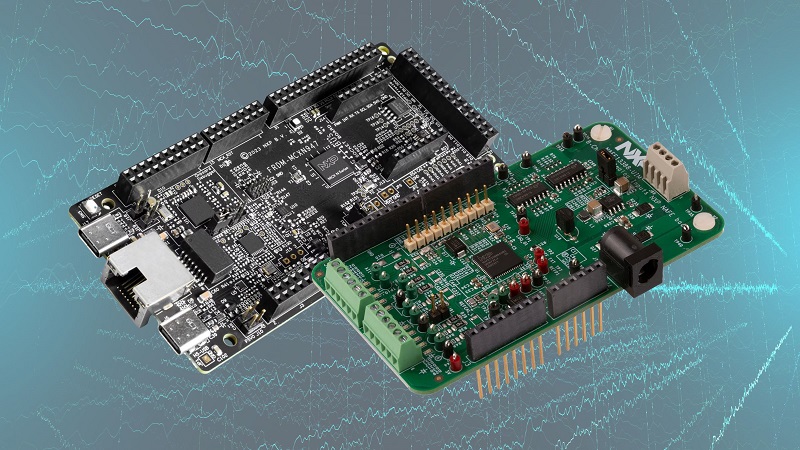
Key benefits include a fully tested, modular, and expandable platform with ready-to-use libraries, versatile sensor integration, and a choice of connectivity options (CAN FD, Ethernet, USB). The module allows for easy expansion to design new use cases like AI/ML and offers quick evaluation using a web server application (GUI). This training is ideal for professionals looking to leverage this module for accurate, real-time data acquisition and processing in various industrial applications.
What You Will Learn
- Trends in Analog Sensing: Understand the latest trends in multi-sensor capability, real-time decision making, and edge computing
- Challenges in Industrial Environments: Learn about the common challenges such as noise rejection, signal integrity, robust connectivity, and energy efficiency
- Module Features and Benefits: Explore the features of the Universal Sensing Module, including high precision, low power consumption, and small footprint
- Key Benefits: Discover the fully tested, modular, and expandable platform with ready-to-use libraries, versatile sensor integration, and choice of connectivity options
- Enablement Tools: Learn about the firmware, software, and diagnostic tools that facilitate quick development and deployment, including quick evaluation using a web server application (GUI)