Facebook
 Google
 GitHub
 Linkedin

In a level-to-flow cascade arrangement (LC sending SP to FC), I’m trying to understand what the level controller is actually doing.
Does the LC calculate and send a flowrate setpoint to the flow controller?
For example:
Or is the LC simply increasing/decreasing a 4–20 mA signal to the FC, and the FC interprets that somehow?
Basically, how does the cascade interaction physically and functionally work between the LC and FC in a typical DCS/PLC implementation?
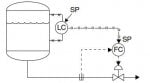
Does the LC calculate and send a flowrate setpoint to the flow controller?
For example:
- if level increases slightly → send flow SP = X m³/h
- if level increases further → send flow SP = X + Δ m³/h
Or is the LC simply increasing/decreasing a 4–20 mA signal to the FC, and the FC interprets that somehow?
Basically, how does the cascade interaction physically and functionally work between the LC and FC in a typical DCS/PLC implementation?