
 Facebook
 Google
 GitHub
 Linkedin
VSD and VFD Motor Drive Features
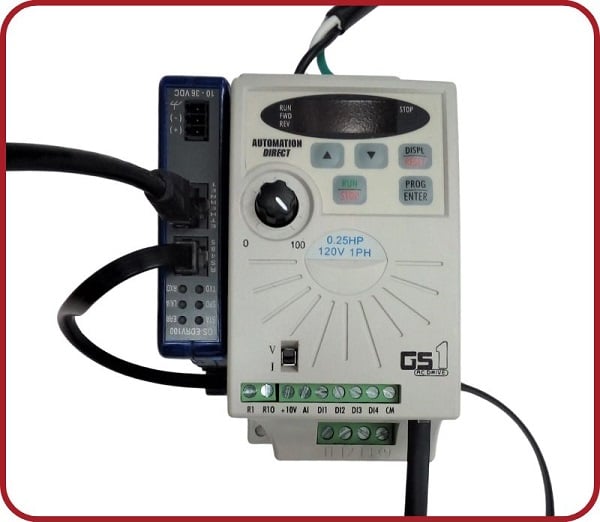
Motor drive units are complex machines that convert incoming control signals and power into an output
The speed, torque, and control advantages of VFD and VSD units so far outweigh the costs in modern installations that they are nearly always chosen to drive motors, large or small.
Modern DC and AC motor drives provide features useful when using electric motors as final control elements. Some common features seen in both VSDs and VFDs are listed here:
- Speed limiting
- Torque limiting
- Torque profile curves (used to regulate the amount of torque available at different motor speeds)
- Acceleration (speed rate-of-change) limiting
- Deceleration (speed rate-of-change) limiting
- DC injection braking (applying DC to a motor to turn it into an electromagnetic brake)
- Dynamic braking (turning the motor into an electromagnetic brake)
- Regenerative braking (turning the motor into a generator to recover kinetic energy)
- Plugging (applying reverse-direction power to a motor to quickly stop it)
- Overcurrent monitoring and automatic shut-down
- Overvoltage monitoring and automatic shut-down
- PWM frequency adjustment (may be helpful in reducing electromagnetic interference with some equipment)
Not only are some of these limiting parameters useful in extending the life of the motor, but they may also help extend the operating life of the mechanical equipment powered by the motor. It is certainly advantageous, for example, to have torque limiting on a conveyor belt motor, so that the motor does not apply full rated torque (i.e. stretching force) to the belt during start-up.
If a motor drive is equipped with digital network communication capability (like EtherCAT, PROFINET, or Modbus, for example), it is usually possible for a host PLC or DCS system to update many of these control parameters as the motor is running.
In order for a VSD or VFD to properly and safely control an electric motor, that drive must be programmed with the motor’s nameplate data (voltage rating, current rating, maximum speed, etc.). Failure to properly configure an electronic motor drive with these “base” parameters may even result in damage to the motor, for example, if the drive is configured to output more current than the motor is rated for! As such, it is recommended that you first program these parameters into a motor drive before setting any other drive parameters.
