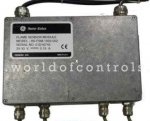
Reuter Stokes Flame Tracker Module FSM-1002-001 Replacement

From my understanding and research on the forum, GE utilized the FSM-1002 module on Mark V controllers and older as a result of the Reuter Stokes Flame Tracker, or newer FTD 325, not being able to connect directly to the PTBA cards. Whereas the old Honeywell LG1093AA sensors could because they required 335VDC.

My question is now that GE is moving away from the Reuter Stokes sensor, and offers an upgraded fiber optic sensor, would these new sensors still have to be connected to the FSM-1002 interface module? Or do these sensors, including the legacy Reuter Stokes, get connected directly to the TBAI cards and bypass the module altogether? I imagine this would involve some amount of programming.

Any input would be appreciated. Thank you.
 

Attachments

@VFS2000,

The way the control signal database is configured in the Mark* V the flame detectors inputs MUST be connected to the <P> PTBA terminal board. This is because the TCEA cards in <P> handle the flame detection signalling for the control procesor(s). When it was the Geiger-Mueller type flame detectors (which required 335 VDC for operation) the connection was made directly to the <P> PTBA terminal board.

When the change to the R-S Flame Tracker was made it was not possible to directly connect the Flame Trackers to the <P> PTBA, so the FSM-1002 module was invented and used as an intermediary device between the Flame Trackers and the <P> core's TCEA cards. The FSM-1002 has to convert the 4-20 mA signal into a square wave of varying frequency *at 335 VDC) for the TCEA cards to detect flame and flame intensity.

It would take a pretty serious re-write of the Mark* V control signal database to allow the flame detectors to be connected to any other inputs of the Mark* V. I would imagine (I don't know this for certain) that any new flame sensor would be a 4-20 mA device (or similar) and as such would probably work with either the FSM-1002 or some new intermediary device.

Since GE doesn't really "support" the Mark* V and since the designers of the Mark* V are probably long retired from GE it doesn't seem likely that a re-write of the Mark* V control signal database would be undertaken--which would require new PROMs for most all of the Mark* V-era printed circuit cards.

It would be gracious of you to write back if you learn anything related to this change of flame sensor to something using a fiber optic cable between the sensor and the Mark* input terminals. Especially as it relates to the Mark* V, but maybe also to newer Mark* turbine control systems.
 
@WTF?

Thank you for the insight and background. I have tried to get in touch with independent service providers as well as GE directly to determine whether that interface module will eventually be removed or if it will remain in place during the upgrade to fiber optic. So far, no response but will keep you posted.

It doesn't strike me as beneficial to GE to want to move away from Reuter-Stokes sensor yet keeping the interface module in place without some alternative solution.
 
@VFS2000,

If the new flame sensors can operate with 4-20 mA signals, I would think that it would work very well with the FSM-1002 module. The FSM-1002, again, is converting a 4-20 mA signal into a square wave of varying frequency that the TCEA cards need to detect flame and flame intensity.

MANY analog sensors these days use 4-20 mA signals, and the newer Mark* turbine control systems all use 4-20 mA inputs for flame sensing. So, it would be a simple matter to substitute the new sensor and any "converter" assembly (to convert light intensity to a 4-20 mA signal) on the newer Mark* turbine controls if it's a really desirable flame sensor upgrade (to the fiber optic cabling instead of copper wiring).

Which brings me to the question of why it's thought that upgrading to the new sensor using fiber optic cabling is so desirable. Have the R-S Flame Trackers been unreliable? Is it because of the heat in the turbine compartment around the Flame Trackers? Are the new flame sensors with fiber optic cabling that less expensive than the R-S Flame Trackers?

Is the FSM-1002 proving unreliable?

Is the new flame sensor with fiber optic cabling part of a control system upgrade or combustion system upgrade (to DLN or some new version of DLN) being provided by GE or some third party provider?

Simply curious.
 
@WTF?

  • Have the R-S Flame Trackers been unreliable?
    • I have spoken with several operators that comment on the lack of reliable signal output even with new Flame Trackers. They report 2 or 3 failed start attempts before they get a reliable flame signal. In their words, it seemed like the sensor needed to "warm up" before it functioned correctly.
    • There are reports of unknown contamination on the lens on both the combustion chamber facing as well as back side of the lens. Once contamination occurs on the back side, there is no means of cleaning the sensor and it needs to be replaced.
    • Others comment on the lack of durability due to the proximity to heat.
  • Is it because of the heat in the turbine compartment around the Flame Trackers?
    • This is a possible source of the failures. Additionally, the need for water cooling causes issues. Operators that have questionable water quality often run into issues of clogging with the small water lines.
    • There have also been issues with the lines coming undone as well as the water cooling jacket rubbing against the sensor housing itself. This ends up with cool water dripping on the combustion chamber casing. See PSIB 20230125A-R1 from GE that highlights this issue.
  • Are the new flame sensors with fiber optic cabling that less expensive than the R-S Flame Trackers?
    • They are more expensive than the Flame Tracker as a result of the incorporation of the fiber optic cable. However, this helps in moving the electronics away from the highest temperatures around the turbine.
    • Reuter Stokes developed the FTD 325 to alleviate the issues, but even this has proven to be unreliable. That is why GE developed a newer sensor.
  • Is the FSM-1002 proving unreliable?
    • I am uncertain if this is the case. As you say, newer 4-20mA sensors should be able to communicate with the module. However, as with any electronics there is concern about obsolescence especially considering that Reuter Stokes has now been sold to Crane.
  • Is the new flame sensor with fiber optic cabling part of a control system upgrade or combustion system upgrade (to DLN or some new version of DLN) being provided by GE or some third party provider?
    • It is being provided by GE as one of their upgrades to remove the older, water cooled sensors.
    • Robust Dry Flame Detector | GE Vernova
    • End users can also go direct to the supplier to swap out their sensor as it is a direct retrofit for both the Flame Tracker and the newer FTD 325. However, in the case of swapping out the Flame Tracker you will need to determine how to route the longer fiber optic cable and mount the sensor.
 
Top