Elevated Vibrations After Successful Commissioning Run

Hi,
After some advice, we recently undertook a MI on a FR6B unit unit was commissioned over a space of 5hrs run time and was base loaded to 45mw, all vibration levels were found to be more than acceptable with #1&2 bearings settling at 2.0-3.0mm/s for the duration of the run once the unit had synced (bar the load gearbox LS shaft which has been ongoing for some years has existing balance weights added)

New sets of buckets fitted, new shrouds, rotor was low speed balanced, new bearings and all turbine and compressor clearances within OEM specifications.

Unit was shutdown put on cooldown (witnessed first instances of barring after shutdown) from 6:00pm till 1:00pm the following day was given a start command at approx. 3:00pm the vibration levels were elevated from startup.

We have checked ratchet operation was functional during cooldown but cant be confirmed if it operated consistently as no external monitoring to confirm shaft motion under ratchet only piston limit on off signal for feedback, i suspect the rotor has bowed to be causing elevated levels from startup and with a successful run the day prior.

Just after some thoughts on this as we are not onsite and others are doing the fault investigation.

Few other checks that are being performed:
  1. Confirm IGV's opening as required
  2. Confirm buckets integrity rubs etc.
  3. Inspect through hatches acc gearbox and load gearbox


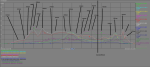
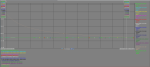
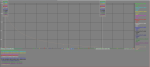
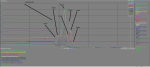
Please see the below trends I'm at a bit of a loss as in my experience this all points to a hogged rotor but I'm being told it couldn't have happened?

GOOD RUN UP
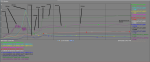
Good run up 28th July.PNG


FAILED RUN UP
Bad Run  28th July.PNG


GOOD RUN COAST DOWN TIME 10:34sec
Good run down 2000rpm to 0 10mis and 34 seconds  28th July.PNG

FAILED RUN COAST DOWN TIME 8:58 sec
Bad run down 2000rpm to 8mins and 58 seconds  28th July.PNG
 

Attachments

@Turbines For Life,

Who told you the turbine rotor couldn't have "hogged" and what evidence does that person have that it couldn't have hogged?

If the L33HRF logic signal changed state during the normal 3+ minute full ratchet operation (the ratchet normally starts every 3 minutes, but takes about 20-40 seconds to complete a full stroke and retraction) for the entire duration of the period the machine was on cooldown, then unless the ratchet mechanism and self-sequencer (I presume the machine uses a self-sequencer for executing forward and retraction strokes and actuating 33HR-1) isn't adjusted or working properly then it would seem the cooldown sequence operated properly.

I would tend to agree with your assessment (based on the information provided!) that the shaft did deflect--probably because of a period of non-ratchet operation.

The best thing to do here in my opinion is to leave the machine on cooldown, have the operator(s) check the machine periodically (both visually AND using the HMI) to be sure the machine was being rotated (as sure as humans can be). It might also be worth checking the 33HR-1 limit switch and self-sequencer (the latter is somewhat difficult to do as there are no user-serviceable parts) to see that the machine is, indeed, reaching the end of a forward stroke (the part of the operation that turns the rotor approximately 45 degrees each operation) AND that the retraction stroke completes and the machine rotor makes a SMALL bit of a turn (which is evidence the ratchet mechanism has re-engaged and is ready for the next operation in 3 minutes). This short (duration and rotation) also helps to keep the jaw clutch halves engaged during the inactive period of the cooldown sequence. (I'm presuming the machine has a jaw clutch and not a SSS clutch between the torque converter output shaft and the Accessory Gearbox input shaft.) L33HRF goes from a logic "0" to a logic "1" at the END (end) of a forward stroke and REMAINS a logic "1" for the short duration of the RETRACTION stroke, and when the self-sequencer then sees the retraction stroke has completed it puts hydraulic ratchet pressure on the forward stroke pistons to re-engage the ratchet mechanism (and to try ensure the jaw clutch halves stay mostly engaged) and when this happens L33HRF goes to logic "0". So, when watching the shaft/clutch mechanism you will see a pulsing movement as the ratchet starts and moves through a forward stroke, then the shaft will stop moving and L33HRF will change from logic "0" to logic "1" and the hydraulic ratchet operation smoothes out as the pistons move through the retraction stroke and when the retraction stroke completes and a very "short" (duration and rotation) forward stroke starts again L33HRF will go back to a logic "0" until the next ratchet forward stroke operation (in a little over three minutes) completes. (MANY people mistakenly believe L33HRF is a logic "1" DURING the forward stroke operation--when it is actually a logic "0" during the forward stroke and changes to a logic "1" AT THE END OF A FORWARD STROKE, and remains a logic "1" DURING the RETRACTION STROKE.

Sometimes when a jaw clutch is worn or the jaw clutch engagement pistons aren't working properly when the short forward stroke operation occurs after the retraction operation finishes the two halves of the jaw clutch will almost disengage or even disengage. This can cause the next ratchet operation to be longer than normal as the jaw clutch halves have to be re-engaged; but the shaft should still complete the forward/retraction stroke as normal--it just takes a little longer time because the jaw clutch halves have to be re-engaged.

Removing the cover over the jaw clutch halves and videoing a couple of ratchet operations (sometimes more) can be helpful if you don't have experienced people on site. Sometimes, it can help experienced people to spot an issue or issues (on site or off site!). [Keep hands/fingers away from the jaw clutch halves because there are some very strong springs AND hydraulic cylinders on the jaw clutch. AGAIN, I'm presuming the machine has a jaw clutch and not a SSS clutch.]

I suppose it's also possible that if the shaft had "hogged" during cooldown operation and couldn't actually be turned by the ratchet that L33HRF might still change states--but the time it was a logic "1" would probably be very short. It's possible, but not very likely.

My best guess--because there's a lot we don't know about the machine and the circumstances--is that this is NOT a controls-related problem (unless 33HR-1 isn't operating/adjusted properly). Videos of some ratchet operations would be very helpful in isolating the potential problem(s) OR eliminating some possible causes.

I would suggest letting the machine remain on cooldown while monitoring ratchet operation, then starting the machine in CRANK mode and letting the starting means spin the shaft for 10-30 minutes (if possible) and then selecting FIRE mode and letting the machine establish flame and warm-up slowly (it's NORMAL for the shaft speed to increase during FIRE mode operation...) and then after 20-30 minutes or so select AUTO and let the machine accelerate to FSNL--all while monitoring vibrations.

If you are really concerned, you can have someone with a borescope check axial compressor blades (rotating and stationary) and possible turbine blade tips.

If the machine has elevated vibrations during this procedure but gets to FSNL without tripping (or maybe even going into alarm on high vibration) and then smoothes out after a few minutes (10-30 minutes) at FSNL, then I would definitely be VERY diligent in monitoring cooldown/ratchet operation the next time the machine is shut down or trips. Because cooldown/ratchet operation when the machine is cool might be very different than when its warm--videos of both could be very helpful.
 
We ran the machine today cranking to 500rpm then checking rundown cranked to 1200rpm checked rundown fired run was successful with 2.0mms across both bearings.
Machine was on manual cooldown from the Time it was tripped until this successful run.
We are now monitoring the cooldown and ratcheting to ensure systems are operating correctly.
I suspect yes the ratcheting system may be failing when oil is hot or viscosity has increased due to perished seals or the jaw clutch hasn’t en properly.
May I ask a question how would you run cooldown ratchet times these are peaking units may be started and stopped twice a day then left for 3 days etc.
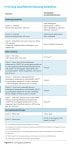
GER3620 figure 1 as per the below should be followed to a tee yes?

What do others do at peaking stations ?

What are the maintenance penalties for leaving the unit on extended barring apart from lube oil pump / motor and ratchet pump wear ?
IMG_3663.jpeg
 
@Turbines For Life,

Peaking turbine stations do ALL sorts of things to reduce electrical load (cost) during cooldown operation. The table/chart you posted is, of course, probably a little conservative since it was probably produced by the OEM. Still, not a bad thing to follow as a good means of maximizing turbine and parts life.

A peaking station I worked at for a while went to starting the machines (Frame 7EA) every morning for at least two hours (it started being four hours, but the plant wasn't getting requested to run very often in the beginning, so to reduce electrical costs it was reduced to two hours per day). This way the oil system was kept "warm" and the machine could be started with relatively little vibration during starting and acceleration. (Management was concerned that the machine could not be started if it hadn't been on cooldown for some period every 24 hours; OEM recommendation was four hours, but, again, that was reduced to two hours.)

Ownership and management have to use their experience and knowledge and network and OEM recommendations to try to balance the risk of not making a call or having issues during starting/loading. Especially with DLN-I combustion systems in cold winter environs.

Have you tried joining and consulting the Frame 6 User's Group (sorry I don't have the URL at this writing)? You could probably find just about any justification for your sites operating procedures there--the problem will be picking one after reading about so many different sites/management/ownership do....
 
Top