GAS TUBINE FRAME-V Vibration sensor differential alarm

M

Thread Starter

MATRIX

We have Gas turbine Frame-V with MARK-Vie control system and turbine is in running condition.

One alarm is appearing frequently" Vibration differential high" on its HMI.

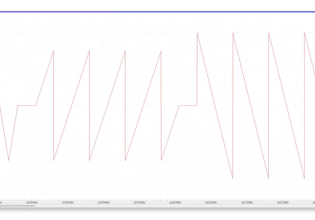
We checked all vibration parameters and found its exciter compartment vibration 39V-5A was shoot up to 15 mm/Sec. We have dual vibration sensor on each compartment and trip provided 2oo2 in logic. Its second vibration sensor value is normal and 4.2 mm/sec.
We have doubt on 39V-5A sensor. Please guide me that
can be plan to replace vibration sensor online (in GT running condition). Guide us method.

When we removed sensor from location then what value to be show on HMI. It will be zero or high value. Guide us.

Can we bypass turbine trip on exciter compartment vibration individually from MARK-Vie online? Guide us method.
 
MATRIX,

You are working with a GE-design Frame <b>5</b> heavy duty gas turbine equipped with a Mark VIe turbine control system. (The Roman numerals are used for the control system version designation, not the Frame size designation.)

Have you used the 'Alarm Lock' function to prevent nuisance toggling of the alarm? (Select the alarm by clicking on the alarm in the Alarm Window and then clicking on 'Alarm Lock' at the top of the Alarm Window. This will effectively disable the toggling of the alarm, and is meant to be used prevent disturbing operators from having to continually deal with nuisance alarms (heaven forbid the operators be bothered with alarms) until such time as the technicians can repair or replace the faulty sensor (or resolve the alarm condition). When the condition has been successfully resolved/corrected, click on the alarm again and then click on 'Alarm Unlock'.

No; the trip is not blocked when an alarm is locked. The only thing 'Alarm Lock' does is prevent toggling of the alarm, prevent logging of the toggling of the alarm to the printer and the alarm log/alarm queue. The time and date the alarm was locked IS logged to the alarm printer/queue (as is the time/date the alarm was unlocked).

As for replacing the sensor on-line, well, that's kind of what redundant sensors were installed for--when access is available and safe. You can disconnect the cable from the sensor, and the signal from that sensor will likely go to zero and another alarm, indicating a failure of the sensor (because the circuit has been opened by disconnecting the cable) will be annunciated. You still have the protection of the second sensor, so tell the technician replacing the failed sensor not to strike the remaining sensor (which shouldn't be too difficult in this case). Replace the failed sensor, and re-connect the cable. All should be well. Then unlock the alarm as above.

I would NOT recommend trying to block any vibration trip, ever. Most of the GE vibration algorithms will activate a single trip output on any group (turbine, load gear, generator or driven device) so if you block the trip any other high-high vibration condition will be blocked from tripping the turbine--and that's hard to justify to the plant manager and the insurance company after the fact, when hindsight is always perfect.

Redundant sensors are designed to be operated in the event one sensor fails. You might even just find that the retaining screws of the suspect sensor are loose and by tightening them the intermittent signal will go away.

Of course, you may find that the cable is bad, or the shield grounds were not terminated properly resulting in induced electrical noise affecting the signal. When something like this occurs on a running turbine, the first question to be asked is: What changed prior to the start of this problem? Was there a recent maintenance outage were work was performed in the vicinity of the generator exciter bearing vibrations sensors? Were they disconnected/re-connected during the outage? Or, did the unit recently experience a trip from load? The answer to the question may be very helpful in understanding the cause as well as in determining the solution.

So, if the unit is going to be shut down relatively soon and the sensor can be replaced, I would recommend just locking out the offending alarm, having the operators closely monitor the vibration on that bearing and not rely simply on the Mark VIe to protect the turbine, but rather be proactive if vibration increases on the good sensor (I know, that's asking a LOT of most gas turbine operators, but that's what they get paid the big bucks for, though most think they get paid the big bucks just to silence alarms and tell the maintenance/technicians to do something to stop the alarm--and that's just not true).

The one problem here is that most GE HMIs with the 'Alarm Lock' function ship without that function being tested and made functional.... It's a shame, but it's the truth. So, you just might find after reading this whole reply and trying to lock out the alarm that the function doesn't work--which would be typical of most GE HMIs these days. Even the GE/packager TAs don't understand the use and usefulness of this function and so completely neglect to test it to ensure it works properly.

Please write back to let us know what you find and how you fare--both with locking out the alarm, and resolving the sensor problem.
 
V
Thanks for response.

Our management decided to bypass particular digital output L39VT_11 or freeze BB11 (39V_5A) analogue TILL PROBE REPLACEMENT and normalized after job done. So please guide us for-

1. Can possible vibration analogue value freeze till vibration probe replacement. What is procedure for freeze vibration value from block.

2. can bypass L39VT_11 from vibration block till probe replacement. Procedure of bypass from block.
Possibility of TURBINE TRIP during probe replacement after bypass L39VT_11.

PLEASE GUIDE US.
 
vimal gupta,

You are most welcome.

<b>Usually,</b> most Speedtronic turbine control systems are configured <b>NOT</b> to trip on a single vibration sensor reading high-high, especially if there are redundant sensors on bearings. And, that is <b>IF the vibration block masks (configuration parameters) are configured correctly).</b>

Usually, sensors are grouped (turbine group; load/reduction gear group; generator group; etc.). And if there are redundant sensors in a group then it takes more than one sensor (usually two) in a group indicating high-high to trip.

You should be able to look at the vibration block 'Help' screen for more information about the block and how it can be configured. You should also refer to the Control Specification document, Sect. 09, for information on how the vibration block is configured for your site. Sometimes, there is useful, helpful information in the descriptions in the Control Specification.

If you want to "freeze" a value, I warn you: Many sites have done this, and because people unfamiliar with "forcing" (as GE calls it in ToolboxST) actually get very nervous and click twice (unintentionally--but nerves can be a real problem!) and end up tripping the turbine when trying to block a trip by forcing a signal to remain at "0". It's not for the faint of heart.

It would be necessary to look at the application code using ToolboxST to be certain how the individual sensors are assigned to particular inputs/outputs of the block to be able so say whether or not forcing L39VT11 is the proper signal to force or not. Seems okay, but assignments can be--and are sometimes--made differently, so beware.

I wish I could be more help, but the instructions for checking parameters and assignments and then forcing a value would take too long to write and communicate back-and-forth via this forum--and there's always still a possibility the turbine can be tripped by a shaky mouse finger, even with perfect instructions.

There is another recent thread about a site that tried to force the analog input from a vibration sensor to a typical running value with the turbine running and then when they disconnected a wire of the circuit the turbine tripped anyway.... There are no guarantees in the Speedtronic world. None.

Please write back to let us know how you fare.
 
I have some near issue. In our Frame-6 GE GT, We got intermittent high seismic vibration spikes for bearing # 2. it is coming randomly. we noticed some traces of oil in the termination junction box of this sensor. this termination junction box also contain another probes termination and bearing temperature sensors so we expect this oil traces coming through the cables of temp sensors from the bearing. but I know oil is not conductive. Can lube oil traces in the termination box cause problem like this?
 
No, only one BB5. I am sure it is false, but I need to know the effect of lube oil accumulation in the Junction box of the seismic Vibration wiring? I know oil is not conductive so it should not affect reading and cause problem?
 
Actually, oil combined with dirt and dust is conductive and has been known to cause grounds.

More than likely, though, the problem is with the cable between the pick-up and the junction box--or with the way the shield drain wire is grounded. A lot of those cables had a very ... poor ... design for insulating the shield drain wire from the conductors. And some were much longer than required for the application, so when the cables were cut (most with braided stainless steel sheaths--making cutting difficult and time-consuming--something which is ALWAYS in short supply at power plants) the insulation of the conductors was easily damaged and came in contact with the shield and drain wire.

Also, because of the extreme heat in the load tunnel, the insulation quite often gets damaged.

But, under some conditions, oil can lead to grounds--not common, and <b><i>especially bad</b></i> when combined with carbon dust from generator brushes. Usually the ground impedance gradually decreases over time when moisture (water or oil combined with dust/dirt) is present and makes contact between the conductors/terminals and ground.

It may also be as simple as a poor connection at the cable connector of the sensor, or even loose mounting bolts (I know; this NEVER happens--but it does, and all too frequently (it's that power plant time thing (never enough time to do it right the first time, but ALWAYS enough time to do it again, or even again, or even a third time in some cases). Of course, it's hot and difficult to access the bearing housing in the load tunnel, but it's always best to check the simplest things first.

Hope this helps!
 
Top