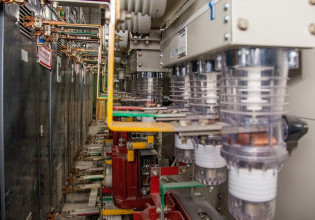
GE frame 6B SRV Location

Hi,
I am currently involved in a site modification project where space constraints prevent the installation of the SRV adjacent to the GCVs. The GCV is located within 20 feet of the gas turbine, and there is insufficient space for the SRV in this vicinity. As a result, we need to relocate the SRV to another location.

My concern is whether moving the SRV further away from the GCV (e.g., 50 feet) could potentially impact the turbine's operation. If such a distance could cause issues, I would like to know if there is an optimal distance where we can relocate the SRV without affecting the turbine's performance.

Thanks in advance
 
@Syed2024,

So, the basic design philosophy for the gas valves (SRV, GCV, GTC, GSV, or the Independent Gas Valve arrangement) is that they should be as close to the gas fuel manifolds in the turbine compartment as possible.

The main purpose of the SRV (Stop-Ratio Valve) is to shut off the flow of fuel to the turbine--either during a normal fired shut-down or to protect the machine when a trip condition has been detected. Any fuel trapped between the gas valves (SRV, GCVs) and the fuel nozzles must still flow into the machine after the SRV closes. And the volume of fuel which has to dissipate (flow into the fuel nozzles and combustors) is directly proportional to the distance from the SRV to the fuel nozzles. (GCVs ARE NOT positive shut-off valves; they are only control valves, which have an allowable leakage flow-rate through them even when fully closed.) Increasing that distance between the SRV and the fuel nozzles increases the volume of fuel between the SRV and the fuel nozzles, which means more fuel will flow into the machine when the SRV is closed--especially during a trip from loaded operation---which means there will continue to be flame in the machine longer than there would be flame if the gas valves (SRV and GCVs) were as close to the fuel manifold (and fuel nozzles) as possible. If the generator breaker were to trip "early" during loaded operation (before the gas valves (SRV and GCVs) closed that fuel continue to flow into the machine, probably a very large amount of fuel, which would cause the machine to accelerate very quickly (with a load on the generator) and possibly exceed the Maximum Search Speed rating of the machine (usually 113% or rated speed). This HAS happened, and while it's highly unusual, it has happened and there has been serious mechanical damage to the machine. Yes--the turbine control system would sense an overspeed at 110% and again at approximately 112%--but the SRV is already closed and the fuel between the gas valves (SRV and GCVs) is still flowing into the machine as the pressure drops. But, there is still flame.

Remember, it takes only about 20% of rated fuel flow to maintain FSNL (Full Speed-No Load). And it takes about 70-75% of rated fuel flow-rate to produce rated load at ISO conditions--that means a difference of 50% of rated fuel flow from zero load to rated load, which is 2.5 times more than the fuel flow-rate needed to maintain FSNL. Without a load on the generator if fuel is flowing into the machine it can accelerate VERY fast.

You can't rely on the IGVs closing and reducing air flow--because less air flow means the axial compressor isn't working as hard so it will accelerate even faster than if the IGVs were fully open or at minimum operating angle because the axial compressor is drawing less energy from the turbine section (and if the generator breaker is open while fuel is still flowing into the machine and there's zero load, well, that's not the best condition).

Again, the standard philosophy for locating the SRV and GCVs is to have them--particularly the SRV--as close to the machine and fuel manifolds and fuel nozzles as possible to protect the machine in the event of a trip from loaded operation. In my opinion, having the GCVs as much as 20 feet away from the turbine compartment (and the fuel manifolds and fuel nozzles) is unsafe--even if the SRV were located in the same location as the GCVs. Moving the SRV even further away from the GCVs--and the turbine compartment (and the fuel manifolds and fuel nozzles) is a seriously flawed plan.

If there were a problem and the machine was damaged with such placement/arrangement of the fuel control valves (the SRV and GCVs) the insurance company would probably have a major heart attack once the modification was discovered. Meaning, they might not want to pay for the damages which could be attributed to the increased distance between the SRV (and GCVs) from the turbine compartment (and fuel manifolds and fuel nozzles)....

There may be an Auxiliary Gas Fuel Stop Valve, usually located in the gas fuel supply piping immediately upstream of the SRV. If that is relocated, it, too, will be too far from the turbine compartment to provide any relief from the situations described above. Now, it's possible that an Auxiliary Gas Fuel Stop Valve downstream of the SRV and immediately upstream of the GCVs might do the "trick", but if the GCVs are 20 feet away from the turbine compartment (and fuel manifolds and fuel nozzles) that's still too far to be safe. And when the vent valve between the SRV and the GCVs opens (when the unit gets to a low speed (or zero speed) it will be venting a large amount of gas if the SRV is 30 feet or more from the GCVs.

Hope this helps.
 
@WTF?
I think newer machines have vent between SRV and GCV. Our new machines frame 5 have vent between srv and gcv and old machine doesn't have. If that is the case, would this still be a problem?
Maybe tuning the controller for valve will be the challenge when you increase distance between the valves generally, not sure how it's done by GE.
 
@munna,

Every gas-fueled GE-design heavy duty gas turbine I have ever worked had a solenoid-operated vent valve to vent the space between the SRV and GCV. It's generally a small valve, 3/8-inch or 1/2-inch, and its main purpose is to vent any trapped gas fuel between the SRV and GCV prior to ignition. Most of these vent valves didn't open until the machine reaches a certain speed level on shutdown/trip, some didn't open until the machine was at zero speed.

One of the beauties of GE heavy duty gas turbine control systems was (and hopefully still is) that tuning of fuel control valves and IGV actuators isn't necessary because the factory design people calculated the gains required for the specific electro-hydraulic servo valve, hydraulic pressure and actuator. As long as the regulator has the proper gains as calculated by the factory, there is no need for "tuning."

The issue with the original poster's proposed gas fuel valve locations is the volume of fuel between the GCVs and the turbine compartment gas fuel manifolds and fuel nozzles. 20 feet is a considerable distance (volume of fuel). And, again, GCVs are not safety shutoff rated valves; they're not meant to be gas fuel stop/shutoff valves--that's the job of the SRV. Which in this case would be 30 feet from the GCVs--which is, again, a lot of fuel. And if the standard 20VG-1 solenoid valve is used to vent the space/piping between the SRV and GCVs it's going to take a long time to vent that much fuel--and it's a LOT of fuel to be venting to atmosphere.

Some of the system designs for F-class fuel gas valves were clunky, some VERY clunky--because they wanted the GCVs, SRV and auxiliary gas fuel shut-off valve to be as close to the turbine compartment, fuel manifolds and fuel nozzles as possible. Those machines also have multiple manifolds and fuel nozzles--which represents a large volume of fuel which must flow into the machine even after the SRV and aux gas fuel shut-off valve close during a trip or shutdown.

Some of the gas fuel valve compartments used for B/E-class machines with DLN combustion systems were also extremely clunky, even dangerous to be in while the machine was running (no clear means of egress). But, again, it was thought to be necessary to keep the distance (volume of piping) between the gas valves and fuel manifolds and fuel nozzles to a minimum.

In my personal opinion what the original poster is proposing is dangerous. To your point, @munna, with that volume of piping (30 feet in length/distance) there very well could be issues with gas fuel flow-rate and stability because of resonance that might be very difficult to reduce/eliminate. This proposal should be analyzed by someone/company with experience with gas fuel systems. I would imagine GE wouldn't even touch it, but it's possible they might consider it for a fee--before saying, emphatically, it's unsafe and not recommended (though with some data and calculations to support their position(s)). I am just expressing my personal opinion after three decades of working on many GE-design heavy duty gas turbines, most of which burned gaseous fuels (natural gas or LNG; some burning propane or butane by-products of a nearby industrial plant (usually an oil refinery) and observing the changes which occurred when GE went from on-base gas fuel valves (the combined SRV/GCV arrangement) to off-base gas fuel valve "skids" and then, eventually, the independent gas valve skids used for all machines with DLN combustion systems (I, 2, 2.6, etc.), and the way they were designed, built and located per GE specifications--so, no experience with safety calculations and any empirical data which was used in the process. I would also venture there are some relevant technical regulations and/or standards (thinking of ANSI and API standards here) which might also be consulted for large, gas-fired rotating equipment and which many manufacturers, sites and insurance companies follow very closely to reduce possible litigation in the event of a serious incident (because, there are NO accidents--just failures to recognize safety considerations and practices and implement them properly).

That's all I got here.
 
@WTF? thank you for your input on my view. I don't have any more knowledge than you to oppose/discuss on this topic. And I have added more things to my knowledge from your comment.
 
Top