 Facebook
 Google
 GitHub
 Linkedin
Banner Engineering Adds Sound to Its SD50 Status Display for Plants
With 12 tones, a 77 dB alert, and multicolored status LEDs visible from 10 meters, Banner Engineering’s SD50 helps operators react to production events.
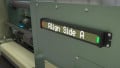
Banner Engineering’s SD50 Status Display with Audible adds customizable sound alerts to visual machine-status updates, helping operators respond quickly to production changes, maintenance needs, and equipment faults. The display offers 12 tones, a 77 dB audible alert, bright white text, and multicolored status LEDs visible from up to 10 meters. Wireless connectivity and support for Modbus RTU, Modbus TCP, and EtherNet/IP give the device flexibility for applications ranging from assembly guidance and pick-to-light sorting to conveyor monitoring and packaging operations. An IP65-rated housing supports use in demanding industrial environments.
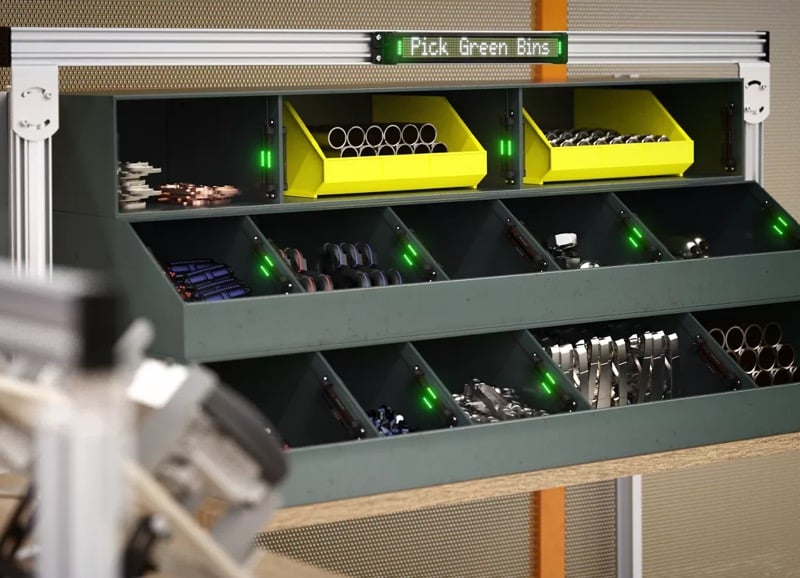
Customers can define their visual and audible interaction with three different melody types: whoop, jingle, strobe, siren, staccato, wobble, pulse, and continuous. Other custom tones are also available. Image used courtesy of Banner Engineering
Configuration and Versatility
The SD50 Status Display is versatile in mounting and communicates wirelessly using industrial radio frequencies (such as 900 MHz or 2.4 GHz); it can be placed anywhere in industrial facilities, on mobile machinery, remote walls, or other surfaces. It requires no costly or complex cabling or HMIs, and its placement flexibility expands application possibilities.
The device supports native Modbus RTU communication, a common serial protocol used in industrial operations. With this capability, the SD50 speaks directly to wireless gateways, controllers, and Modbus RTU masters.
The wireless SD50 display also connects to Modbus TCP or EtherNet/IP networks (common to Allen Bradley/Rockwell PLCs), offering connection to a compatible industrial gateway or master controller. Operators can use the SD50 as a digital input, IO-Link, or Modbus device. Possible applications include banner monitoring, sensing, and safety solutions. Customers can configure the device by defining text and calling it via discrete control or process data.
Banner Engineering experts can explain how customers can set up displays in measurement mode. Banner Engineering
The SD50 wireless status display also features an IP65-rated polycarbonate housing that protects against dust ingress and low-pressure water spray from any direction. The housing also includes silicone-encapsulated LEDs and condensation vents to maintain the device's integrity in harsh industrial settings.
Run modes allow the SD50 to translate machine outputs into direct, actionable information that can be displayed as status messages, step-by-step instructions, or other key instructions. Measurement modes display information based on machine outputs that might be linked to capacity (such as fill levels), temperature, and (but not limited to) parameters such as distance.
Rapid Status Information
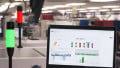
Sometimes, the busy, complex nature of industrial systems, particularly HMIs that capture vast amounts of data and provide visuals for machine status and other key operational nodes, makes it difficult to glean critical information quickly.
The SD50 Status Display with the latest Audible model provides a quick-glance bright white LED display, multicolored status LEDs visible from 10 meters away, and a 77 dB alert with 12 tones, alerting operators to required maintenance, critical tasks, and priority events so that they can respond quickly to resolve operational needs as they arise.
The SD50 can display takt time, machine status, assembly sequences, counts, brief task instructions, and more.
Application Areas
In high-speed production cells, automated fulfillment centers, and assembly lines, the SD50 status display commands instant operator attention by cutting through visual obstacles and line noise. It boosts efficiency at manual assembly stations by announcing step completions or next-part guidance and protects productivity on conveyor paths and in packaging cells by emitting loud, real-time alerts for equipment jams, scrap counts, low stock levels, or serious fault codes. The device can also support pick-to-light sorting by verifying correct selections or emitting sound to alert operators to picking errors.