Facebook
 Google
 GitHub
 Linkedin
Emerson Updates PAC Machine Edition Control Software
Emerson has released version 10.6 of its PAC Machine Edition integrated development environment. The update includes a new PLC simulator and other performance improvements to increase developer efficiency.
Emerson has unveiled version 10.6 of its PAC Machine Edition (PME) integrated development environment software. The software is designed to configure and administer different control systems. Some of these include devices like PACSystems, PLCs, and QuickPanel HMIs. PME 10.6 introduces several new features designed to enhance user experience, including options for increasing industrial efficiency and streamlining automation processes to increase profit margins.
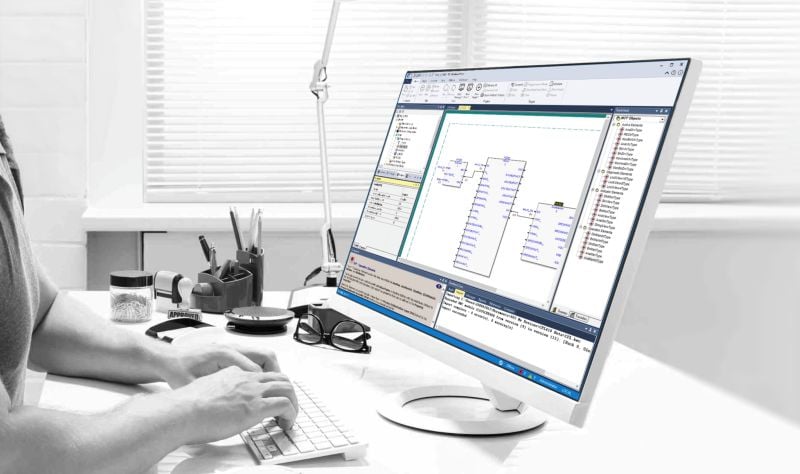
PME 10.6’s newly added PACSystems Simulator gives users the ability to create, test, and analyze automated systems before buying hardware. Image used courtesy of Emerson
PAC Machine Edition (PME) 10.6 Features
Emerson’s PME 10.6 includes several major updates that aim to redefine how engineers interact with automation software, including an added PLC simulator, enhanced data monitoring, optimized connectivity capabilities, and more efficient programming.
The new PACSystems Simulator is a built-in PLC emulator that enables users to develop and test control logic fully before purchasing hardware. This feature streamlines development and minimizes errors by enabling continuous testing throughout the project lifecycle.
PME 10.6 includes an enhanced data monitor that provides developers with improved visualization and analysis capabilities. By plotting data from both physical PLCs and simulated environments, users can more easily find and fix issues, see trends, and gain a deeper system understanding.
The system can now also help to create optimized connectivity through an upgraded OPC-UA PAC Server, which doubles tag capacity, accelerates startup speeds, and improves processing efficiency. Additionally, PROFINET enhancements can be used to create better configurations and diagnostics for intelligent field devices, like sensors and VFDs.
Furthermore, programming efficiency in PME 10.16 is improved through enhancements in User-Defined Types (UDTs), which ensure consistent data element descriptions across applications, reducing configuration time and improving consistency in large-scale projects.

With the newly added PACSystems Simulator, PME 10.16 users can test control hardware before purchasing it. Image used courtesy of Emerson
Enhancing Control Systems
As industrial automation systems grow increasingly complex, developers and engineers face challenges in testing, debugging, and optimizing control logic before deploying expensive hardware. Ensuring the efficiency and reliability of automation solutions often requires robust simulation tools, efficient data monitoring, and optimized communication between control devices and external systems. Many existing systems lack these advanced capabilities, leading to costly errors, prolonged development cycles, and inefficiencies in troubleshooting. Emerson’s PME 10.6 looks to directly address these challenges with improvements that promise to enhance productivity and system performance.
Emerson hopes that the newly added PACSystems Simulator will become a useful addition for engineers and system developers in the automation industry. The ability to test and validate control logic in a virtual environment before investing in hardware can greatly reduce development costs and time to market. This feature alone can refine the way engineers approach automation projects by eliminating some of the unnecessary trial and error phases.
Additionally, enhanced data monitoring can provide real-time data visualization and advanced monitoring configurations. These are useful for providing deeper insights into system performance, enabling quicker diagnosis of root causes and better predictive maintenance strategies after equipment becomes operational.