Facebook
 Google
 GitHub
 Linkedin
From Dust to Data: Fraunhofer’s Safety Overhaul
Fraunhofer unveils DressMAN360° and OPTIMA PRO to monitor and improve worker conditions using sensors, surveys, and real-time environmental data.
Investigators at the Fraunhofer Institute for Building Physics IBP have developed an innovative industrial workplace assessment concept that combines a multi-sensor measurement system of working environment conditions and worker survey data. Production companies can use these tools to construct new facilities or renovate existing structures to enhance worker well-being and performance.
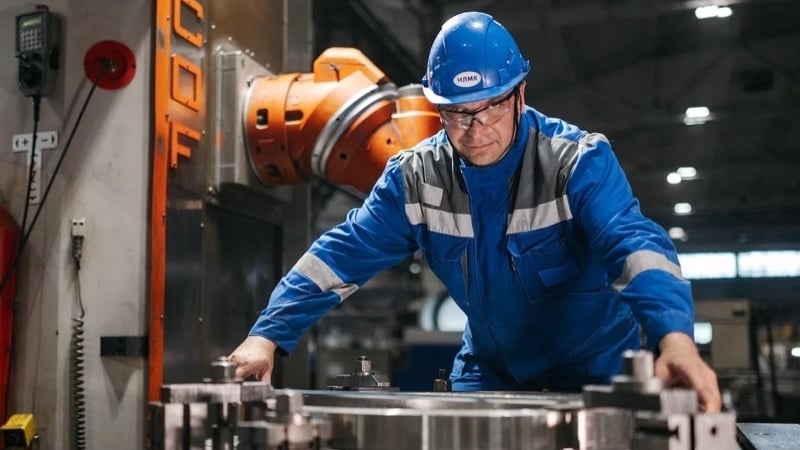
Manufacturing environments can expose workers to dust, debris, chronic noise, and vapours that can cause ill health in the long term. Image used courtesy of Pixabay
Ensuring Safe Working Conditions
The Occupational Health and Safety Act of 1970 was enacted in the United States to ensure employers implement essential procedures and practices to optimize the health and wellness of employees. The act requires employers to ensure that workers can conduct their duties in hazard-free environments, limiting or rather eliminating exposure to toxins, infectious agents, and intolerable noise levels. Employers must also ensure their employees are free from mechanical dangers and undue stress from excessive heat or cold.
In addition to typical physical risks, workers in manufacturing, oil and gas, and energy industries face potential injury from being struck by, entangled in, or trapped amid heavy gear, mobile equipment, and high-pressure zones common in manufacturing settings. Because of combustible gases, vapours, and crude oil, explosions and flames are a continual concern. Static electricity, hot surfaces, and welding processes are some of the ignition sources.
Overhead wiring and other electrical hazards can also be a potential hazard, such as elevated platforms (from which workers can fall), confined spaces (such as in pits and tanks with chemicals or noxious materials), and faulty equipment. Inhaling dust, fine particulates of wood and metal, and/or crystalline silica can cause respiratory issues such as silicosis, chest pain, chronic bronchitis, and more.
OPTIMA PRO
As part of the OPTIMA PRO (optimized performance in temperature, illumination, movement, acoustics, and air quality at production workplaces) initiative, Fraunhofer Institute researchers are investigating the conditions within production environments through the implementation of tools and surveys that paint a broader picture of day-to-day health risks and hazards. The project aims to enhance production workspace assessments to ensure workers' long-term health and well-being in hazardous industrial environments.
The OPTIMA PRO concept will involve the collection of employee surveys concerning subjective well-being under varying conditions, which will be analyzed alongside objective data to build a comprehensive picture of workspace conditions.
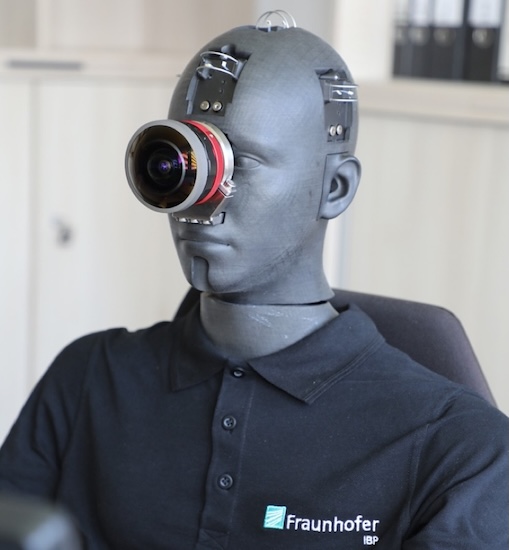
In the future, DressMAN360° will be enhanced to track particulates and contaminants, making it a potent tool for improving energy usage, worker efficiency, and health and well-being in industrial settings. Image used courtesy of Fraunhofer IBP
DressMAN
Researchers at Fraunhofer IBP are developing the sophisticated DressMAN360° to replace their thermal comfort measuring system, DressMAN. The goal of this creative revision, which is a component of the Baden-Württemberg-funded "Work-BW" project, is to transform DressMAN from a niche research tool into a standard industrial workspace comfort assessment tool.
DressMAN360°, under the direction of Senior Scientist Michael Visser, expands upon the initial concept of merging sensor information with human vision. In contrast to the original DressMAN, which employed roughly 30 sensors, the new DressMAN360° shall manifest as a "multimodal" system incorporating cameras and microphones to record all important environmental variables in real time. Direct user input obtained through surveys will be added to this sensor data, providing a comprehensive view of working circumstances and perceptions.
A New Workplace Assessment Methodology
The DressMAN360° and OPTIMA PRO concept can illuminate areas for targeted health and safety workspace management. For instance, workers might perceive temperatures as higher in the presence of warm lighting, and other sounds, other than the thrum of ventilation systems, that might otherwise be overlooked, can be investigated when turning the ventilation systems off. Limiting noise from multiple aspects, ensuring comfortable working temperatures, and chemical-free air are just some aspects that can be tackled when constructing new production environments.
Enhancing workspace safety and comfort not only puts people first but also means improved productivity, attracting job applicants to physically challenging roles, and improving their retention.