 Facebook
 Google
 GitHub
 Linkedin

Need your inputs regarding the following issue:
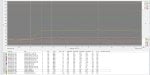
The steam turbine (ST) remained out of service for approximately two months during the outage, during which the ST was kept preserved. After the outage, during turning gear operation, following a rest period of approximately 5, 10, or even 24 hours, the bearing vibration initially remains normal for around 4–5 hours, but then suddenly increases. The issue is predominantly observed at Bearing No. 1, where the normal vibration is approximately 13–14 µm, while during the abnormal condition the X-direction vibration rises to around 40–50 µm and the Y-direction vibration reaches approximately 90–100 µm. Bearing No. 2 experiences only a minor increase of approximately 4–6 µm, whereas Bearing No. 3 remains comparatively normal. The Y-direction vibration is significantly higher than the X-direction vibration. No abnormal mechanical noise has been observed during the event. The Bently Nevada proximity probes and associated measurement loops have been checked and are considered healthy. There is no eccentricity probe installed on the turbine. Bearing No. 1 is an integrated tilting-pad bearing, and its pads and contact areas were inspected using Prussian blue; the contact condition was found satisfactory. The actual shaft lift was also measured using a dial gauge and found to be normal. Other lubrication-related parameters, including lube oil temperature and pressure, as well as the jacking oil pumps and associated checks, have been reported as normal. The jacking oil lines were checked and purged, and their flow was considered satisfactory. The lifting oil flow was adjusted, but this did not improve the vibration condition. The flow regulator (Rethrox) installed in the individual Bearing No. 1 jacking oil branch was also replaced with a new unit; however, the problem persisted.
Regarding the jacking oil system, two jacking oil pumps are available and operated one at a time, with a common pressure relief valve (PRV) installed at the jacking oil discharge header. Both pumps produce the same abnormal behavior, making a fault specific to one pump less likely. Each bearing has its own individual Rethrox flow regulator, while the common jacking oil supply header pressure remains stable, including during the abnormal vibration condition. A pressure gauge was installed downstream of the Bearing No. 1 Rethrox flow regulator, close to the bearing inlet. When vibration is normal, the pressure at this point is approximately 100 bar. However, when the vibration increases, the pressure at the Bearing No. 1 inlet starts fluctuating rapidly by approximately 20–30 bar, while the common supply header pressure remains stable and the other bearing branches do not show a comparable fluctuation. This observation suggests that the pressure disturbance is localized to the Bearing No. 1 branch or its interaction with the bearing, rather than being a straightforward common-header pressure problem. Another important observation is that once the vibration rises to the abnormal level, it remains high even after the turning gear motor is stopped, while the jacking oil pumps continue running. A time-dependent thermal, mechanical, or hydraulic interaction may be involved, but the root cause has not yet been established.
Attachment: Bearings vibration trends
The steam turbine (ST) remained out of service for approximately two months during the outage, during which the ST was kept preserved. After the outage, during turning gear operation, following a rest period of approximately 5, 10, or even 24 hours, the bearing vibration initially remains normal for around 4–5 hours, but then suddenly increases. The issue is predominantly observed at Bearing No. 1, where the normal vibration is approximately 13–14 µm, while during the abnormal condition the X-direction vibration rises to around 40–50 µm and the Y-direction vibration reaches approximately 90–100 µm. Bearing No. 2 experiences only a minor increase of approximately 4–6 µm, whereas Bearing No. 3 remains comparatively normal. The Y-direction vibration is significantly higher than the X-direction vibration. No abnormal mechanical noise has been observed during the event. The Bently Nevada proximity probes and associated measurement loops have been checked and are considered healthy. There is no eccentricity probe installed on the turbine. Bearing No. 1 is an integrated tilting-pad bearing, and its pads and contact areas were inspected using Prussian blue; the contact condition was found satisfactory. The actual shaft lift was also measured using a dial gauge and found to be normal. Other lubrication-related parameters, including lube oil temperature and pressure, as well as the jacking oil pumps and associated checks, have been reported as normal. The jacking oil lines were checked and purged, and their flow was considered satisfactory. The lifting oil flow was adjusted, but this did not improve the vibration condition. The flow regulator (Rethrox) installed in the individual Bearing No. 1 jacking oil branch was also replaced with a new unit; however, the problem persisted.
Regarding the jacking oil system, two jacking oil pumps are available and operated one at a time, with a common pressure relief valve (PRV) installed at the jacking oil discharge header. Both pumps produce the same abnormal behavior, making a fault specific to one pump less likely. Each bearing has its own individual Rethrox flow regulator, while the common jacking oil supply header pressure remains stable, including during the abnormal vibration condition. A pressure gauge was installed downstream of the Bearing No. 1 Rethrox flow regulator, close to the bearing inlet. When vibration is normal, the pressure at this point is approximately 100 bar. However, when the vibration increases, the pressure at the Bearing No. 1 inlet starts fluctuating rapidly by approximately 20–30 bar, while the common supply header pressure remains stable and the other bearing branches do not show a comparable fluctuation. This observation suggests that the pressure disturbance is localized to the Bearing No. 1 branch or its interaction with the bearing, rather than being a straightforward common-header pressure problem. Another important observation is that once the vibration rises to the abnormal level, it remains high even after the turning gear motor is stopped, while the jacking oil pumps continue running. A time-dependent thermal, mechanical, or hydraulic interaction may be involved, but the root cause has not yet been established.
Attachment: Bearings vibration trends