Facebook
 Google
 GitHub
 Linkedin
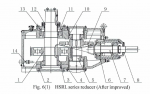
At our powerplant we are experiencing a high vibration issue at one of the cooling towers. We have 4 induced draft cooling fans. The civil structure is based on two towers with two fan stacks each. The issue is occurring at Fan B, which is adjacent to Fan A. The fan consists of 8 blades having total Dia of 8532mm and has a gearbox reducer having 106rev/min output with 13.86 Speed ratio, which is being driven by 250kW motor via flexible coupling having fiber glass spool piece. The gearbox installed is a two stage, three shaft gear box, with Spiral Bevel gear on input shaft and helical cylindrical gear on output shaft. The intermediate shaft and Output shaft have angular roller contact bearings on top and bottom while the input shaft assembly also has back-to-back arrangement of angular roller contact bearings,
Please note that the gearbox currently installed was overhauled in-house and all bearings were replaced. Earlier, it had Chinese bearings with outer race having tight fit in the bearing housing. We replaced them with recommended SKF bearings, which had a slide fit in the housing.
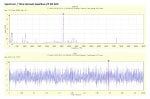
An external vibration analysis was conducted, and findings are also mentioned below along with attached spectrums obtained. The vibration probe currently installed in the gearbox is a triaxial probe (Model: KH-ZDT), which collects and transmits vibrations for 3 Axes X,Y,Z and the oil temperature.
Vibration (X, Y, Z): Alarm:5 mm/s, Trip: 6.3 mm/s
History of Events and Corresponding actions
12/09/2024
At 1756 hrs, CT Fan tripped due to Z-Vibration high @6.0 mm/sec. The vibration at Z jumped to 8.8mm/sec before tripping.
A physical inspection of the fan was performed, and the fan appeared healthy, so it was decided to replace the vibration probe to rule out any issues with the probe.
No spike in motor amperes was observed during the trip event.
13/09/2024
Taken in service after faulty Vibration probe was replaced but tripped on Z-Vibration . Max Vibration 8.8mm/sec.
14/09/2024
Probe terminals were retightened, and the fan was started but tripped again on high Vibration. Motor was decoupled and solo run test was conducted, Normal Motor vibrations and amperes were observed.
15/09/2024
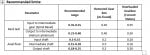
Through inspection window it was checked that some of the gears of intermediate shaft have mild cracks and erosion. Upon inspection, it was observed that all parameters were okay except middle shaft float. Middle shaft axial was found out to be 0.5 where as recommended range is 0.15 to 0.20.
24/09/2024
Spare overhauled gearbox was installed. Blade Angles, Blade height and Blade tip clearances were adjusted to nominal values.
25/09/2024
After taking overhauled gearbox in service, it tripped on high vibration >8.5mm/s.
30/09/2024
Fan hub was removed, and its gearbox underwent solo testing. During the solo test, vibration and temperature levels were observed to be normal.
01/10/2024
Fan hub was installed without fan blades for hub testing. During the test, both vibration and temperature levels were observed to be normal.
02/10/2024
After comprehensive checks, Including hub replacement, weight balancing of blades, Fan was taken in service and the maximum recorded vibration were X = 4.7 mm/s, Y = 3.9 mm/s, and Z = 4.7 mm/s. The fan continued in operation since this activity without any tripping.
09/10/2024
Vibration analysis was done. The gear mesh frequency of bevel gears is 18000 CPM. On Cell B the vertical vibration spectrum shows peaks at 1GMF and 2GMF (36000 CPM). The axial vibration show peaks at 2GMF (36000 CPM) and 3GMF (54000 CPM). This might indicate gear misalignment. In helical/spiral gears axial reading is considered more significant. There were no significant peaks on output shaft and vibration was overall low there as well.
23/02/2025
Before Winter plan parameters at DCS were X=4.337, Y= 2.151, Z= 2.473
24/02/2025
During winter plan, Nozzle deblocking was done
02/03/2025
Taken in service and Vibration X and Z was noted to be 4.7-4.6 mm/s
12/03/2025
Tripped on high Z vibrations with max values of X=4.851, Y= 2.49, Z=6.458. The X and Y vibrations didn’t show any upwards trend. Internal inspection of the gearbox revealed no damage to the internals. Middle shaft float was found on the higher side at around 0.35mm, the recommended range for which is 0.15mm-0.20mm. Pinion float was found to be 0.28mm for which the recommended range is 0.10mm to 0.15mm.
27/03/2025
The middle shaft axial float was adjusted from 0.35mm to 0.18mm. The pinion shaft float was not adjusted since our gearboxes have a history of running satisfactorily without any vibrations with pinion floats as high as 1.8mm. CT Fan B was taken in service after this adjustment. The maximum vibration readings during the shift were X: 4.1 mm/s, Y: 2.4 mm/s, Z: 3.5 mm/s, and the average readings were X: 3.9 mm/s, Y: 2.1 mm/s, Z: 3.1 mm/s.
30/03/2025
At 10:18 hrs, Fan B tripped on high vibration. Maximum Z-Vibration recorded at 21.6 mm/sec. X and Y vibrations didn’t peak during this event.
After 2 hours, Fab B was restarted and its vibrations were peaking at X:4.6 mm/s, Y:2.4 and Z:3.9 mm/s. After 2 minutes, it tripped on high Z vibrations peaking at 22 mm/s. X and Y vibrations didn’t peak in this incident.
What we cannot figure out is that regardless of all the checks and remedial steps, the problem still persists. Even if gear mis alignment exists how can we rectify this issue, with in the gear box. what might be the reason fir sudden spikes. and what would it become stable after we only conducted fan weight balancing even if gear misalignment existed.
Please note that the gearbox currently installed was overhauled in-house and all bearings were replaced. Earlier, it had Chinese bearings with outer race having tight fit in the bearing housing. We replaced them with recommended SKF bearings, which had a slide fit in the housing.
An external vibration analysis was conducted, and findings are also mentioned below along with attached spectrums obtained. The vibration probe currently installed in the gearbox is a triaxial probe (Model: KH-ZDT), which collects and transmits vibrations for 3 Axes X,Y,Z and the oil temperature.
Vibration (X, Y, Z): Alarm:5 mm/s, Trip: 6.3 mm/s
History of Events and Corresponding actions
12/09/2024
At 1756 hrs, CT Fan tripped due to Z-Vibration high @6.0 mm/sec. The vibration at Z jumped to 8.8mm/sec before tripping.
A physical inspection of the fan was performed, and the fan appeared healthy, so it was decided to replace the vibration probe to rule out any issues with the probe.
No spike in motor amperes was observed during the trip event.
13/09/2024
Taken in service after faulty Vibration probe was replaced but tripped on Z-Vibration . Max Vibration 8.8mm/sec.
14/09/2024
Probe terminals were retightened, and the fan was started but tripped again on high Vibration. Motor was decoupled and solo run test was conducted, Normal Motor vibrations and amperes were observed.
15/09/2024
Through inspection window it was checked that some of the gears of intermediate shaft have mild cracks and erosion. Upon inspection, it was observed that all parameters were okay except middle shaft float. Middle shaft axial was found out to be 0.5 where as recommended range is 0.15 to 0.20.
24/09/2024
Spare overhauled gearbox was installed. Blade Angles, Blade height and Blade tip clearances were adjusted to nominal values.
25/09/2024
After taking overhauled gearbox in service, it tripped on high vibration >8.5mm/s.
30/09/2024
Fan hub was removed, and its gearbox underwent solo testing. During the solo test, vibration and temperature levels were observed to be normal.
01/10/2024
Fan hub was installed without fan blades for hub testing. During the test, both vibration and temperature levels were observed to be normal.
02/10/2024
After comprehensive checks, Including hub replacement, weight balancing of blades, Fan was taken in service and the maximum recorded vibration were X = 4.7 mm/s, Y = 3.9 mm/s, and Z = 4.7 mm/s. The fan continued in operation since this activity without any tripping.
09/10/2024
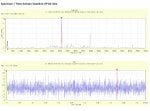
Vibration analysis was done. The gear mesh frequency of bevel gears is 18000 CPM. On Cell B the vertical vibration spectrum shows peaks at 1GMF and 2GMF (36000 CPM). The axial vibration show peaks at 2GMF (36000 CPM) and 3GMF (54000 CPM). This might indicate gear misalignment. In helical/spiral gears axial reading is considered more significant. There were no significant peaks on output shaft and vibration was overall low there as well.
23/02/2025
Before Winter plan parameters at DCS were X=4.337, Y= 2.151, Z= 2.473
24/02/2025
During winter plan, Nozzle deblocking was done
02/03/2025
Taken in service and Vibration X and Z was noted to be 4.7-4.6 mm/s
12/03/2025
Tripped on high Z vibrations with max values of X=4.851, Y= 2.49, Z=6.458. The X and Y vibrations didn’t show any upwards trend. Internal inspection of the gearbox revealed no damage to the internals. Middle shaft float was found on the higher side at around 0.35mm, the recommended range for which is 0.15mm-0.20mm. Pinion float was found to be 0.28mm for which the recommended range is 0.10mm to 0.15mm.
27/03/2025
The middle shaft axial float was adjusted from 0.35mm to 0.18mm. The pinion shaft float was not adjusted since our gearboxes have a history of running satisfactorily without any vibrations with pinion floats as high as 1.8mm. CT Fan B was taken in service after this adjustment. The maximum vibration readings during the shift were X: 4.1 mm/s, Y: 2.4 mm/s, Z: 3.5 mm/s, and the average readings were X: 3.9 mm/s, Y: 2.1 mm/s, Z: 3.1 mm/s.
30/03/2025
At 10:18 hrs, Fan B tripped on high vibration. Maximum Z-Vibration recorded at 21.6 mm/sec. X and Y vibrations didn’t peak during this event.
After 2 hours, Fab B was restarted and its vibrations were peaking at X:4.6 mm/s, Y:2.4 and Z:3.9 mm/s. After 2 minutes, it tripped on high Z vibrations peaking at 22 mm/s. X and Y vibrations didn’t peak in this incident.
What we cannot figure out is that regardless of all the checks and remedial steps, the problem still persists. Even if gear mis alignment exists how can we rectify this issue, with in the gear box. what might be the reason fir sudden spikes. and what would it become stable after we only conducted fan weight balancing even if gear misalignment existed.