Dynamic Vapour Compensation for GWR

In one of our applications to measure hydrocarbon level in a high pressure gas injection scrubber we have used EMERSON 5301 GWR probe. The instrument is not working properly and giving unreliable/erratic readings. Emerson is suggesting now to use different probe with "Dynamic Vapour Compensation" technique. This technique is generally used for high pressure steam drum level measurement.

In our application temperature is not high i.e. 40 deg. C. Lower fluid density 890 kg/m3. Upper fluid (vapour) density 283 kg/m3. If anybody has experience using GWR successfully in such high pressure level measurement application then please share the Dos and Don'ts of such applications to achieve a reliable measurement.
 
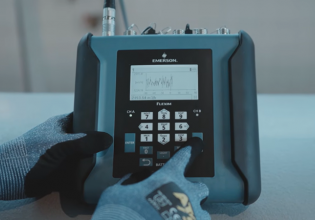
Use Emerson's Radar Configuration Tool (Radar Master) to view the live echo curve and identify if the issue is:
No echo (vapour interference)
Multiple echoes (internal reflections)
Weak echo (low dielectric or incorrect probe type)
 
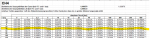
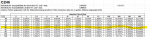
Best GWRs manufacturers offer this feature that compensate the slower speed of propagation of the microwaves passing through a gas phase at high pressure and temperature. You don't mention your process pressure and the gas composition but as an example below the deviations at different P and T of methane, negligible up to 40 bar (1.5%) and of ethane, more affected, 1.5% already at 25 bar. Then, if you reach such pressures a gas phase compensation could be helpful
1751006813003.png1751006977667.png
 
Dear All,
Thanks a lot for your response. As I have already mentioned Emerson was already onboard. They have done required testing and that's why suggesting a different probe for the gas phase compensation. In our case gas pressure is 167 bar. This is hydrocarbon gas, mainly CH4.
But my question was slightly different. I was looking for the user experience in this matter. If anybody has experienced this issue and able to resolve finally using dynamic vapour compensation techniques, I was looking for their insights. The other thing surprises me is that we have similar applications in other offshore platforms. But there operation team is not reporting similar issue. It seems in those cases conventional single rod GWR probes (installed in 2" bridles)are working well. How that is possible?
 
Dear,
if you're having a constant inaccuracy when pressurized, with level reading lower than actual, then gas phase compensation will help. But if you're having erratic readings, jumps to 0% or 100% or alarm echo lost, the root cause must be different. Recording some echo curves with software Tank Master while issues are occurring and sending them to Emerson's support will help to identify the correct solution
Few questions:
installation in external bridal or inside the scrubber?
Rod or coaxial probe?
Any build up on the probe or foam or emulsion on product surface possible?
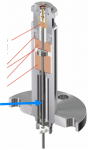
Reading stucks at 100%? Possible condensation or build up in the hollow space above the flange?
1751263633084.png
 
Top