Voltage and reactive powercontrol

I know the subject was many times discussed here, but pls will experts help me and answer my questions:
Assume we are using diesel generator set, in a power plant in which we have say three generator sets each [email protected] pf, 11KV,50 hz.
The three generator sets are parallel and connected to grid, one of them is in frequency control while the other two are in droop, my question if we are using AVR for excitation control which is the suitable mode? :
Voltage control mode or var/pf?
Also will acabability curve will be included within the AVR to help it choosing the suitable operation points?
Also I noticed operators are forced many times to correct pf or voltage deviations, while they don't do corrections many times or it can be no need for them to correct for frequency!
Is this due to system frequency control is more accurate than voltage or excitation control?
 
@Wilimohi,

You wrote: "The three generator sets are parallel and connected to grid, one of them is in frequency control while the other two are in droop, ... "

I have a problem with this description. IF the machines are connected to is a sizable grid with many other generator sets and their prime movers synchronized to the grid AND the machine you say is operating in "frequency control"--meaning that the diesel's governor was operating in Isochronous Speed Control mode--that would mean this one machine's load is changing automatically as the load on the grid is changing in order to maintain the grid frequency. The power plant operators would have no control of the load on that machine--because "frequency control" (Isochronous Speed Control governor mode) ONLY wants to keep the frequency of the grid it is synchronized to at rate (50 Hz) and adjusts its load accordingly. The ONLY thing the operators can do to a machine who's governor is operating in "frequency control" mode (Isochronous Speed Control governor mode) is change the frequency--they can't change the load of the machine (as "frequency control" implies!).

What I think might be happening is that one of the three gen-sets at this power plant is designated to be the "frequency control" machine in the event that the power plant gets separated from the grid. This would typically be done using what's called a PMS (Power Management System) that will send commands to one (sometimes more) machine(s) to control load and frequency when separated from a grid, say at a plant that is supplying power to a large factory or refinery or cement plant, etc. BUT, when the power plant is synchronized to the grid that machine runs in Droop Speed Control mode and is switched to receiving commands from the PMS to maintain frequency when the power plant is separated from the grid.

A PMS can do a LOT of things, or just a couple. It can handle load-shedding, VAr and/or PF control, it can control one or more machines when its doing this.

But a machine with its prime mover governor operating in Isochronous Speed Control mode ("frequency control") should not be synchronized to a grid with many other generators and their prime movers. Grid frequency is rarely stable at a constant value, and theory says there is only one machine which operates in Isochronous Speed Control mode ("frequency control") on any grid of any size. Two or more machines can be used to stabilize and control frequency on a grid, but they are not generally operating in Isochronous Speed Control governor mode, because they WILL "fight" each other for control of the system frequency. And it can be a very, very ugly fight, and lead to brown-outs and black-outs. So, it's never done. Ever.

There are schemes called "Isochronous Load-Sharing Mode" or "Isochronous Standby Mode" but they are really just Droop Speed Control machines with a faster response rate--or they get signals from a remote system to change load(s) to maintain system frequency.

Now, to the VAr versus PF (Power Factor) and voltage control issues (VAr vs. PF, and voltage control--they are two separate, but related, issues). The explanation/descriptions below refer specifically to synchronous generators.

VArs (Volt-Amperes Reactive) refers to the amount of reactive current flowing in some part of a circuit--in this example we are referring to the amount of reactive current flowing through a generator's stator windings. PF (Power Factor) refers to the relationship between real power (watts; kW; MW) and reactive "power" (VArs; kVArs; MVArs) flowing in a generator's stator windings. In effect, it is a way to measure the efficiency of the generator--how many watts/kW/MW the generator is producing-- of the total amount of energy being produced by the generator (watts/kW/MW and VArs/kVArs/MVARs). A power factor of 1.0 (also called "unity power factor) means the total amount of energy the generator is producing is real power--watts/kW/MW; and zero reactive power is being produced (or consumed). 1.0 is equal to 100%--when a generator's power factor is 1.0, 100% of the energy it is producing is real power (watts/kW/MW). When a generator's power factor is 0.89, then 89% of the energy the generator is producing is real power, and 11% of the enegy the generator is producing is reactive power (VArs; kVArs; MVARs).

[Reactive current is often said to be "imaginary" current--because it doesn't do any real work, not like watts/kW/MW do. So, technically, reactive current shouldn't be referred to as reactive power--again, because it doesn't do any real work. So, be careful with terms and names. While VArs don't do any real work they are still often referred to a reactive power--but SOME people will try to confuse everyone by saying VArs aren't power. In my personal view of things, VArs DO perform a very important function on an AC power system (I'm referring to the VArs produced (or consumed) by a synchronous generator that allows real power (watts/kW/MW) to be more efficiently transmitted and distributed on an AC power grid/system. It's just that VArs don't produce any "useful" work--like horsepower, for example. So, again, technically it is incorrect to refer to VArs as reactive power, but, in reality it's done all the time at power plants all over the world.]

Now, voltage control--specifically generator terminal voltage control. When the amount of excitation being applied to the generator rotor from the "AVR" (Automatic Voltage Regulator) is exactly the amount required to make the generator terminal voltage exactly equal to the grid/system voltage the generator is synchronized to then the generator will be producing maximum watts/kW/Mw--at a power factor of 1.0. (We are talking about the voltage the generator "sees" at the generator breaker terminals, so if the grid voltage is 110 kV (for example), and there is a transformer between the generator terminal and the grid, and your generator operates nominally at 11 kV, then the input side of the the transformer is 11 kV and the output side of the transformer is 110 kV. The generator thinks it's synchronizing to 11 kV, but the transformer is converting that 11 kV to 110 kV to supply it to the grid. The generator doesn't know anything about the 110 kV.)

When the machine is synchronized to a grid if the excitation being applied to the generator rotor from the AVR is increased and nothing is done to the machine to change the load (real power--watts/kW/MW) being produced by the machine then reactive current will start flowing in the generator's stator windings. It is referred to as lagging reactive current in this case (and is often considered to be positive reactive current). The VAr indication will increase from zero, and the machine's power factor will decrease from 1.0--because the real power being produced by the machine as a portion of the total power (watts/kW/MW plus VArs/kVArs/MVARs) being produced by the machine has changed because the excitation changed. In effect, what is happening when the excitation is being increased to the machine is that the generator terminal voltage "increases"--and that is trying to increase the grid/system voltage (the 110 kV on the "high" side of the transformer). At some locations in the world, the local generator can have a large impact on the system voltage, while in other locations it will have a very small impact; the impact a local generator will/can have on grid system voltage is depending on many factors, so, again, it's not the same impact at every power plant synchronized to the grid.

If there are zero VArs/kVArs/MVARs flowing in a generator's stator windings when the machine is connected to the grid (the power factor will be 1.0!), and the amount of excitation being applied to the generator's rotor windings from the AVR is decreased, and nothing is done to the machine to change the load (real power--watts/kW/MW) being produced by the machine then reactive current (VArs/kVArs/MVArs) will start flowing in the generator's stator windings. The VAr indication will increase, but in the leading direction (often considered to be negative VArs/kVArs/MVArs), and the power factor will decrease from 1.0 in the leading direction.

So, this is ONE way the power factor and reactive current flow of a generator can be changed--by varying the amount of excitation being applied from the AVR to the generator's rotor windings. That can be done by an operator manually adjusting the amount of excitation being applied to the generator's rotor windings, OR it can happen when the grid system voltage is changing (and at some places in the world it can, and does, change often during the day). So, if the excitation system is not being operated in VAr or PF control and the grid voltage changes then the power factor of generators synchronized to the grid will change--as often as the grid voltage changes. (This means the amount of reactive current (VArs/kVArs/MVArs) flowing in the generator's stator windings also changes...!) If there is a large facility located nearby which switches large inductive loads (such as high horsepower electric induction motors, for example) on and off during the day/night, then that can have an effect on the power factors of generators operating at nearby power plants, too.

VAr control is a control method/scheme that looks at the VArs flowing in a generator's stator windings and compares that value to a VAr setpoint and automatically adjusts the excitation to keep the generator's VAr value equal to the VAr control setpoint value; no operator action required (except to set a desired VAr value and enable VAr control). This means that the power factor of machines operating in VAr control will vary as the machine load varies and/or the system grid voltage varies during the day. As was seen above, VArs and power factor are directly related, so this is normal and to be expected.

PF control is a control method/scheme that looks at the power factor of a generator and compares that value to a power factor setpoint and automatically adjusts the excitation to keep the generator's power factor value equal to the power factor control setpoint; no operator action required (except to set a desired power factor value and enable PF control). This means that the VAr value of machines operating in PF control will vary as the machine load varies and/or the system grid voltage changes during the day. Again, as was seen above, pf and VArs are directly related, so this is normal and to be expected.

I must mention that many grid/system operators/regulators are frowning on (disliking very much) the use of VAr- or PF control by power plants. In some situations it can negatively affect grid system voltage stability, which affects EVERYONE connected to or using power from the system/grid. Some grid/systems have forbid the use of VAr- and/or PF control entirely.

As for which (VAr- or PF control) is the "suitable mode" for your plant and configuration and grid situation, we don't have anywhere near enough knowledge to be able to answer that question with any meaningful response. I hope that given the information above and with knowledge of the configuration and intended operation of the power plant you are describing, you should be able to make your own decision about the most suitable mode of generator operation (generator terminal voltage control). If this is just a general question (and I hope it's not a school homework-related question...) then you should now have enough information to formulate an answer to suit what you believe is the most suitable mode to operate the machines is.

You may have doubts--but you really don't. What you may require is clarification--and we are happy to provide clarification. This subject is difficult, and I have attempted to describe it without a lot of maths and formulas and vectors and charts and graphs. I have attempted to describe it in real-world operating terms. Please--if you have doubts--please read and re-read, and then re-read this response and then ask for clarification about what you are having difficutly understanding. In real-world operating terms nothing in this thread is incorrect. It might not be 100% technically correct (using terms like armature reaction and torque angles and vectors and sines and cosines and tangents and calculus--but it very accurately describes what happens when an operator is sitting at a control board (HMI) and operating a power plant. Operators don't need to know about maths and formulae and vectors and calculus--they need to know what happens they increase excitation or energy flow-rate into the generator's prime mover. Or how to respond to a large change in VAr or power factor readings and, basically, how the two (VArs and power factor) are related and what happens to one when one is doing something to change the other (because--again, they are directly related).

These are good questions, but while this is not an impossible subject it is difficult--even with maths and forumlae and graphs and vectors. All of that is just a way of prediciting or proving what happens when an operator (or a control system) changes the excitation being applied to a generator rotor, or what happens when the system/grid voltage changes, or what happens when a control scheme/method changes the generator excitation or the energy flow-rate into a generator's prime mover.

Take this response in small chunks, and come back to it several times. It should begin to become clearer over time, until, finally one day you will look up and say to yourself, "Oh, yeah!" One of my favorite sayings is, "Learning is finding out what you already knew." When something suddenly becomes clear, it's natural to think, "Oh, yeah! I knew that!" because now it fits with what you already knew and clarifies things to make it understandable.

I'm not the best proof-reader of my writing, so there may be a mistake here or there--I hope not. If you find something, please let me know, though I only have about 24 hours to make a formal correction.
 
@Wilimohi,

You wrote: "The three generator sets are parallel and connected to grid, one of them is in frequency control while the other two are in droop, ... "

I have a problem with this description. IF the machines are connected to is a sizable grid with many other generator sets and their prime movers synchronized to the grid AND the machine you say is operating in "frequency control"--meaning that the diesel's governor was operating in Isochronous Speed Control mode--that would mean this one machine's load is changing automatically as the load on the grid is changing in order to maintain the grid frequency. The power plant operators would have no control of the load on that machine--because "frequency control" (Isochronous Speed Control governor mode) ONLY wants to keep the frequency of the grid it is synchronized to at rate (50 Hz) and adjusts its load accordingly. The ONLY thing the operators can do to a machine who's governor is operating in "frequency control" mode (Isochronous Speed Control governor mode) is change the frequency--they can't change the load of the machine (as "frequency control" implies!).

What I think might be happening is that one of the three gen-sets at this power plant is designated to be the "frequency control" machine in the event that the power plant gets separated from the grid. This would typically be done using what's called a PMS (Power Management System) that will send commands to one (sometimes more) machine(s) to control load and frequency when separated from a grid, say at a plant that is supplying power to a large factory or refinery or cement plant, etc. BUT, when the power plant is synchronized to the grid that machine runs in Droop Speed Control mode and is switched to receiving commands from the PMS to maintain frequency when the power plant is separated from the grid.

A PMS can do a LOT of things, or just a couple. It can handle load-shedding, VAr and/or PF control, it can control one or more machines when its doing this.

But a machine with its prime mover governor operating in Isochronous Speed Control mode ("frequency control") should not be synchronized to a grid with many other generators and their prime movers. Grid frequency is rarely stable at a constant value, and theory says there is only one machine which operates in Isochronous Speed Control mode ("frequency control") on any grid of any size. Two or more machines can be used to stabilize and control frequency on a grid, but they are not generally operating in Isochronous Speed Control governor mode, because they WILL "fight" each other for control of the system frequency. And it can be a very, very ugly fight, and lead to brown-outs and black-outs. So, it's never done. Ever.

There are schemes called "Isochronous Load-Sharing Mode" or "Isochronous Standby Mode" but they are really just Droop Speed Control machines with a faster response rate--or they get signals from a remote system to change load(s) to maintain system frequency.

Now, to the VAr versus PF (Power Factor) and voltage control issues (VAr vs. PF, and voltage control--they are two separate, but related, issues). The explanation/descriptions below refer specifically to synchronous generators.

VArs (Volt-Amperes Reactive) refers to the amount of reactive current flowing in some part of a circuit--in this example we are referring to the amount of reactive current flowing through a generator's stator windings. PF (Power Factor) refers to the relationship between real power (watts; kW; MW) and reactive "power" (VArs; kVArs; MVArs) flowing in a generator's stator windings. In effect, it is a way to measure the efficiency of the generator--how many watts/kW/MW the generator is producing-- of the total amount of energy being produced by the generator (watts/kW/MW and VArs/kVArs/MVARs). A power factor of 1.0 (also called "unity power factor) means the total amount of energy the generator is producing is real power--watts/kW/MW; and zero reactive power is being produced (or consumed). 1.0 is equal to 100%--when a generator's power factor is 1.0, 100% of the energy it is producing is real power (watts/kW/MW). When a generator's power factor is 0.89, then 89% of the energy the generator is producing is real power, and 11% of the enegy the generator is producing is reactive power (VArs; kVArs; MVARs).

[Reactive current is often said to be "imaginary" current--because it doesn't do any real work, not like watts/kW/MW do. So, technically, reactive current shouldn't be referred to as reactive power--again, because it doesn't do any real work. So, be careful with terms and names. While VArs don't do any real work they are still often referred to a reactive power--but SOME people will try to confuse everyone by saying VArs aren't power. In my personal view of things, VArs DO perform a very important function on an AC power system (I'm referring to the VArs produced (or consumed) by a synchronous generator that allows real power (watts/kW/MW) to be more efficiently transmitted and distributed on an AC power grid/system. It's just that VArs don't produce any "useful" work--like horsepower, for example. So, again, technically it is incorrect to refer to VArs as reactive power, but, in reality it's done all the time at power plants all over the world.]

Now, voltage control--specifically generator terminal voltage control. When the amount of excitation being applied to the generator rotor from the "AVR" (Automatic Voltage Regulator) is exactly the amount required to make the generator terminal voltage exactly equal to the grid/system voltage the generator is synchronized to then the generator will be producing maximum watts/kW/Mw--at a power factor of 1.0. (We are talking about the voltage the generator "sees" at the generator breaker terminals, so if the grid voltage is 110 kV (for example), and there is a transformer between the generator terminal and the grid, and your generator operates nominally at 11 kV, then the input side of the the transformer is 11 kV and the output side of the transformer is 110 kV. The generator thinks it's synchronizing to 11 kV, but the transformer is converting that 11 kV to 110 kV to supply it to the grid. The generator doesn't know anything about the 110 kV.)

When the machine is synchronized to a grid if the excitation being applied to the generator rotor from the AVR is increased and nothing is done to the machine to change the load (real power--watts/kW/MW) being produced by the machine then reactive current will start flowing in the generator's stator windings. It is referred to as lagging reactive current in this case (and is often considered to be positive reactive current). The VAr indication will increase from zero, and the machine's power factor will decrease from 1.0--because the real power being produced by the machine as a portion of the total power (watts/kW/MW plus VArs/kVArs/MVARs) being produced by the machine has changed because the excitation changed. In effect, what is happening when the excitation is being increased to the machine is that the generator terminal voltage "increases"--and that is trying to increase the grid/system voltage (the 110 kV on the "high" side of the transformer). At some locations in the world, the local generator can have a large impact on the system voltage, while in other locations it will have a very small impact; the impact a local generator will/can have on grid system voltage is depending on many factors, so, again, it's not the same impact at every power plant synchronized to the grid.

If there are zero VArs/kVArs/MVARs flowing in a generator's stator windings when the machine is connected to the grid (the power factor will be 1.0!), and the amount of excitation being applied to the generator's rotor windings from the AVR is decreased, and nothing is done to the machine to change the load (real power--watts/kW/MW) being produced by the machine then reactive current (VArs/kVArs/MVArs) will start flowing in the generator's stator windings. The VAr indication will increase, but in the leading direction (often considered to be negative VArs/kVArs/MVArs), and the power factor will decrease from 1.0 in the leading direction.

So, this is ONE way the power factor and reactive current flow of a generator can be changed--by varying the amount of excitation being applied from the AVR to the generator's rotor windings. That can be done by an operator manually adjusting the amount of excitation being applied to the generator's rotor windings, OR it can happen when the grid system voltage is changing (and at some places in the world it can, and does, change often during the day). So, if the excitation system is not being operated in VAr or PF control and the grid voltage changes then the power factor of generators synchronized to the grid will change--as often as the grid voltage changes. (This means the amount of reactive current (VArs/kVArs/MVArs) flowing in the generator's stator windings also changes...!) If there is a large facility located nearby which switches large inductive loads (such as high horsepower electric induction motors, for example) on and off during the day/night, then that can have an effect on the power factors of generators operating at nearby power plants, too.

VAr control is a control method/scheme that looks at the VArs flowing in a generator's stator windings and compares that value to a VAr setpoint and automatically adjusts the excitation to keep the generator's VAr value equal to the VAr control setpoint value; no operator action required (except to set a desired VAr value and enable VAr control). This means that the power factor of machines operating in VAr control will vary as the machine load varies and/or the system grid voltage varies during the day. As was seen above, VArs and power factor are directly related, so this is normal and to be expected.

PF control is a control method/scheme that looks at the power factor of a generator and compares that value to a power factor setpoint and automatically adjusts the excitation to keep the generator's power factor value equal to the power factor control setpoint; no operator action required (except to set a desired power factor value and enable PF control). This means that the VAr value of machines operating in PF control will vary as the machine load varies and/or the system grid voltage changes during the day. Again, as was seen above, pf and VArs are directly related, so this is normal and to be expected.

I must mention that many grid/system operators/regulators are frowning on (disliking very much) the use of VAr- or PF control by power plants. In some situations it can negatively affect grid system voltage stability, which affects EVERYONE connected to or using power from the system/grid. Some grid/systems have forbid the use of VAr- and/or PF control entirely.

As for which (VAr- or PF control) is the "suitable mode" for your plant and configuration and grid situation, we don't have anywhere near enough knowledge to be able to answer that question with any meaningful response. I hope that given the information above and with knowledge of the configuration and intended operation of the power plant you are describing, you should be able to make your own decision about the most suitable mode of generator operation (generator terminal voltage control). If this is just a general question (and I hope it's not a school homework-related question...) then you should now have enough information to formulate an answer to suit what you believe is the most suitable mode to operate the machines is.

You may have doubts--but you really don't. What you may require is clarification--and we are happy to provide clarification. This subject is difficult, and I have attempted to describe it without a lot of maths and formulas and vectors and charts and graphs. I have attempted to describe it in real-world operating terms. Please--if you have doubts--please read and re-read, and then re-read this response and then ask for clarification about what you are having difficutly understanding. In real-world operating terms nothing in this thread is incorrect. It might not be 100% technically correct (using terms like armature reaction and torque angles and vectors and sines and cosines and tangents and calculus--but it very accurately describes what happens when an operator is sitting at a control board (HMI) and operating a power plant. Operators don't need to know about maths and formulae and vectors and calculus--they need to know what happens they increase excitation or energy flow-rate into the generator's prime mover. Or how to respond to a large change in VAr or power factor readings and, basically, how the two (VArs and power factor) are related and what happens to one when one is doing something to change the other (because--again, they are directly related).

These are good questions, but while this is not an impossible subject it is difficult--even with maths and forumlae and graphs and vectors. All of that is just a way of prediciting or proving what happens when an operator (or a control system) changes the excitation being applied to a generator rotor, or what happens when the system/grid voltage changes, or what happens when a control scheme/method changes the generator excitation or the energy flow-rate into a generator's prime mover.

Take this response in small chunks, and come back to it several times. It should begin to become clearer over time, until, finally one day you will look up and say to yourself, "Oh, yeah!" One of my favorite sayings is, "Learning is finding out what you already knew." When something suddenly becomes clear, it's natural to think, "Oh, yeah! I knew that!" because now it fits with what you already knew and clarifies things to make it understandable.

I'm not the best proof-reader of my writing, so there may be a mistake here or there--I hope not. If you find something, please let me know, though I only have about 24 hours to make a formal correction.
Thank you Mr TFU for your kind response to my questions, as you said the subject is difficult, but I found your response yo be excellent, still so many questions a rise but for now:
1/you said if you increase excitation without any change in real load, so if I ever try to increase excitation to make my generator terminal voltage if I found it to be lower than system voltage I shall increase real load of my generator too so that there will not be lagging reactive current following in my generator stator winding?
2/you said if excitation is decreased and nothing is done to change real load.... etc, then if I discover my generator terminal voltage to be greater than system voltage :I shall decrease real load too so that there will not be leading reactive current flowing in my gen. Stator winding?
3/for AVR if I want to put in VARs mode, how can I choose the set point, is it according to generator rated name values, I. e to the maximum VARs of generator and rated power factor?
Or according to formal load situations through the day I shall put the suitable Var set point?
Please help me by answering, and correct me if there is any wrong in the design of my questions.
Thank you alot
 
@Wilimohi,

The name is WTF?, thank you very much. :)
I can see where this is headed....

1) NO. NO. And NO. If your generator is operating at 2.5 MW and you find leading VArs flowing in the generator stator windings then all you need to do is increase excitation and that will cause the leading VAg magnitude to decrease with no appreciable affect on the generator load (MW). It's NOT necessary to make any change in load when adjusting the magnitude (and/or direction) of the VArs flowing in the generator stator windings.

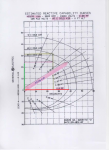
[When generator terminal voltage is higher than grid/system voltage then there will be lagging VArs flowing in the generator stator windings. This is usually considered to be positive VArs--flowing OUT of the generator to the grid/system. When generator terminal voltage is lower than grid/system voltage there will be leading VArs flowing in the generator stator windings; in my view this means the generator is "consuming" VArs from the grid/system and for most grids/systems in the world (but not ALL) "consuming" VArs from the grid/system IS NOT a good thing. This is usually considered to be negative VArs--flowing IN to the generator from the grid/system. If you look at the reactive capability curve provided in your first thread, you will see that most generators can't handle very many leading VArs. BUT, they CAN produce lagging VArs--LOTS of them--without much of an impact on generator health.]

2) NO. NO. And NO.

3) IF the machine has a VAr control mode, sometimes it will be an AVR function, and sometimes it will be a prime mover governor function. It just depends on what equipment is being used to control the prime mover and generator and what the packager of the diesel-generator set considers acceptable and reliable (really, just what's the least expensive is the usual selection/configuration criteria).

I have seen some machines (generators and their prime movers) have what I consider to be a crude VAr control scheme where the desired VAr setpoint is set using a potentiometer ("pot") and/or a thumbwheel device. And, with this setup it's usually difficult to change the VAr setpoint from the control room.

Some installations have the ability to enable/disable VAr control from an HMI using a mouse. If this is the case, there is usually a screen where the operator clicks on a field to enter the desired VAr setpoint value (and the press ENTER or some other confirming action), and then clicks on ENABLE (or some similar name) to make VAr control active. When VAr control is active it may even be able to change the VAr setpoint by just clicking in the VAr setpoint field and entering a new value (and then usually press ENTER or some other confirming action).

MOST power plants have a desired VAr setpoint they want to try to maintain--either during the entire day, and possible even on weekends and holidays, OR they are required, either by their host facility or the grid/system operator/regulator to have different VAr values at different times of the day and/or week. This, I would think, would be posted somewhere in the facility (say in the front of the logbook, or on some plant bulletin board) and the operators would be told of the requirement so that they could monitor/change the VArs as required.

Just about every power plant is unique. Yes, they produce watts/kW/MW and VArs/kVArs/MVArs--but they usually only get paid for producing watts/kW/MW--not for producing VArs/kVArs/MVARs.

VAr/PF control is primarily for grid/system voltage support and stability. Or, if the power plant is primarily supplying power to a host facility (such as a refinery, or a cement plant, or a large factory, as examples) they may be required to supply VArs/maintain a particual power factor in order to support facility operation. Grids/systems (electric utilities) don't charge residential (home and small businesses) for VArs, though the rate they pay for watts/kW has an added factor for VAr consumption. Larger electric power consumers--refineries, cement plants, large factories, etc.--do often consume a lot of VArs and so the utility places a VAr-hour meter in the plant to measure the VArs/kVArs/MWARs consumed by the plant and the plant pays for VArs/kVArs/MWARs in addition to watts/kW/MW.

There are certain types of loads that either consume VArs (such as electric induction motors) or produce VArs (I'm thinking of huge banks of flourescent lights, such as in a factory, or large apartment complexes with lots of small businesses). These types of loads cause the voltage and current sine waves on the power distribution grid/system to shift out of phase with each other. The more they shift out of phase with each other the less efficient the grid/system is at delivering power. So, synchronous generators (and power factor correction capacitors) are often used to help shift the voltage and current sine waves on the grid/system to be more in phase with each other, which improves the efficiency of the grid/system power delivery.

Finally, you wrote, "... how can I choose the [VAr] setpoint, ..." The VAr setpoint should not generally be a value outside the generator reactive capability curve limits, and generally should be chosen so that the generator power factor remains equal to or greater than the generator nameplate value, regardless of machine cold air temperature. AGAIN, if you're an operator at a power plant I would sincerely hope that you have had some kind of training about how the plant should be operated and if there are specific VAr values (and/or real load values) the plant should be maintaining at certain times of the day or week then those are clearly and concisely explained to you. In the absence of any kind of formal operating guidelines for VArs/power factor, most power plants DO NOT get paid for the VArs they produce (lagging VArs mostly) and so if the absence of any formal guides/requirements I would think the general directive should be to maintain a very slight positive VAr flow (lagging direction) but keep the power factor close to 1.0--because this will maximize the real load (watts/kW/MW) that can be produced by the machine and therefore make the power plant more profitable. If you're working for an electric utility, they probably have a very specific way they want the machines operated--but, in general, they, too want to make as many watts/kW/MW as they can because they don't generally get to charge for VArs/kVArs/MVArs (except for very large consumers of reactive current). So, again, every plant is unique. And every plant SHOULD have some kind of operational philosophy or requirements which must be met. And those should be clearly explained to the operators and operations supervisors.
 
@Wilimohi,

The name is WTF?, thank you very much. :)
I can see where this is headed....

1) NO. NO. And NO. If your generator is operating at 2.5 MW and you find leading VArs flowing in the generator stator windings then all you need to do is increase excitation and that will cause the leading VAg magnitude to decrease with no appreciable affect on the generator load (MW). It's NOT necessary to make any change in load when adjusting the magnitude (and/or direction) of the VArs flowing in the generator stator windings.

[When generator terminal voltage is higher than grid/system voltage then there will be lagging VArs flowing in the generator stator windings. This is usually considered to be positive VArs--flowing OUT of the generator to the grid/system. When generator terminal voltage is lower than grid/system voltage there will be leading VArs flowing in the generator stator windings; in my view this means the generator is "consuming" VArs from the grid/system and for most grids/systems in the world (but not ALL) "consuming" VArs from the grid/system IS NOT a good thing. This is usually considered to be negative VArs--flowing IN to the generator from the grid/system. If you look at the reactive capability curve provided in your first thread, you will see that most generators can't handle very many leading VArs. BUT, they CAN produce lagging VArs--LOTS of them--without much of an impact on generator health.]

2) NO. NO. And NO.

3) IF the machine has a VAr control mode, sometimes it will be an AVR function, and sometimes it will be a prime mover governor function. It just depends on what equipment is being used to control the prime mover and generator and what the packager of the diesel-generator set considers acceptable and reliable (really, just what's the least expensive is the usual selection/configuration criteria).

I have seen some machines (generators and their prime movers) have what I consider to be a crude VAr control scheme where the desired VAr setpoint is set using a potentiometer ("pot") and/or a thumbwheel device. And, with this setup it's usually difficult to change the VAr setpoint from the control room.

Some installations have the ability to enable/disable VAr control from an HMI using a mouse. If this is the case, there is usually a screen where the operator clicks on a field to enter the desired VAr setpoint value (and the press ENTER or some other confirming action), and then clicks on ENABLE (or some similar name) to make VAr control active. When VAr control is active it may even be able to change the VAr setpoint by just clicking in the VAr setpoint field and entering a new value (and then usually press ENTER or some other confirming action).

MOST power plants have a desired VAr setpoint they want to try to maintain--either during the entire day, and possible even on weekends and holidays, OR they are required, either by their host facility or the grid/system operator/regulator to have different VAr values at different times of the day and/or week. This, I would think, would be posted somewhere in the facility (say in the front of the logbook, or on some plant bulletin board) and the operators would be told of the requirement so that they could monitor/change the VArs as required.

Just about every power plant is unique. Yes, they produce watts/kW/MW and VArs/kVArs/MVArs--but they usually only get paid for producing watts/kW/MW--not for producing VArs/kVArs/MVARs.

VAr/PF control is primarily for grid/system voltage support and stability. Or, if the power plant is primarily supplying power to a host facility (such as a refinery, or a cement plant, or a large factory, as examples) they may be required to supply VArs/maintain a particual power factor in order to support facility operation. Grids/systems (electric utilities) don't charge residential (home and small businesses) for VArs, though the rate they pay for watts/kW has an added factor for VAr consumption. Larger electric power consumers--refineries, cement plants, large factories, etc.--do often consume a lot of VArs and so the utility places a VAr-hour meter in the plant to measure the VArs/kVArs/MWARs consumed by the plant and the plant pays for VArs/kVArs/MWARs in addition to watts/kW/MW.

There are certain types of loads that either consume VArs (such as electric induction motors) or produce VArs (I'm thinking of huge banks of flourescent lights, such as in a factory, or large apartment complexes with lots of small businesses). These types of loads cause the voltage and current sine waves on the power distribution grid/system to shift out of phase with each other. The more they shift out of phase with each other the less efficient the grid/system is at delivering power. So, synchronous generators (and power factor correction capacitors) are often used to help shift the voltage and current sine waves on the grid/system to be more in phase with each other, which improves the efficiency of the grid/system power delivery.

Finally, you wrote, "... how can I choose the [VAr] setpoint, ..." The VAr setpoint should not generally be a value outside the generator reactive capability curve limits, and generally should be chosen so that the generator power factor remains equal to or greater than the generator nameplate value, regardless of machine cold air temperature. AGAIN, if you're an operator at a power plant I would sincerely hope that you have had some kind of training about how the plant should be operated and if there are specific VAr values (and/or real load values) the plant should be maintaining at certain times of the day or week then those are clearly and concisely explained to you. In the absence of any kind of formal operating guidelines for VArs/power factor, most power plants DO NOT get paid for the VArs they produce (lagging VArs mostly) and so if the absence of any formal guides/requirements I would think the general directive should be to maintain a very slight positive VAr flow (lagging direction) but keep the power factor close to 1.0--because this will maximize the real load (watts/kW/MW) that can be produced by the machine and therefore make the power plant more profitable. If you're working for an electric utility, they probably have a very specific way they want the machines operated--but, in general, they, too want to make as many watts/kW/MW as they can because they don't generally get to charge for VArs/kVArs/MVArs (except for very large consumers of reactive current). So, again, every plant is unique. And every plant SHOULD have some kind of operational philosophy or requirements which must be met. And those should be clearly explained to the operators and operations supervisors.
You said:
If there are zero VArs/kVArs/MVARs flowing in a generator's stator windings when the machine is connected to the grid (the power factor will be 1.0!), and the amount of excitation being applied to the generator's rotor windings from the AVR is decreased, and nothing is done to the machine to change the load (real power--watts/kW/MW) being produced by the machine then reactive current (VArs/kVArs/MVArs) will start flowing in...... etc
So my dear wtfu?.... My question to you which you answer as 1/,i made according to what you had written(I. e if there is zero vars flowing in generators stator winding when m/c is connected to grid I. e unity pf,if excitation is increased, and nothing is done to change real load of m/c!!!!!!!!!!!!
So what do you mean by when ex. Increased and nothing is done to change real load of m/c????
Every who read ur above para. WILL COME TO HIS MIND THAT THERE IS A RELATION BETWEEN INCREASING OR DECREASING EXCT. AND NOT CHANGING REAL LOAD AT THE SAME Time....
I my opinion my dear there is a relation between increasing and decreasing EXCT. and reactive lagging or leading current following in gen stator and decreasing real kW load as in this case I. e current flowing in stator winding will cause stator windings temperature to get very high and the action which will be done in this situation is to decrease real kW load other wise generator will trip at too high w
 
@Wilimohi,

As the author of a response you, @Wilimohi, can modify what you wrote by clicking on 'Edit' at the bottom of the response (next to 'Report')--for approximately 24 hours. After approximately 24 hours the 'Edit' option disappears and you can no longer edit (modify) your response.

It would really help me, in particular, if you could provide an example of when you change VArs by changing excitation. State what the real load is and what the reactive current is BEFORE you make the change, what you are changing (real load and/or excitation (VArs)), and what happens to real load AND VArs after you make the change.

Typically, when operators adjust VArs (or power factor) on a synchronous generator they ONLY increase or decrease excitation. And, I'm only accustomed to changing the VArs (or power factor) the magnitude of VArs only changes by a few VArs (and I'm speaking about machine much larger than your 5 MW diesel generators--but the percentage change would be equivalent, I'm sure). In my experience, the load WILL change--but by a small amount. ALMOST ALL of the machines I worked on were operated by the operator inputting a MW setpoint and the turbine control system then adjust the fuel flow-rate to make the actual load equal to the setpoint, so if adjusting reactive current/power factor causes the real load to change, the turbine control system will make the necessary adjustment to return the real load to the setpoint. But, again, the changes to either real load or reactive current were not large and didn't have a large affect on the other parameter.

Excitation control systems, AVRs, usually have two modes of operation--manual and automatic. The intent of automatic excitation control mode is to automatically adjust excitation to maintain a generator terminal voltage setpoint. It does this by monitoring generator terminal voltage using special transformers, and makes automatic adjustment to excitation as necessary to maintain a nominal generator terminal voltage setpoint). In theory, this is good--but in practice it doesn't quite work well when changing load (again, I'm talking about machines in the 25 MW to 250 MW range). So, often the operators need to make slight changes to excitation as a machine is being load or unloaded. Not usually large changes, but changes have to be made to keep VArs and/or power factor in a normal range.

The intent of manual excitation control mode is to allow the machine to continue to be operated in the event the special generator terminal voltage transformers have failed. In this case, the operators are entirely responsible for making all necessary adjustment to excitation at all times (again, because the generator terminal voltage sensing transformers/circuitry isn't working).

Honestly, without more input from you on your system and its configuration we can't be of more specific help. I was trying to simplify the explanations so as not to flood you with information and details so that you would begin to understand the basics of VAr and/or power factor control. When real load changes on a synchronous generator the real current in the generator stator windings changes, which means the strength of the generator stator magnetic fields changes also.. And there is interaction between the generator rotor magnetic field and the generator stator magnetic field--whenever the machine is running and synchronized to a grid/system (because when it's not synchronized to a grid/system there is no current flowing in the generator stator windings, hence no generator stator magnetic field to speak of).

From the sounds of it, your machines are installed in a hot ambient environment and are probably air-cooled so ambient temperature greatly affects the generator cooling air temperature. But, we don't know anything about the generators at your installation--if they are air-cooled, or if they are water-to-air cooled, or some other method of reducing the generator cooling air as it enters the generator. If you look closely at the Reactive Capability Curve in your first thread you will see that as the generator air temperature increases the amount of power (watts/kW/MW) decreases and so does the amount of VArs/kVArs/MVArs).

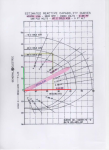
The next snippets are kind of crude but should be helpful in your understanding. I made a paper arrow, used a pink highlighter to make it stand out, and used it to illustrate some concepts. When there are 0 VArs/kVArs/MVArs flowing in the generator stator windings the total amount of torque being input to the generator goes out as watts/kW/MW--real power. Let's presume the actual temperature of the cold air entering this generator is 40 deg C (104 deg F). Further lets say for the first example that there are 0 MVArs flowing in the generator stator winding--a power factor of 1.0--meaning that all the torque being applied to the generator by the prime mover (in the case of this Reactive Capability Curve it is a GE-design Frame 6B heavy duty gas turbine) is being converted to MW, AND that the machine is producing NAMEPLATE rated power (45,176 kW (45.176 MW).

1731697182466.png

In the second snippet I moved the arrow up to the 0.90 power factor position--but the amount of torque being supplied to the machine from the prime mover remained the same, because the fuel flowing into the prime mover did not change so the torque being produced and applied to the generator rotor remained the same (unchanged). HOWEVER, that torque from the prime mover is now being split between MW and MVArs. (In our example, this occurred because an operator manually increased the excitation being applied to the generator rotor to cause approximately 19.25 MW, lagging, (the green line at the left of the graph) to flow in the generator stator windings and approximately 40.9 MW to be produced by the generator. The lenght of the arrow DID NOT change--because the fuel flow into the prime mover DID NOT change so the torque being applied to the generator rotor did not change--which results in the generator producing 45176 kVA (what's called apparent power--the sum of MW and MVAr in this example). (The amount of apparent power (VA/kVA/MVA) being produced by a generator is the square root of the sum of the (square of the watt/kW/MW and the square of the VAr/kVAr/MVAr) being produced by the generator. So, the square root of (19.25 MVAr squared PLUS 40.9 MW squared) is 45.176 MVA, or 45176 kVA. (These are rough numbers because it's difficult to exactly say for sure precisely how many MW and MVAr are being produced, but it's a very good approximation.)

1731697251401.png

In the second snippet the arrow was moved to the 0.85 power factor position--but the amount of torque being supplied to the generator from the prime mover remained the same (because the fuel flow-rate didn't change). In this snippet the amount of MVArs increased to approximately 23.000 and the amount of real power decreased to approximately 38.883 MW. And the square root of the sum of the squares of the MVAr (the green line) and the MW (the red line) approximately equals 45.176 MW, or 45176 kW. (Again, this is a rough approximation from the graph--but it's still a good approximation.)

So, as you say, even if the fuel flow-rate into the prime mover remains the same the amount of real power (watts/kW/MW) does change when the power factor of the machine changes. I haven't calculated the percentage change in the two examples above but it's not insignificant. The key takeaway here is that "splitting" the generator output into both VArs/kVArs/MVArs and watts/kW/MW changes even while holding the energy flow-rate into the machine constant. That's directly reflected in this example by the power factor--again, it's a measure of the efficiency of the machine at converting torque from the prime mover (as a result of burning fossil fuel(s)) into real, useful work (watts/kW/MW, and ultimately horsepower and light and heat (or air conditioning)). When no VArs/kVArs/MVArs are being "produced" the power factor is 1.0--meaning the machine is converting (nearly) 100% of the torque being applied to the generator to useful work (watts/kW/MW). "Producing" any VArs/kVArs/MVArs reduces the efficiency of the machine at converting fossil fuels into useful work.

Again, in my experience, there is some scheme at work in the prime mover control system that is attempting to hold the real power output constant regardless of reactive current flow in the generator stator windings. So, when VArs/kVArs/MVArs are changed and the real power output changes the prime mover control system automatically adjusted the real power output without the operating needing to make any changes to return the machine to a constant power output.

What we don't know is what the operating conditions are for the machines at your site. I presume the machines are operating at rated real power output and when you are changing excitation to affect a change in MVArs/power factor and that's why it's necessary to change fuel flow because someone thinks the machines should be running at "maximum" real power all the time while still "producing" VArs/MVArs. The effect of increasing real power to maintain some "maximum" real power value is that more amperes will flow in the generator stator windings, which will increase the stator winding temperature--and it seems some control system is monitoring generator stator temperatures and tripping the machine when they get too high. A high ambient air temperature (presuming the generators are air-cooled AND the ambient temperature at the installation is normally "high" (say, above 40 deg C during most days)) AND high generator real power output (increasing the generator stator winding temperatures even more than usual in an attempt to "maximize" MW output at all times, even when "producing" VArs/MVArs) is problematic in terms of generator longevity.

I also suspect the generators at the installation are rated very close to the namplate rating of the diesel generators driving them--making little room for changing reactive current when the machine is running at or very near rated power output. This could be contributing to the issue(s) at the site with reactive current "production."

I'm making these presumptions because we don't know much of anything about the installation and how the machines are operated. And, I like to try to at least make some guesses as to what may be happening to cause a question or a problem. I may be totally off base with my presumption of how the machines are being operated at your site. The rest of what I wrote is true, just maybe not the part about how the machines are being operated. But, my guess is that you're probably relatively new at this power plant operations thing and can't really tell us exactly what is happening and why. (This is why I wrote, "I can see where this is headed....")

That's all I can add. It's late and I'm tired, and I have a long weekend ahead of me, and FULL schedule next week as well. Sorry for any confusion I may have caused.
 
@Wilimohi,

You asked a couple more questions I didn't respond to; sorry.

a) Also will acabability curve will be included within the AVR to help it choosing the suitable operation points?

While I have seen AVRs/exciters with this ability, I don't believe it's common. EVERY generator has its own Reactive Capability Curve. It's really the responsibility of the people operating the generators to pay attention to the generator's Reactive Capability curve to ensure the machine is being operated within its limits. (Again, we don't have any idea of what the Reactive Capability Curve for the diesel-generators at the installation where you work AND we don't know how much (or why) the VArs vary so much.)

b) Also I noticed operators are forced many times to correct pf or voltage deviations, while they don't do corrections many times or it can be no need for them to correct for frequency!
Is this due to system frequency control is more accurate than voltage or excitation control?

Frequency control is one of the most important aspects of grid/system operation. When multiple synchronous generators and their prime movers, often located at multiple locations, are synchronized to the same grid/system it is the grid/system operators' responsibility to respond to load changes on the grid (the total number of electric motors and lights and televisions and tea kettles and computers and computer monitors, etc.) and adjust the loads of one or more generator prime movers to maintain a stable grid/system frequency. And, when there are many, many multiple synchronous generators and their prime movers all operating in Droop Speed Control synchronized together on a grid/system (acting as one giant synchronous generator) there is what's called "rotating inertia" helping to keep the grid/system frequency relatively stable (on a well-regulated and operated system/grid).

If your power plant operates independently of a larger system/grid to supply a nearby facility with electric power when the grid/system connection is interrupted for some reason then in the simplest configuration one of the machines will be operating in Isochronous Speed Control mode and any other machine synchronized with the Isoch machine will be operating in Droop Speed Control mode. The Isoch machine's prime mover control system reacts very quickly to changes in the load(s) that the power plant is supplying (such as when induction electric motors, especially large ones, are started or stopped, for example) and automatically adjusts the energy flow-rate into the Isoch machine's prime mover to maintain the frequency of the system. (Frequency and generator speed are directly related. As machine speed changes, generator frequency also changes.)

But, again, you are asking questions we can't answer well without more information. All we can do is talk in simple, general terms and we can't answer specific questions about your power plant and how the machines at your power plant are operated because we don't know the configuration of your power plant and any auxiliary or remote control systems used at your power plant to control the generator sets. Sorry; but without more information we can only reply in simple, general terms--which should still be helpful as you become more familiar with terms and concepts and fundamentals and operation and the equipment at your site and how your supervisors want the plant to be operated.
 
Top