In the "old" days, an operator wasn't allowed to select COOLDOWN OFF until some amount of time had passed since the unit dropped below a certain speed OR had reached zero speed (which is a "speed level" in GE control philosophy: L14HR). There used to be either a timer or a counter that incremented based on expired time to signify it was possible to stop the cooldown operation/sequence. The signal name was L62CD, and when L62CD became a logic "1" it was possible for the operator to then, manually, select COOLDOWN OFF.
The control philosophy for Frame 9F/FA machines is now under the purview of GE's Belfort, France, engineering location. And GE Belfort has seen fit to "disrupt" typical tried and true, proven control sequences in favor of control sequences "invented in Belfort (France)."
In my personal opinion, as @CCTTL says, the most correct and logical permissive for selecting COOLDOWN OFF is when internal machine temperatures have reached a value that doesn't result in the axial compressor causing the machine shaft to sag (or bow) under its own weight when cooldown operation is stopped.
But, you will need to look either in the Operations & Maintenance Manuals provided with the machine(s) at your installation, OR for the most certain result of what permissive(s) are used on the machine(s) at your installation have a read of the application code running in the Mark* VIe for cooldown operation to determine what precisely is the condition when COOLDOWN OFF can be selected.
It's not safe thinking to believe that ALL GE-design heavy duty gas turbines have the same sequencing/programming/application code running in them--as @CCTTL wrote. Because different locations and even different licensed packagers of GE-design heavy duty gas turbines can--and do--modify what were standard GE control and protection schemes it is ALWAYS best to consult the programming/configuration/application code running in the turbine control system at the installation for the FINAL word on how things actually operate at any particular installation.
@WTF?
You are right that's I was found that the timer l26cd 1440 min start after L14HR
Does wheel space temp or bearing temp prevent cool down off process
Or what I have to take care when I need to make cool down off immediately after shut down due to a problem
Also i read that we can make cool down off
For 20 min and start unit again more than 20 min we need to wait at turning gear two hours
I would need to see the application code for the Cooldown sequence running in the Mark* VIe at your installation to say if anything else is needed to enable the stopping of Cooldown operation.
It's ALWAYS possible to stop cooldown operation if absolutely necessary--BUT it should ONLY be done with clear understanding of all the possible knock-on effects.
Are there issues with the equipment at the site that require stopping Cooldown operation--like an oil leak, or a hydraulic issue ("jacking oil") or ???
When the machine internals are hot after fired operation at load and a machine is shut down or tripped it will take a good while for the machine internal temperatures (specifically the axial compressor section of the shaft AND the machine's high-pressure shaft where it sits in the two bearings (hot end and cold end bearings). Typical bearing materials (babbit) can begin to soften or even melt when the shaft temperature in the bearing is above 300 deg F--and there's no reliable way to measure shaft temperature (bearing metal temperature, and bearing drain temperature--but NOT shaft temperature). If L.O. flow to the bearing is not maintained until such time as machine internal temperatures (in this case turbine wheelspace temperatures where the turbine section of the high-pressure shaft that sit in the hot end bearing) then it's very possible, even likely, that damage to the bearing and possibly even the shaft (if rotated when the bearing material has been displaced because of heat and the weight of the shaft) can occur.
Getting back to the axial compressor section of the machine high-pressure shaft, it is the longest section of the shaft and it has rotating blades that sit between stationary blades and there are very tight clearances between the tips of the rotating blades and the axial compressor casing and between the tips of the stationary blades and the axial compressor rotor. Because the axial compressor rotor gets very warm during normal operation (compressing the air that flows primarily into the combustors) if the shaft isn't turned--at least periodically--it will begin to sag (down) or in some case bow (up) and cause rubs or possibly even broken blades (rotating and/or stationary).
The turbine compartment of most F/FA-class machines are VERY hot, and we all know that GE doesn't use insulating blankets on the either the axial compressor or turbine casings. Sometimes the turbine compartment vent fans don't run during at least a portion of the Cooldown sequence (because cooler ambient air flowing on and over the casings can cause them to cool at a faster rate than machine internals (axial compressor and turbine) which can also result in rubs and worse (in both the axial compressor and/or the turbine sections). A LOT of people (untrained and inexperienced) think, "Oh well, we'll just open the turbine compartment doors and let cooler ambient air enter the turbine compartment while it's on (or off) Cooldown to help the machine cool faster--and that's simply just asking for serious problems for the reason just explained (uneven cooling of the casings and internals).
But, there is some good news. If the axial compressor does "take a set" because it can't be rotated for some reason (the turning gear mechanism is broken, etc.) as it cools down to near ambient temperature it will actually begin to straighten somewhat--it won't go back to completely straight, but it will naturally straighten to a point that Cooldown operation can be started again to help further restore the shaft to near normal straight (at least enough to be able to CRANK and/or FIRE the machine, or even run it up to FSNL--though it's likely the vibrations during such a START will be higher than normal).
The big key here is to make sure that if Cooldown has to be stopped (and it can be) that one of the Main L.O. Pumps remains running at all times until such time as the highest wheelspace temperature has dropped to about 150 deg F. This is to maintain a flow of cooling L.O. to the bearing of the machine (turbine and generator) so that the bearings will not be seriously harmed. Failure to keep one of the Main L.O. Pumps running while machine internal temperatures (wheelspace temperatures) are high (especially above about 200 deg F) will most likely result in problems.
There is ONE MORE important thing to note: If the machine is taken off Cooldown operation prematurely, or the cooldown machinery can't keep the machine on Cooldown after a trip/shutdown from fired operation JUST WAIT!!! That's right, don't get nervous and try to come up with different methods to turn the high-pressure shaft because the shaft WILL sag or bow if it's hot and if it sags or bows enough and there are methods being frantically employed to turn the rotor they will most likely result in damaged or broken blades (axial compressor and/or turbine). Best to wait AT LEAST 24 hours under such conditions (while keeping one of the Main L.O. Pumps running at all times if possible!) so that the high pressure shaft willstart its natural process of beginning to return to normal straight. Then, after the 24 hour period of no Cooldown operation the machine can then be put ON COOLDOWN and allowed to remain on Cooldown operation for at least 4 hours helping the shaft to return to nearly straight before STARTing the machine.
This process is the same for almost ALL GE-design heavy duty gas turbines, especially the single-shaft machines. If Cooldown operation after a trip or shutdown from fired operation can't be achieved or maintained it's not the end of the world! Patience is key, and an understanding of equipment and how high temperatures (and low temperatures!) can affect the equipment (it's not always as simple as it might seem--but it's actually very logical when it's understood) damage to the equipment can be almost completely prevented and machine operation (and revenue generation) can begin much quicker than if the machine is damaged because of frantic, uneducated attempts to try to turn it are used. Let's say the turning gear motor failed shortly after Cooldown operation started, and there was a spare turning gear motor in the warehouse at site, or one could be brought to site in a few hours. That's great! The motor should be replaced--BUT the machine should not be put ON COOLDOWN until about 24 hours since it first reached Cooldown operation (before the turning gear motor failed). It's very likely that the turning gear might not even be able to rotate the shaft because it has bowed or sagged sufficiently there is contact between rotating and stationary blades/casing/rotors. There have been installations that then used high-powered hydraulic jacks to help start the high-pressure shaft rotating, that resulted in millions of US Dollars in damage and lost revenue (electricity and/or steam production). Maintain cool heads, and understand how things work and all will most likely be okay.
If you are just trying to put together a procedure for what to do if the machine can't achieve Cooldown operation after a trip or shutdown from fired operation, well, I applaud you for doing so. I'm not going to tell you what to force (Logic Forcing) to get the machine to stop rotating and what to force to keep one of the Main L.O. pumps running in this public forum, but if you look at the application code long enough and with enough patience you will ultimately see what is required for a OFF COOLDOWN command to the Mark* VIe to be accepted from an operator (all the permissives for the machine at your plant). Just remember to keep one of the Main L.O. Pumps running if the machine internals are above about 150 deg F (the highest wheelspace temperature, that is!) and all will be okay. Yes; people--supervisors, managers and operators--will all be nervous during this time, but sometimes the best course of action is: Inaction (in this case for a period of about 24 hours).
To specifically address your questions about intermittent Coolcown operation:
"Also i read that we can make cool down off
For 20 min and start unit again more than 20 min we need to wait at turning gear two hours"
I interpret that to mean: "Can we stop Cooldown operation for a period (or periods) up to about 20 minutes, and then restart Cooldown operation again (or even possibly a normal START to FSNL and loaded operation). But, if it's not possible to restore Cooldown operation in about 20 minutes we need to be ON COOLDOWN for two hours after being able to re-establish Cooldown operation."
Yes; short periods of up to about 20 minutes are possible (I caution you to keep one of the Main L.O. Pumps running if at all possible (you also have to consider Generator Seal Oil pressure/flow). Longer than 20 minutes at zero speed if the machine is HOT--you mentioned needing to stop Cooldown immediately after reaching very low/zero speed--then you should really have all parties involved reach a consensus about remaining at zero speed with a Main L.O. Pump running OR just waiting for the recommended 24 hours (with a Main L.O. Pump running). There are multiple variables at work here; what is the differential between ambient temperature (outside the turbine compartment versus machine internal temperatures). Do the turbine compartment doors have to be opened while the machine is not on Cooldown operation? (It has to be remembered that the exhaust stack will draw air in through the IGVs, through the compressor, combustors, turbine section, turbine exhaust and HRSG and up and out of the exhaust stack, but if the turbine compartment vent fans are running (and some sites will start ALL of the turbine compartment vent fans under such circumstances--which IS NOT a good idea!) and the differential between ambient temperature and compartment temperature is very high, then this can lead to different cooling rates.) How long off Cooldown operation is too long? 20 minutes? 22 minutes? 25 minutes? 26 minutes? 29 minutes? (One has to remember, a Frame 9F/FA is a two-bearing machine and the distance between the bearings is long.... Time is of the essence--especially if the machine is HOT--such as just after reaching zero speed after a trip or shutdown.)
But if the machine can't get put back on Cooldown operation relatively quickly (approximately 20 minutes...) then even trying to put it on ON COOLDOWN can also be risky as explained above. Patience is a virtue (one that is in short supply in today's world).
Managers get paid the big bucks to make these risky decisions--because the people chosen to be the managers usually have operational experience to think through all of the factors before making a decision. What I have presented to you are typical OEM recommendations; if the machine is not under some kind of warranty from the OEM or some service provider then plant personnel can make whatever decision they want, hopefully well aware of the consequences of a more risky decision. One can be a hero in one or even three or four instances, but karma can be a tough master. At this level of decision-making about how long is too long and what to do when things aren't ideal, sometimes the insurance company can have heartburn over a decision of this magnitude. At this level the name of the game is risk management--and that's why managers get paid the big bucks (to take all recommendations, and based on their experience and knowledge, make the tough decisions and live with the consequences (if there are any).
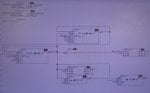
That's only a portion of the Cooldown sequencing. If I recall correctly, L1Z doesn't start the turning gear mechanism--but, then, GE Belfort has different ideas about what was long-standing, tried, true and proven sequencing. What else does L3CD do? What drives L62CD? In other words, is/are there any other permissives in the L62CD logic (such as maximum wheelspace temperature or bearing temperature) other than L14HR? What else does L3SQ do?

 Facebook
 Google
 GitHub
 Linkedin