Facebook
 Google
 GitHub
 Linkedin
Automated Water Management Safeguards the Suds for a Rural Coin Laundry
Suds-n-Duds is a staple for local Atmore, AL residents. It's critical to protect the washing machines with a system that monitors well pressure while automatically switching and flushing the municipal supply.
A consistent supply of clean water is the lifeblood of any laundry. Large commercial operations can afford sophisticated monitoring and filtering equipment, but smaller coin-operated providers must face similar challenges with far more limited resources.
The issue is compounded when a small-town site relies partially on well water, even if a municipal water hookup is available, because they must find the most cost-effective way to select between the two options. Balancing these two sources requires continuous oversight, a luxury that smaller businesses with unstaffed facilities rarely possess.
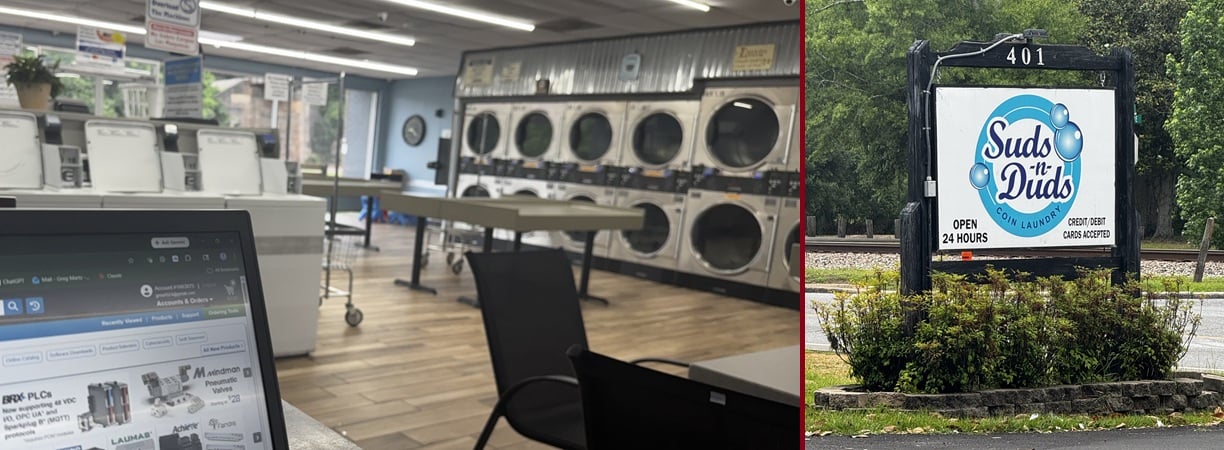
Figure 1. Commercial coin laundries depend on clean, consistent water pressure to maintain continuous operations.
When the team at CoStream was approached by the ownership of Suds-n-Duds in Atmore, Alabama, the operational challenges were immediately clear. Well water was clearly the preferred option, but it could become unavailable for several reasons. Municipal water was a good contingency approach but presented another set of challenges. Manually monitoring conditions and switching back and forth had proved impractical. Fortunately, CoStream has a solid track record of helping all types of smaller operations by implementing accessible and right-sized automation solutions, so that good results come out in the wash.
Avoiding Dirty Laundry… Or Worse
The coin-operated laundry primarily relies on a private well as its water supply because well water is cleaner, lacks municipal treatment additives, and is a lower-cost source. Unfortunately, relying solely on private well infrastructure introduces vulnerabilities ranging from equipment problems to seasonal volume drops due to low water tables.
To preserve continuity, the facility also had access to a city water connection as a backup, but this required manual switching. While the municipal connection provided a safety net, this connection is the “end of the line” and tends to accumulate a troublesome amount of silt if not flushed periodically. If the facility switched directly to city water without clearing the lines, the incoming silt would be problematic for both the washed goods and the internal machine valves.
Managing the water sources requires continuously monitoring the supply pressure, then initiating a transfer sequence, and performing the flushing protocol upon switching to municipal water. The facility is open 24 hours a day and is not fully staffed, so it simply would not make financial sense to rely on a person to sit and watch pressure gauges all day and make the necessary adjustments.
A “Laundry List” of Automation Needs
For anyone familiar with industrial automated equipment and systems, the obvious answer would be to use a commercial off-the-shelf PLC and HMI setup to monitor some strategically installed instrumentation and control a few valves. However, most industrial-grade automation systems, instrumentation, and SCADA platforms used by large utilities and production facilities are completely cost-prohibitive for more mom-and-pop size endeavors.
Because this facility is managed remotely for the most part, a localized run-to-failure methodology was a major operational risk. If a well pump failed midday, the facility could sit idle for hours, losing revenue and damaging customer loyalty. Technicians needed a system that could track live pressures, handle valve actuation safely, and provide real-time remote manipulation capabilities via mobile devices—all without demanding an expensive annual software licensing agreement.
To overcome these cost and complexity barriers, the project team designed a standalone, intelligent automation loop focused on decentralized control. By focusing on hardware with an excellent price-to-performance ratio and free configuration software, the team engineered a robust solution scaled to meet a small business budget.
Sorting Out an Automated Laundry Platform
The core automation strategy centered on deploying AutomationDirect PLC and HMI products, which are the preferred platform used by CoStream whenever possible due to their expansive feature set, ready availability, no-cost software, and overall favorable price/performance ratio.
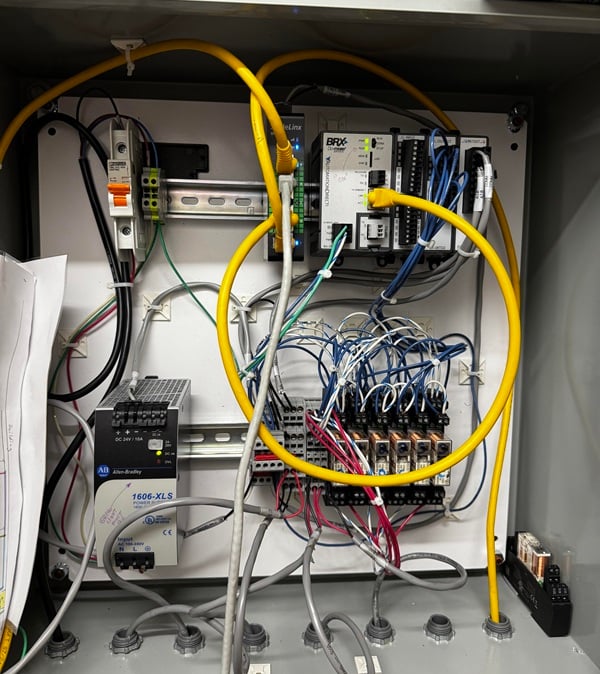
Figure 2. The compact AutomationDirect BRX PLC fits easily inside a small control enclosure, with Dold relays operating control valves.
A BRX PLC was specified to handle the monitoring and control logic, along with native support for industrial communications protocols. To track the status of incoming water, industrial ProSense 4-20 mA pressure sensors were installed directly on both the well supply line and the incoming city water line, delivering real-time analog data straight to the PLC. A C-more HMI would provide local visualization and remote viewing capability, and it would send email notifications when problems occurred.
To control water connections, the team installed three heavy-duty, stainless-steel dual-solenoid-operated ball valves: one from each water source, and one to flush the city line to drain. Each valve is driven by a pair of Dold force-guided relays sourced from AutomationDirect, ensuring positive relay open/close action and long-term operating reliability. All these components are compact, lending themselves to installation in a small control panel that would be easy for those working on the initial install or troubleshooting in the future.
When the system is operating on well water and a supply failure drops the pressure below a pre-programmed threshold, the PLC notifies the users that they should initiate the transition from well to municipal water. Before connecting the municipal supply directly to the facility, the logic first opens a dedicated valve to flush the city line to drain for a period of time, clearing silt from the system. Once the timing sequence finishes, the PLC closes the flush valve and opens the municipal supply valve to the laundry, while simultaneously closing the well water valve.
Operators manually initiate the changeover from municipal water back to well water when conditions are acceptable.
Mastering Monitoring and Metrics
Establishing visibility to the system status and data was the final piece of the architecture.
By pairing the controller with a StrideLinx secure industrial VPN router, the team enabled encrypted cloud connectivity without requiring complex local IT infrastructure changes.
The business owner now has complete operational visibility onsite via the local color touchscreen HMI. The HMI also sends email notifications to the business owner’s team to alert them of any issues. This HMI model also supports remote access using a smartphone application, so the owner can remotely monitor line pressures, adjust pressure setpoints, check valve positioning, override the flushing cycle, and perform other functions.
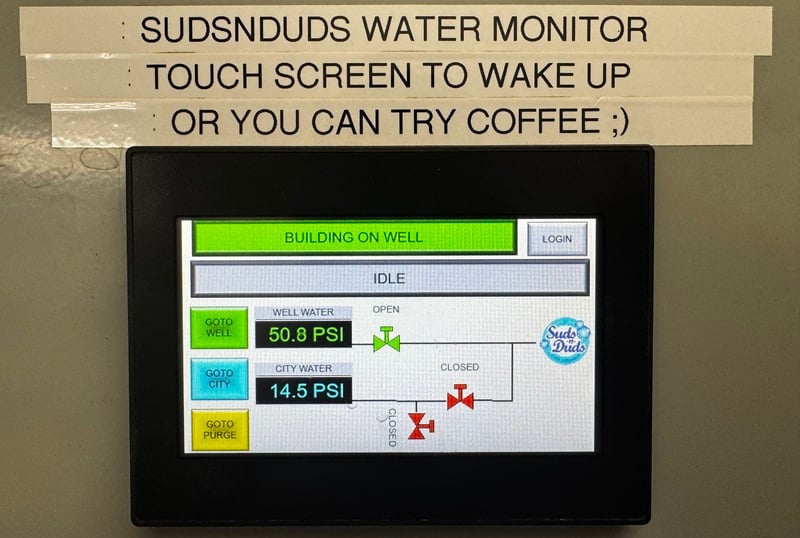
Figure 3. An AutomationDirect HMI provides user-friendly local indication and control visualization.
The integration of this small-scale automation system has virtually eliminated downtime caused by water supply interruptions. In the past, a well problem during an unstaffed weekend shift could halt operations for an entire day, leading to hundreds of dollars in lost revenue and significant customer frustration. Now, transitions happen automatically in a matter of minutes, keeping the facility humming along smoothly. The addition of the flushing sequence has prevented sediment from fouling downstream washing machine components, saving money by avoiding the replacement of components and maintenance labor.
Sustainable Architecture for Small Enterprises
The AutomationDirect ecosystem is a key enabler, allowing providers to deliver sophisticated and cloud-connected monitoring and control systems for smaller end users at a fraction of the cost of larger-scale PLC/HMI/SCADA platforms.
CoStream especially appreciates that the BRX PLC and C-more HMI programming environments are completely free, so both systems integrators and end users avoid the recurring annual software licensing fees often associated with other suppliers. Free and easily used software makes it accessible and possible for end user technicians to learn a bit more about system details, and many times to provide a greater degree of self-support. Also, sourcing parts through a streamlined online ordering approach makes it simpler to support the system in the future.
Suds-n-Duds now stands as an example of how small-scale commercial operations can utilize accessible, modern industrial automation to protect their equipment and maximize uptime through proactive automation and remote management. With the right tools, products, and a smart design, even a main-street coin laundry can achieve the type of operational resilience and professional-grade results formerly available only to large utilities, manufacturers, and process operations.
All images used courtesy of CoStream
Related Content