Facebook
 Google
 GitHub
 Linkedin
Data Centers, AI, and the New Control Playbook: Weidmüller’s Perspective
Control.com chats with Weidmüller to get some insights about data center automation, learning about security, environmental impacts, regulations, and more.
Data centers underpin everything on which electric utilities and industrials rely: grid analytics, DER orchestration, and increasingly AI/ML. They also draw a target on their backs: high energy use, water demand, and a bigger cyber-attack surface.
The question facing controls engineers is not whether these pressures are real (as they are), it is rather a matter of how we instrument, automate, and document performance and security without sacrificing reliability.
As we near the opening of Data Center World (Washington DC, April 20-23, 2026), it's a great time to explore a few themes that experts will be discussing at the show, providing insights as to how Weidmuller helps address critical challenges. The Control.com engineering team was honored to speak with Pete Tecos, the Director of Data Centers and Energy at Weidmüller, to clarify several key questions in this developing industry.
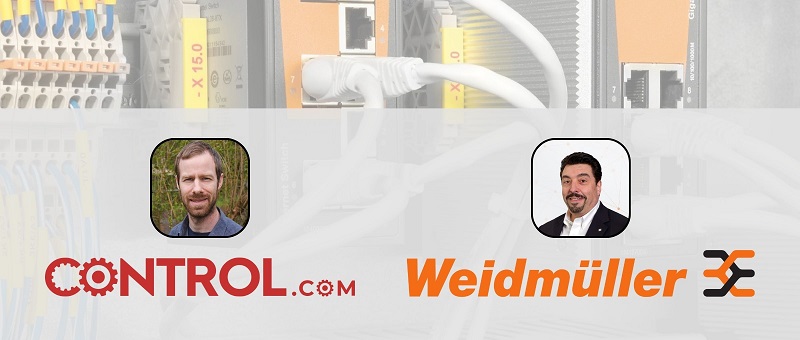
Figure 1. Control.com’s Director of Engineering Content and Pete Tecos, Director of Data Centers and Energy at Weidmuller.
David: Data centers have gained notoriety in recent days for consuming a lot of energy and resources. What environmental/energy regulations are in place (or under development), and how does an automation system help to meet benchmarks?
Pete: In the United States, there is no single federal “data center efficiency” law for private facilities. Operators largely follow DOE design best practices and EPA ENERGY STAR benchmarking/certification to demonstrate performance and engage utilities. These are voluntary but well‑established references in corporate ESG programs and customer RFPs.
Disclosure pressure is rising. The SEC’s climate‑related disclosure rule – finalized in March 2024 but stayed during litigation – requires larger public filers to report material Scope 1/2 emissions and climate risk governance. Even with the stay, many organizations are preparing internal controls and data pipelines, so they are not scrambling later.
Individual states are also moving, especially on water use. As AI/HPC campuses scale, lawmakers are introducing reporting requirements and incentives for reclaimed water and closed‑loop cooling. Expect more transparency mandates on water withdrawals and discharge quality at the facility level.
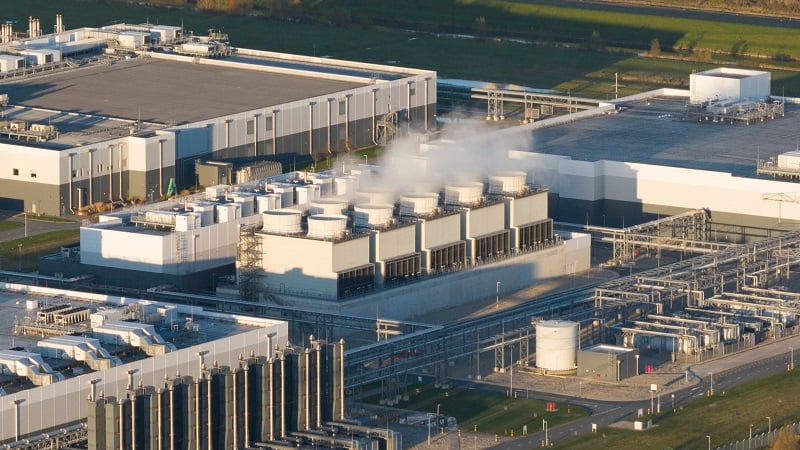
Figure 2. Evaporative cooling is the process of using water heated by the computer equipment, and evaporating that water to dissipate the heat. Image used courtesy of Adobe Stock
Outside the U.S., the EU Energy Efficiency Directive (EED) already requires EU data centers ≥500 kW IT load to report environmental KPIs – PUE, WUE, set points, renewable share, waste‑heat reuse – under a Commission rating scheme that standardizes metrics and calculations.
Weidmüller remains at the cutting edge of EED/ENERGY STAR Data Readiness and KPI instrumentation:
- Edge controllers perform KPI pre‑aggregation (PUE/WUE/ERF) and store‑and‑forward.
- Remote I/O captures feeder/PDU/row/rack metering, CHW/LCW flow and ΔP, and CDU supply/return temperatures.
- Industrial Ethernet switches and terminal connection systems speed metering and sensor retrofits across multiple rows.
- Ubiquitous Connectivity (Modbus‑TCP, BACnet/IP, PROFINET, MQTT) streams signals to BMS/DCIM and reporting systems.
- High‑efficiency power supplies reduce waste heat (supporting PUE) and expose diagnostics for remote monitoring audits and condition-based maintenance.
- Energy meters & transducers deliver audit‑grade electrical data for PUE/WUE calculations.
David: How are automation systems guarded against attacks in these networks that house massive amounts of potentially sensitive information? AI seems to be a black box - it consumes information without a lot of transparency; is it truly as significant a problem as is often reported, and if so, how can we protect against breaches?
Pete: Most breaches do not start in a high‑assurance server – they start where there’s trust by default. In data centers, that often means building automation and OT: chillers, pumps, valves, power panels, and the gateways and protocol converters that tie them together. We anchor designs in three pillars: NIST SP 800‑53 Rev. 5 for controls, NIST SP 800‑82 Rev. 3 for OT tailoring, and NIST SP 800‑207 Zero Trust for architecture.
This is how Weidmüller implements Zero‑Trust OT in Practice:
- Managed industrial Ethernet switches provide VLANs, ACLs, and ring redundancy to enforce Level 3/3.5 segmentation.
- Secure protocol gateways isolate BACnet/Modbus/PROFINET from enterprise routes via an OT DMZ.
- Secure firmware pipeline: signed images, staged rollout, and one‑click rollback for change control.
In the EU, NIS2 and ENISA guidance codify similar expectations for data center service providers – risk management, supply‑chain controls, incident handling, logging, and evidence mapping to standards. If you build for 800‑53/82/207, you are already aligned with the European direction.
On AI as a “black box”: the risk is less magic, more scale. AI accelerates the aggregation of sensitive datasets and multiplies east‑west connectivity. Countermeasures are familiar: classify and isolate AI data, enforce policy firewalls on model inputs/outputs, and log everything—so AI systems can never implicitly reach or influence the plant control layer.
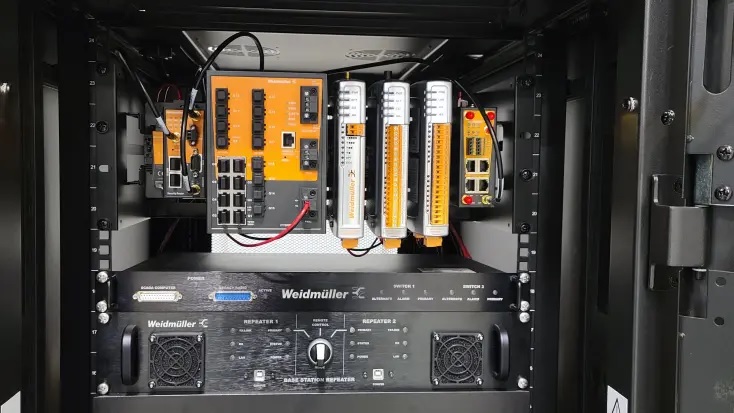
Figure 3. Connectivity is, perhaps, the most critical driving factor in data center security risks. Image used courtesy of Weidmüller
David: How do companies manage systems that require constant updates (the reality of the IT world) but must still be ultra-reliable? Updates and long-term reliability are often in conflict with each other, but the only way to make something perfectly reliable is to isolate it from all external influences, and that's not realistic!
Pete: Isolation is reliable – and impossible. The way to update constantly and keep SLAs is to engineer for change: split cadences (fast IT, deliberate OT), design for uninterrupted work with redundant power/cooling paths and make every change observable and reversible.
How can you facilitate updates while mitigating the risk of outages? Weidmüller has your back:
- u‑control backup/restore and config versioning make rollbacks routine.
- Blue/green “shadow” configurations at the control cell allow canary flips tied to health.
- User-friendly terminals (like the SNAP IN series) cut installation time and wiring errors during metering/sensor retrofits in live spaces.
One telemetry fabric, many payoffs. You already have a robust sensor/telemetry system for regulatory and sustainability reporting. That same data can be reused to validate software patches and control system updates, proving objectively that efficiency and stability metrics (PUE, WUE, set point accuracy, event rates) haven’t regressed.
The Bottom Line for Controls
Sustainability, security, and reliability converge at the terminal block. If you cannot measure it, you cannot prove it; if you cannot segment it, you cannot secure it; and if you cannot roll it back, you cannot safely update it. Our job is to make the unglamorous layers – wiring, I/O, edge connectivity, and secure updates – boringly dependable so your facility hits its numbers and its SLAs every day.
References
DOE Best Practices Guide for Energy‑Efficient Data Center Design (2024); EPA ENERGY STAR Data Centers; SEC Climate Disclosure Final Rule (Mar 2024, stayed); EU EED data‑center reporting & rating scheme; ISO/IEC 30134‑2:2026 (PUE); ASHRAE TC 9.9; NIST SP 800‑53 Rev.5; NIST SP 800‑82 Rev.3; NIST SP 800‑207.