Facebook
 Google
 GitHub
 Linkedin
ABB Announces Product Upgrades, Nvidia Partnership, and 2026 Investments
ABB has released a new version of its Symphony Plus DCS, integrated NVIDIA Omniverse libraries into RobotStudio, and announced plans to scale manufacturing and R&D across India.
When it comes to industrial robots, high-voltage electrical components, and distributed control system (DCS) controllers, ABB is a household name. Recently, ABB has upgraded its Symphony Plus DCS platform and partnered with Nvidia to integrate Omniverse digital twin software libraries into RobotStudio.
Additionally, to strengthen its electrification, motion, and automation business areas, ABB is investing approximately $75 million to expand its manufacturing and R&D facilities across India.
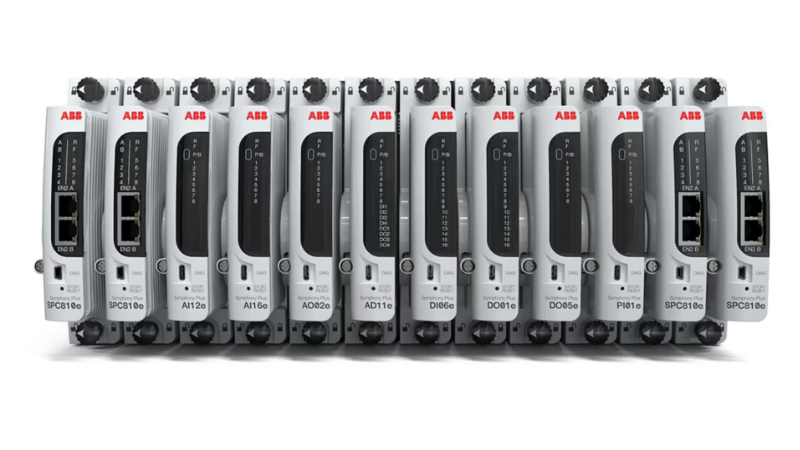
ABB’s SPR2025 release focuses on improving system performance, security, and interoperability. Image used courtesy of ABB
Symphony Plus SPR2025
Within a large-scale processing plant such as an oil refinery, there is a control room where operators have access to sensors and data. The data being displayed and the control of the process are all handled by a DCS.
Recently, ABB updated its Symphony Plus DCS platform with SPR2025. The new release enables communication over OPC UA, a widely used protocol in industrial manufacturing facilities. Offering a system-wide OPC UA feature enables better, more secure communication between ABB hardware and sensors. It also paves the way for smart sensors and IoT-ready devices to be integrated into new and existing systems.
Deploying digital changes in the field on an automated process needs to happen dynamically, without disrupting the process. The SPR2025 release has separated the control and the digital environments for exactly this reason. Users can now deploy performance monitoring, analytics, and AI-based models without disrupting automated processes.
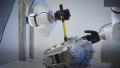
By using RobotStudio with Omniverse libraries, users can transform robotic simulations into reality with a high level of accuracy. Video used courtesy of ABB Robotics
RobotStudio HyperReality
A digital twin is a virtual copy of an existing machine or factory. ABB has partnered with Nvidia to make Omniverse libraries available within RobotStudio. According to ABB, this new simulation tool, RobotStudio HyperReality, enables designers and developers to create robot programs with up to 99% accuracy.
Building robotic programs in a digital space reduces integration time and reduces the risk of equipment interference. Having a digital copy of the equipment allows specific scenarios to be played back to help troubleshoot issues found in the field.
RobotStudio has had the functionality to create robot programs offline for quite some time, but with the integration of Omniverse libraries, positions can be taught more accurately, resulting in a fully debugged and taught robot program ready to deploy once the system is powered on, saving time, money, and resources.
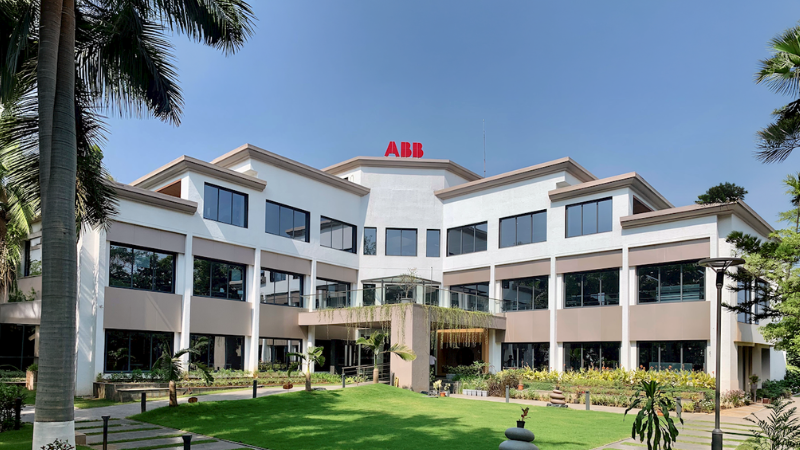
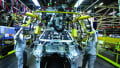
During 2026, ABB will invest $75 million across India to expand manufacturing and R&D. Image used courtesy of ABB
Expanding Manufacturing in India
ABB announced that it will invest approximately $75 million to expand manufacturing capacity and increase R&D capabilities across multiple cities in India. The company plans include expanding existing electrical protection and enclosures manufacturing facilities. This expansion will help support India’s high-speed rail and metro transportation systems. A new facility will house the manufacturing of uninterruptible power supplies and will also be dedicated to R&D.
ABB will also expand existing low-voltage drive and motor production in the Peenya area. The company will expand digital capabilities in this region by adding an innovation lab, remote monitoring and diagnostics, and a training facility.
Enhancing Industrial Automation
ABB’s latest announcements demonstrate the company's commitment to staying competitive by upgrading its control systems to be future-proof, partnering with AI professionals, and investing in additional manufacturing facilities where its products are used. These additions and expansions aim to solidify ABB’s place within the automation market.
Featured image used courtesy of ABB
Related Content