Facebook
 Google
 GitHub
 Linkedin
AstraZeneca Partners With Multiply Labs on Cell Therapy Robotics
A new collaboration between AstraZeneca and Multiply Labs explores using modular robotics to boost throughput in cell therapy manufacturing.
AstraZeneca and Multiply Labs have announced a collaboration to evaluate the use of modular, GMP-ready robotics for scaling cell therapy manufacturing. The partnership will assess Multiply Labs’ robotic arms and reconfigurable platform in a high-throughput production environment, with a focus on improving efficiency, precision, and compliance. By combining AstraZeneca’s clinical and manufacturing expertise with Multiply Labs’ automation technology, the initiative aims to explore new pathways toward commercial-scale, robot-led cell therapy production.
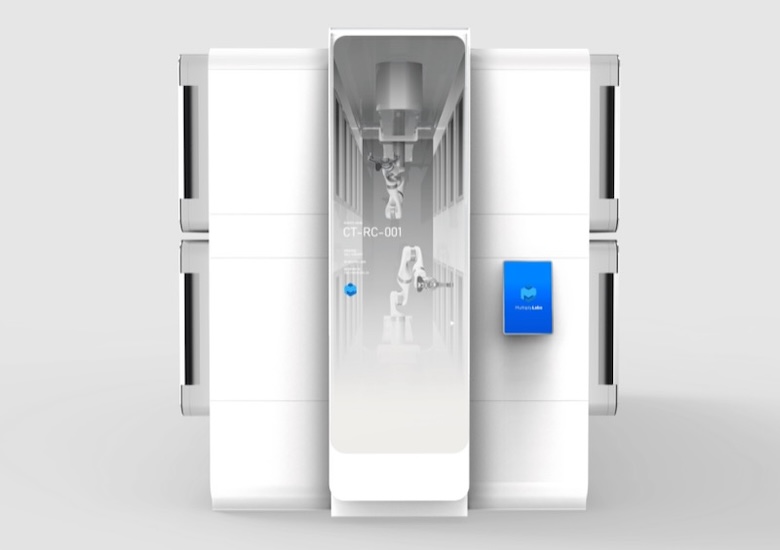
As part of Multiply Labs’ robotic platform, robotic arms slide from one module to the next, executing cell therapy manufacturing tasks in parallel to maintain efficiency and throughput. Image used courtesy of Multiply Labs
Cell Therapy in Modern Medicine
Cell therapies are an important area of research and are actively used in modern medicine to treat a range of diseases and disorders. One example is the extraction, isolation, and genetic modification of immune cells (a type of white blood cell). In the lab, immune cells are genetically engineered to produce a chimeric antigen receptor (CART). These receptors can recognize specific structures on particular types of cancer cells called antigens. This form of cell therapy is called autologous cell therapy, in which the cells are taken from the patient, modified, multiplied, and reintroduced into the patient.
This type of therapy is highly complex and costly to deliver, as it is tailored to an individual and their specific disease. The extraction process and all stages leading to patient reinfusion must be carefully tracked and conducted in accordance with current good manufacturing, clinical, and laboratory practices.
Allogeneic cell therapies involve collecting cells from healthy donors, which are then modified and produced at scale (at a lower cost than autologous cell therapy) to help more patients. While this therapy cuts costs and can be effective, it is riskier because patients’ immune systems could reject the donor cells, a protective process known as immune rejection.
Both modes of cell therapy require accuracy and precision to perform laboratory procedures and deliver safe, high-quality products. There is also a growing need to scale and improve the efficiency of cell therapy manufacturing while ensuring strict adherence to quality and regulatory standards. This is where advanced automation and robotics come in.
A Modular Approach to Scaling Cell Therapy Manufacturing
Multiply Lab’s latest technology operates via a unique modular robotic system. Customers can set up any process within cell therapy manufacturing by selecting and implementing a desired set of robotic modules. Users will find specific instruments within each module that accommodate specific processes, such as cell expansion and cultivation, incubation, maintenance of sterile, stable growth conditions, reagent mixing, and more.
An overview of the pioneering, modular, robotic technology behind next-generation cell therapy biomanufacturing. Video used courtesy of NVIDIA
The modular system runs in parallel, allowing the expedient movement of robotic arms between modules for efficient operation and an optimized workflow. Speed, precision, and availability of instruments also help to boost productivity and overall throughput.
In early 2024, Multiply Labs began collaborating with the Stanford GMP Facility: Laboratory for Cell and Gene Medicine (LCGM) to enable cell therapy organisations to compare manual procedures with automated ones. The insights gained from this can show cell therapy companies the benefits of onboarding automation and robotics solutions.
Multinational biopharmaceutical company AstraZeneca has agreed with Multiply Labs to assess a potential approach to integrating GMP-ready robotics solutions into cell therapy manufacturing at commercial-scale production capacity.
The agreement focuses on evaluating the use of multiple robotic arms from Multiply Labs in an environment with innovative technology and expert clinical knowledge. This, coupled with Multiply Labs' robotic platform, provides a valuable test bed for piloting high-throughput, robot-led cell therapy manufacturing.