Facebook
 Google
 GitHub
 Linkedin
Burro Debuts Grande 44 for Industrial Logistics
The Grande 44 combines 44 horsepower, 6,000-pound towing capacity, and outdoor navigation for demanding industrial environments.
At Automate 2026, Burro introduced its latest autonomous work platform, the Grande 44. This launch is important as the company moves from agricultural robotics to industrial site logistics. Burro, previously known for its farm robots, is now focusing on industrial operations that require reliable transport of heavy materials across large facilities, outdoor areas, and spaces connecting indoors and outdoors.
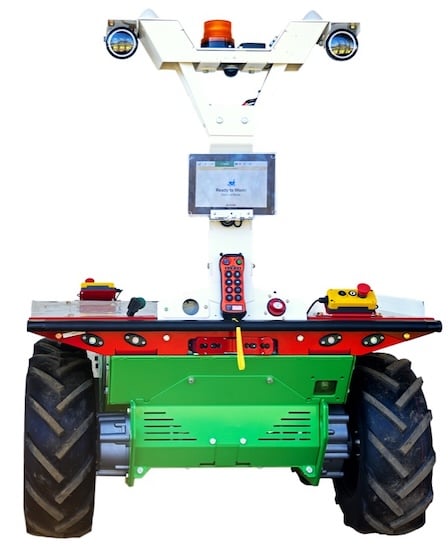
The new Grande 44 robotic platform. Image used courtesy of Burro
A New Class of Industrial Autonomous Vehicle
Burro says the Grande 44 was built to handle challenges that most warehouse autonomous mobile robots (AMRs) cannot. While most AMRs perform well in organized indoor spaces, industrial sites often require platforms that can handle rough terrain, outdoor areas, and changing work sites.
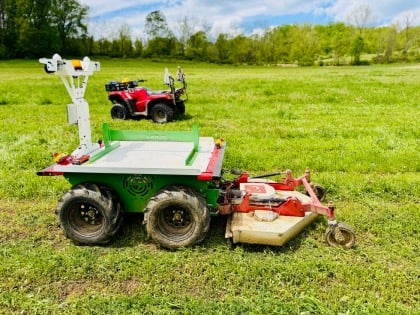
The Grande 44 modular, heavy-duty platform is suitable for use in an outdoor environment. Image used courtesy of Burro
The Grande 44 offers up to 44 horsepower and can tow loads up to 6,000 pounds. It can also carry up to 1,500 pounds on its steel cargo platform. The vehicle uses high-traction R4 tires and a strong chassis designed for continuous work in tough terrain. It also features a 1.5-kW wireless charging and docking system to reduce downtime and support autonomous fleet operations.
From Agricultural Fields to Industrial Yards
Burro’s move into heavy industry builds on years of experience in agriculture, where autonomous systems must handle unpredictable terrain. The company reports its fleet has covered over 200,000 miles autonomously and logged more than one million hours of operation. This experience has given Burro a large dataset to train and improve the autonomy systems now used in the Grande 44.
Instead of designing the platform solely for warehouses, Burro drew on its outdoor autonomy experience to create a system that can operate in both indoor and outdoor work areas. This makes the new platform especially useful for industries where materials often move between warehouses, loading docks, staging areas, and production sites.
Bridging the Indoor-Outdoor Autonomous Operations
A major technical challenge for the AMR industry is expanding autonomy beyond structured warehouse environments, where traditional AMRs often rely on controlled settings, set routes, and predictable conditions.
Outdoor industrial environments are more complex, with changing lighting, uneven terrain, weather, and unexpected obstacles. Burro believes its experience in agricultural robotics helps the new Grande 44 handle these challenges by leveraging advanced vision systems and physical AI technologies that operate in less structured settings. As industrial facilities grow larger, the ability to move easily between indoor and outdoor spaces could become a key advantage for autonomous platforms.
Expanding Beyond Material Transport
The new Grande 44 platform has many practical uses, such as autonomous towing of trailers and component trains at logistics hubs, rail facilities, and airports. It can also support automated inspection, patrol, and scouting by adding extra sensors and RFID technology. These features could help facilities monitor equipment, track assets, and perform routine inspections with less manual work.
Production of the Grande 44 platform is scheduled to begin in the second half of 2026, with first customer deliveries expected later that year. Visitors to Automate 2026 can see Burro’s autonomous technology in action at live demonstrations in the Automate AMR Demo Area.
As labor shortages and productivity demands continue to drive investment in automation, Burro’s latest platform reflects the industry's broader effort to bring autonomous mobility beyond warehouses and into the broader industrial landscape.
Related Content