Facebook
 Google
 GitHub
 Linkedin
Keyence Launches Next-Generation Scan Tunnel System for Logistics Industry
Keyence has developed a scan tunnel system specifically designed for the logistics industry. The new system simultaneously reads barcodes and measures package dimensions, even in high-speed applications.
Barcodes are a great way to store a small amount of data that can be read by a scanner and decoded within a control system. A typical installation for a fixed mount reader involves reading barcodes in a stationary environment; reading barcodes in motion is quite difficult. The logistics industry, however, cannot afford the luxury of stopping packages on a conveyor belt to read the barcode. Package barcodes must be read as they travel past the reader, and the reader will need to scan the barcode and decode it, all before the package has left the station.
To handle these demands, Keyence has released its next-generation ST series scan tunnel system, capable of reliably reading barcodes in motion, despite package size or speed.

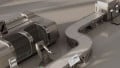
Keyence’s new ST series scan tunnel system is designed to scan package barcodes in logistics applications. Image used courtesy of Keyence
ST Series Scan Tunnel System
The ST series scan tunnel system is designed specifically with the logistics industry in mind. The system consists of different types of readers, a dedicated controller, and analysis software to visualize operating conditions. Once combined, users have a powerful tunnel system capable of reading barcodes regardless of package size or conveyor speed.
When reading barcodes in motion, the gap between barcodes is important, as conventional readers are only able to capture one barcode per image. If there are two barcodes within the scanner’s field of view, errors could occur. To overcome this obstacle, the ST series’ scan tunnel code readers use an offset focal plane and Keyence’s DynaTrax technology to ensure packages as close as 50 mm can still be read without error.
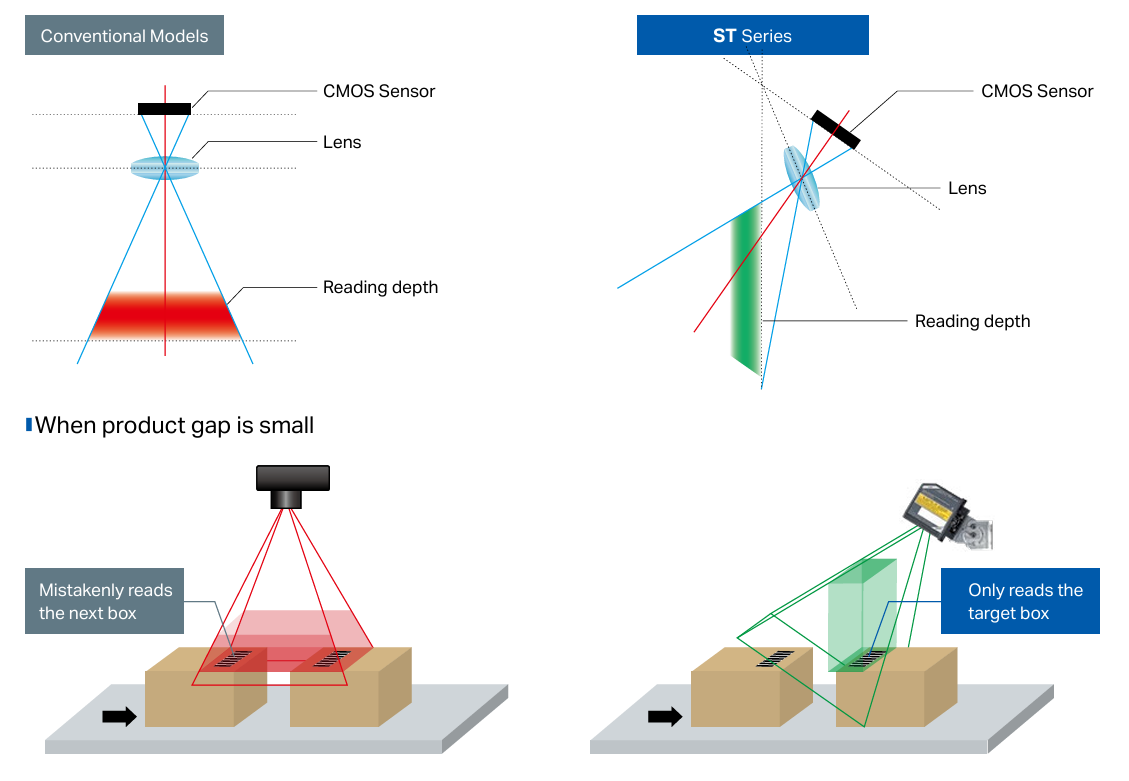
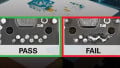
Compared to conventional barcode scanners, the ST series can reliably read barcodes with package gaps as little as 50 mm, resulting in fewer errors and greater throughput. Image used courtesy of Keyence
Scan Tunnel Code Readers
Compared to Keyence’s conventional high-performance models, the ST series scan tunnel code reader has a 2.3 times larger field of view and 2 times greater depth of field. This difference allows for a larger scanning area and a larger change in distance from the reader to the barcode.
To improve the ST series’ scanning results, Keyence’s next-generation system also features a dimensioner that measures the size of packages, regardless of package color or shape. By knowing the size of the package, the system can increase barcode scanning reliability.
Keyence also has a bottom-side reader to read barcodes underneath the package. This reader is available for installation beside a conveyor instead of underneath it, as mounting a reader under a conveyor requires constant cleaning and could be damaged by debris. The side-mounted, bottom-side reader uses an internal mirror not subjected to dirt and debris.

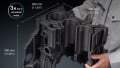
The ST series scan tunnel system combines a scan tunnel code reader (left), a dimensioner (center), and a bottom-side code reader (right). Image used courtesy of Keyence
ST-Series Link
Because barcodes in the logistics industry could be in any orientation or side of the package, multiple readers must be combined to ensure no barcode passes through without being scanned. The ST-Series Link is a communication hub that allows users to connect multiple ST scanners on one IP address. This saves time during integration by not having to configure multiple readers for one application. The controller has ports for Ethernet communications, I/O connections, and even an SD card reader for saving parameters.
Analysis and Troubleshooting
To ensure a smooth running system, the ST-series readers and controllers are compatible with the SR-RT1, a panel mount IPC with pre-installed analysis software. The analysis software can analyze failed images from each reader and determine the root cause of the failure. The software can also display graphical reader statistics, which, at a glance, can outline underperforming readers within the network.
Related Content