Facebook
 Google
 GitHub
 Linkedin
steute Releases Explosion-Proof Solenoid Interlocks for Extreme Conditions
The new solenoid-controlled interlocks for harsh environments are the latest addition to steute’s series of explosive-proof compact interlocks released earlier this year.
For the better part of sixty years, steute Technologies has been making industrial switches for various markets. Today, steute is a global supplier of medical devices for use in operating rooms, safety switches and other safety components, and intralogistics devices. The company is divided into three business units Meditec, Controltec, and Leantec. Controltec is the division that handles the design and manufacturing of safety switches, solenoids, and accessories.
Recently, steute Controltec released a line of interlock switches for use in explosive zones. The company has now expanded that series to include an interlock capable of operating in extreme environments, such as in dusty, dirty, and wet conditions.
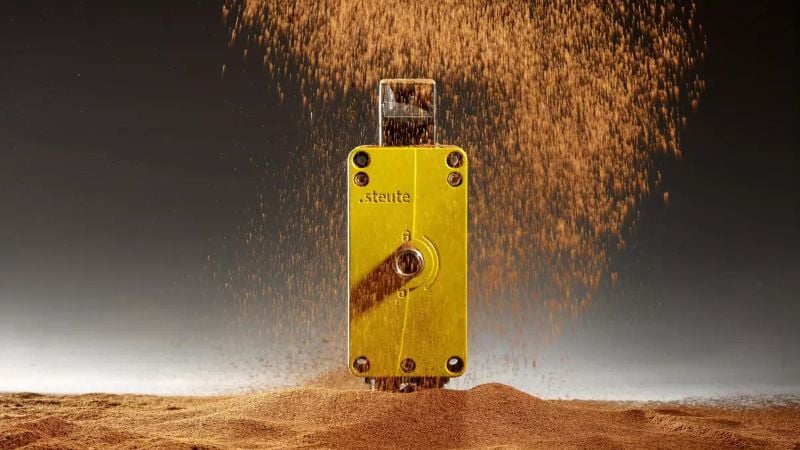
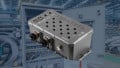
The STM 515 Extreme solenoid interlock is designed for use in harsh environments. Image used courtesy of steute Technologies
Safety Interlocks in Automation
Interlocks function to keep operators and machines safe from harm. Anytime an operator or maintenance staff needs to remove machine fences or guarding, there needs to be an interlock to ensure the fence has been replaced before the equipment is allowed to power on again. A common example is a door to enter an automation cell.
Operators need to have the ability to access a robotic weld cell or an assembly cell for maintenance or teaching robot positions. The position of the door is monitored within the safety system through an interlock. The interlock locking mechanism is fixed to the guarding while the actuator is attached to the door. When the door closes, the actuator enters the interlock mechanism, and the actuator contacts close. The control system can then send a signal to the interlock device to lock the actuator in place. The locking mechanism moves into place with the help of an electrical solenoid.
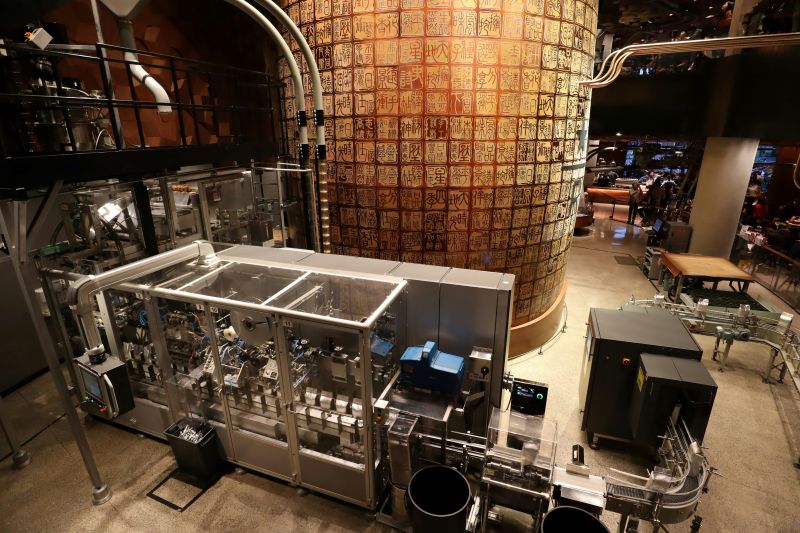
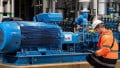
An automated cell uses interlocks to monitor cell door positions in order to prevent harm to machines and operators. Image used courtesy of Unsplash
Once the actuator is locked in place, the locking contacts close, providing two dual-channel monitoring signals to ensure the door is closed and locked. If any of these contacts open or the contacts do not close together, the safety system will drop all stored energy within the cell and make the system safe for entry.
The STM 515 Extreme
The new STM 515 Extreme from steute is a solenoid interlock designed to work in conditions where other interlocks might fail. The STM 515 Extreme comes standard with an IP66/IP67 rating and a corrosion-resistant aluminum enclosure with multiple surface coatings to help prevent wear. All the wiring is contained within a terminal compartment which protects the electrical connections from the harsh environment outside of the enclosure. The STM 515 can be ordered as a spring-to-lock or power-to-lock model; this option will depend heavily on the application where the interlock is used.
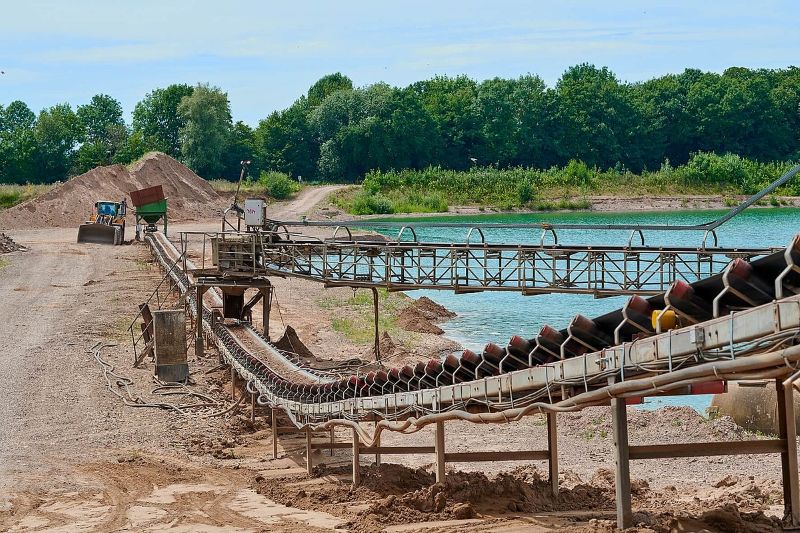
The STM 515 Extreme is an explosion-proof solenoid interlock that can handle dusty, dirty, and wet conditions. Image used courtesy of steute Technologies
On one side of the interlock is an escape release that faces into the danger zone. This release allows users to override the interlock in the event someone is locked inside the danger zone. Inside each interlock are two sets of contacts, one is for the actuator, and the other is to monitor the lock. These contacts provide dual channel feedback to the safety system and ensure the interlock is closed and locked. The STM 515 Extreme does not come with an actuator, so users will need to select an appropriate actuator when ordering the interlock.