Facebook
 Google
 GitHub
 Linkedin
Industrial Automation: Spare Yourself From Network Pitfalls!
Some new factories are networked from stem to stern, ready to roll. But sometimes, it’s just you and a new PLC, so it won’t really matter how you set things up, it’ll probably work just fine, right?
A challenge that’s faced engineers since the very beginning of control systems is this: planning for the future. If you are firmly committed, you might have deployed a small Ethernet system in a shipping facility and still be working in the same plant-wide system 10 years later. Or, you might be on the other end of the spectrum. I would hate to arrive in a facility with a poor network layout that needs to have 10 years of mistakes corrected.
How are we going to plan for the future of our facilities? What steps can we take to ensure we set ourselves up for success? This is not an exhaustive list, but I can share some insights from pitfalls I have experienced and was forced to remedy.
Get Training and Knowledge
By reading this article, you’re already on this step, but don’t stop here by any means. This subject is first on my list for a reason: it is the most important thing. I’m a major Allen Bradley user, so finding an AB Network Fundamentals Course (CCP184-EL) would be highly advantageous for me. You might be using Siemens PLCs or perhaps one of the Automation Direct PLC families. Try to find a training that relates specifically to you and your equipment if possible. You’ll be greatly helped by the hardware familiarity you will receive.
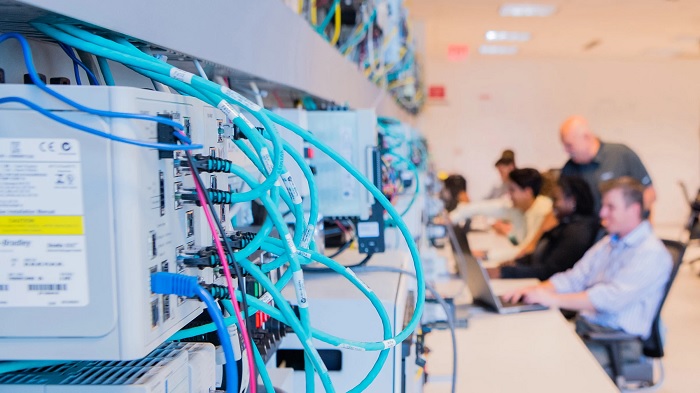
Figure 1. Training tailored to your specific network can be invaluable. Image used courtesy of Rockwell Automation
There are tons of different trainings out there to choose from, but not all of them will educate you about industrial applications. Finding an automation distributor with a class can be very helpful because they understand how automated facilities work. If you receive guidance and lay out your facility like an IT center with only IT hardware, you may find yourself in a pickle down the road. Try to get your knowledge from people in your field. Don’t lay out a telecom center like a sawmill, and likewise, don’t lay out your sawmill like a telecom center.
Network Segmentation
Network segmentation refers to how a network can be laid out and isolated from other sections of itself. Think of it like a school. A one-room schoolhouse (single network for everything) works well when you only have 12 students in the school. When you have 400 students, you will quickly find out you need to segment them into different classrooms because everyone will be talking over each other and it would take far too long for everyone to speak up, share ideas, and respond to requests.
Accomplishing this segmentation is going to take time and a variety of perspectives. Here’s an example. I work in sawmills where lumber travels from one processing machine to another. Each machine center has a single master PLC controlling it. Occasionally, there are multiple PLCs in a single machine center, but there is only one master PLC. It makes sense in our sawmills for the networks to be segmented with one portion of the network (a subnet) dedicated to each machine center.
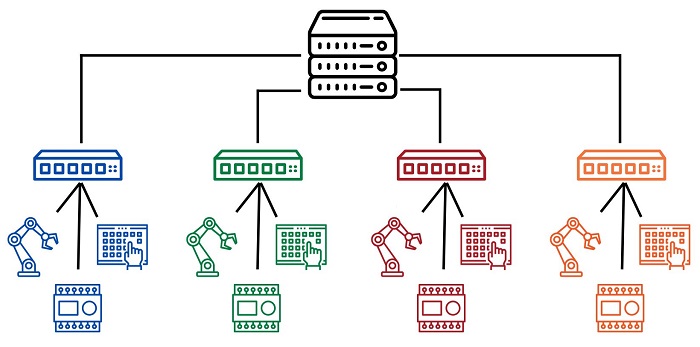
Figure 2. Network segmentation can include subnets to divide functions, physical regions, or machine centers. Image used courtesy of Control.com
Another application could be a facility that uses many short assembly lines to make a product from start to finish. It could make sense for this facility to segment its network with a subnet for each line. Take your time and have multiple knowledgeable people work together to ensure the plan will stand the test of time.
Routing and Backbone Infrastructure
If you have a well-segmented network, the devices on one subnet cannot cross over and clog up the other subnets with traffic. In my example of the sawmill, I described a segment for my upstream machine that allowed its traffic to be isolated from the downstream machine. What if that upstream machine had one very important piece of information that needed to be sent downstream whenever a board passed from one to the other? It would need to have a route!
Routing a network goes hand in hand with the segmentation we discussed previously. The routing of a network is essentially a map. It is a table or set of tables stored in managed switches that tell them where to send traffic when it needs to exit the subnet. These managed switches will generally be part of your backbone network infrastructure. Either they are the ones creating their own operational technology (OT) backbone, as pictured below, or they tie into a traditional IT backbone.
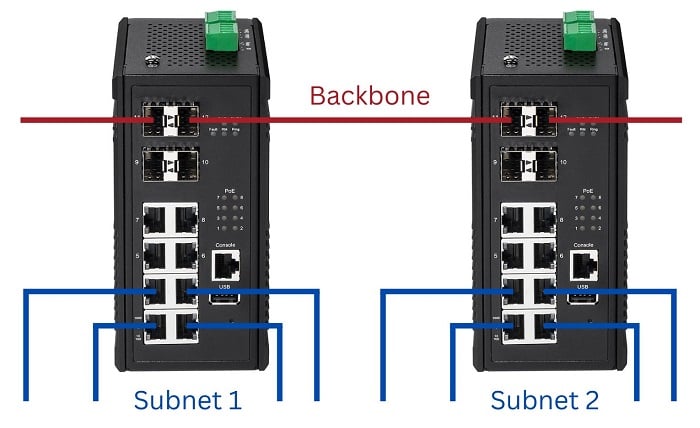
Figure 3. Managed switches linking each subnet to a network backbone. Image used courtesy of Control.com
Whether you tie into an IT backbone or create your own is up to you and your IT department. It is common for companies with a larger infrastructure to already have a network in place that is run by the IT team.
Operate as a Single Team With a Unified Goal
It is important to work with your IT team to ensure you follow the necessary steps to keep your network secure and in line with applicable company policies. Working with IT as an OT person can also allow you to start showing them the differences between IT and OT networks.
A good relationship with mutual respect can open the door to having an IT group that is of great help to you! They might even be able to incorporate new rules and SOPs that help your factory floor operate more efficiently.
Related Content