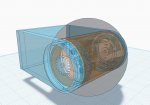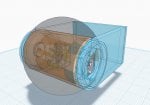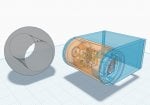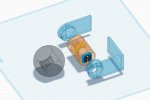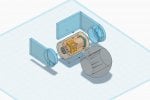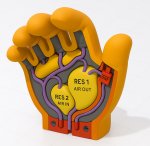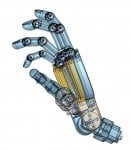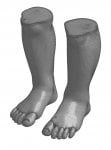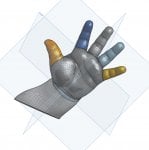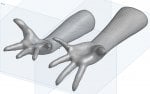
inflatable infant prosthesis design

Hello, I am making a 3D printable infant prosthesis, and need tiny valve designs such as, ball, rotary, solenoid, etc. great examples of which can be found here: basics-of-hydraulic-directional-control-valves . It is a daunting task for the designer, tubing lengths, valves, pump pressure etc.
Ideally the hand needs to achieve about 20 different positions to be any good. Interestingly, the Thumb works like a separate limb altogether.
But, needs combining with the four fingers, with regards to the tubing, valves, and pressure formulas in order to make an effective, Arduino controlled system. The Pump position, can be at the start of the wrist, forearm, or top arm, but, for now I am concentrating the design, on just the Hand. The Shoulder joint, is the same as the Wrist joint, Hip joint, Ankle joint and interestingly the Index finger joint [small motors needed here] esp. as my prototype design is for a 2 year old infant. I am going to make tiny 3D printable valves, for this project. Any useful design considerations, for a tubing setup etc, as outlined above, would be most welcome! - purely charitable and humanitarian attempt.
 

Attachments

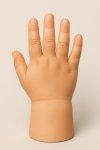
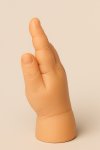
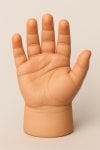
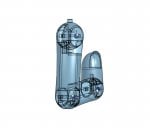
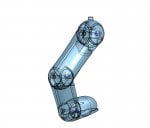
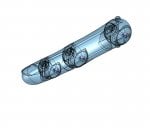
Ammendment to above: Hello, I am making a 3D printable infant prosthesis, and need tiny valve designs such as, ball, rotary, solenoid, etc. great examples of which can be found here: basics-of-hydraulic-directional-control-valves . It is a daunting task for the designer, tubing lengths, valves, pump pressure etc. inflatable infant prosthesis design Relying on the nature of how air pressure works in controlled pre-filled air inflatable, against a small amount of spring tension at each joint, enough for a baby or small child. Inflating lozenge shapes, actuate valve handles, to fill air chambers in the fingers, which work against small spring tension, to return the hand to a relaxed position. Deflation, allows the spring to close fully, like a fist. Hopefully, fully 3D printable springs, lozenges, valves, inner main rotating finger structure, outer shell, and life like, skin stretchy, skin textured outer 3D skin! Ideally the hand needs to achieve about 20 different positions to be any good. Interestingly, the Thumb works like a separate limb altogether.
But, needs combining with the four fingers, with regards to the tubing, valves, and pressure formulas in order to make an effective, Arduino controlled system. The Pump position, can be at the start of the wrist, forearm, or top arm, but, for now I am concentrating the design, on just the Hand. The Shoulder joint, is the same as the Wrist joint, Hip joint, Ankle joint and interestingly the Index finger joint [small motors needed here] esp. as my prototype design is for a 2 year old infant. I am going to make tiny 3D printable valves, for this project. Any useful design considerations, for a tubing setup etc, as outlined above, would be most welcome! - purely charitable and humanitarian attempt.Quiet lightwieght Inflatable design bryser1_gmail_com.jpg
 
This is a fantastic humanitarian project. For your infant prosthesis, here are some key design tips:

  • Valves: Instead of ball/rotary, try reed or flap valves—easier to 3D print at small scale. Consider TPU for flexible, airtight parts.
  • Tubing: Keep runs short, use a manifold for even airflow.
  • Air Chambers: TPU “lozenge” bladders pre-filled slightly reduce pump demand.
  • Springs: 3D printed springs fatigue quickly—TPU bands or hybrid designs work better.
  • Control: Start simple with inflate/deflate per finger, add PWM or proportional valves later. Include pressure sensors for safety.
  • Pump Placement: Keep in the forearm/upper arm to reduce hand weight.

Prototype with 1–2 fingers first, then scale up. This stepwise approach helps balance safety, simplicity, and functionality.
 
Follow my design for child prosthetic 3D printable EEG/EMG Robot hand, here:
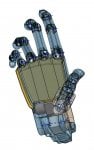
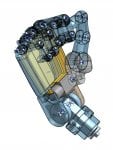
LATEST UPDATE: New Tendon design for child sized robotic prosthetic hand,
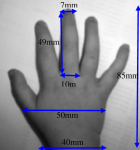
fingers only 52mm long! There are four linear motors which pull the lower tendon and close the fingers,
the upper tendon, acts like a spring and returns the finger to a straight position.
Another motor at the wrist area and one in the palm will allow the fingers to span,
as if playing the piano keyboard! The thumb design is also ready. The whole thing,
including a full version to the shoulder, will be made into a 3D printable,
set of files and instruction manual, all available FREE for Public Download.

infant prosthetic design

baby hand 3d model c [reptology 55mm]
 

Attachments

I noticed you've moved from the original pneumatic concept to a tendon-driven design using linear actuators. That seems like a significant change, and I think it opens up some interesting possibilities.

One area I'd pay particular attention to is tendon tension and force limiting. With motor-driven tendons, actuator position doesn't necessarily tell you where the finger actually is, particularly if the finger encounters an obstruction. I'd consider some mechanical compliance in the tendon system, along with travel stops and a way to detect excessive tension or motor stalls.

I'd also look at whether an underactuated design could reduce the number of motors required. Allowing multiple finger joints to conform mechanically to an object might simplify the design and reduce weight, which seems especially important for a hand this small.

I'd be inclined to prototype one complete finger first and measure the force required to close it, the return force, and how consistently it responds over repeated cycles. That should help establish the actuator requirements before committing to the complete hand.

Given that this is intended for a two-year-old, I'd also want a pediatric prosthetist involved in evaluating fit, pinch hazards, force limits, and failure behavior before any child wears it.

Interesting project. I'd be curious to see how your tendon mechanism develops.
 
Motor position alone cannot confirm finger movement. Tendon friction and mechanical resistance can affect positioning. Current sensing can help detect stalled motors. Force sensing can also prevent excessive tendon tension.

For a miniature prosthesis, actuator size matters enormously. Weight, power consumption, and mechanical travel need careful consideration. I'd prototype one finger before developing the complete hand.

For robotics projects, Unikeyic helps connect technical component selection with distributor-side sourcing workflows. You can check thier robotics and medical electronics-related components. The right motor drivers, sensors, and control components deserve careful evaluation. Pediatric safety should remain the primary design consideration.
 
Thread starter Similar threads Forum Replies Date
bryser1 Human Machine Interface - HMI 0
Similar threads
infant prosthetic design
Top