Frame 9E Lube Oil Tank

H

Thread Starter

Hassan

Can some body guide me about the lowest lube oil tank level of 9E machine? I have seen the MLI 416 for this case but i found such thing 254,305,406 & 432 . Is 432 is the low level? I also see the device summery which gives 71Ql and 71QH for low and high level , but doesn't give the valve of the switch . Please guide me for the low level of lube oil tank

thanks
Hassan
 
GE has been changing their Piping Schematic (P&ID) drawings over the last few years, so the depictions aren't always the same.

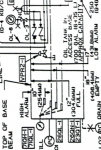
On the drawings I'm familiar with, each measurement was associated with a specific level, such as 71QH-1, 71QL-1, Normal, etc. They were usually shown at one side or the other of the drawing, with dashed lines to the Level Indicator, etc., for the associations.

All measurements are made from the top of the tank to the top of the oil, meaning from the "underside" of the top of the tank. This should also be indicated on the drawing, as well as in the Notes on Sheet 1 of the drawing.

I don't have anything but an F-class L.O. Piping Schematic at this time, and it's woefully inadequate, showing only the Normal L.O. level (sad, but true).

There were also some other measurements usually shown on the drawings, such as the distances from the various pump suctions (which are usually at slightly different elevations). So, don't confuse those with the level indications.

I'm accustomed to seeing four or five indications on a drawing:

High Alarm
Full
Normal
Low and/or Low Alarm

Hope this helps! But, without being able to examine your drawing, it's really difficult to say what each level is associated with.
 
P

ProcessValue

Lube oil tank level

The figures that you have given here is the relative level from the top of the lube oil tank. i will show you a example so that you can understand better.

TOtal tank level : 860 mm
High alarm : (860 - 254) 606 mm
Full : (860 - 305) 555mm
Empty : (860 - 406.5) 453.5 mm
Low alarm : (860 - 432) 428 mm

so as you can see from here , the 77QH-1 which is the lube oil tank high level switch will get activated for a tank level of 606mm and the lube oil tank low level switch will get activated for 428 mm. the rest that you see , the high , full and empty are the local gauge indications.if you see the PID properly you will see that a gauge is indicated in the diagram with dotted lines taken from the different levels.

Hope this will clear your doubts regarding the lube oil tank level gauge
 
N

nayan.sharif

In my plant we are also installing GT frame 9e..LO P&ID shows three level i.e. HIGH, NORMAL and LOW. Values are 254,305 & 432 respectively. But I can't find the height of the tank in my P&ID. In your answer you said tank height is 800 mm. Is it same for all GT 9e LO tank design?
 
nayan.sharif,

Is it not possible to physically measure the distance from the bottom of the L.O. Tank to the underside (the bottom) of the top of the L.O. Tank?

GE Belfort have been changing a LOT of dimensions and practices that have been static for decades, so it's <b>NOT</b> safe to assume the dimension is the same for any recent produce of the Belfort facility.

I would also be very surprised if the dimensions on MLI 0416 (the L.O. P&ID) were <b>NOT</b> specific in that they are referenced to the underside (the bottom) of the top of the L.O. Tank. (Okay; not "very surprised"--after all, it is the Belfort Bunch we're talking about here; but I would be surprised if some reference point to the dimensions you referred to were not delineated somewhere on the drawing, possibly in the Notes (which most people don't ever read, but which have LOTS of good information--maybe even about VCK20-13.?.?.?)).

But, to eliminate all possible confusion the best thing to do in any case is to go out and measure the distance from the bottom of the L.O. Tank to the underside (the bottom) of the top of the L.O. Tank, and then there will be (almost) no doubt.
 
N

nayan.sharif

Dear CSA

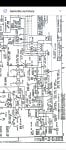
thanks for ur reply. I have checked P&ID and there is no dimension for LO tank. I will measure it manually as per ur advice...:p..and there is nothing written in the notes about LO tank measurement (or VCK20-13!!!!!)
take care
 
nayan.sharif,

Is it not possible to physically measure the distance from the bottom of the L.O. Tank to the underside (the bottom) of the top of the L.O. Tank?

GE Belfort have been changing a LOT of dimensions and practices that have been static for decades, so it's <b>NOT</b> safe to assume the dimension is the same for any recent produce of the Belfort facility.

I would also be very surprised if the dimensions on MLI 0416 (the L.O. P&ID) were <b>NOT</b> specific in that they are referenced to the underside (the bottom) of the top of the L.O. Tank. (Okay; not "very surprised"--after all, it is the Belfort Bunch we're talking about here; but I would be surprised if some reference point to the dimensions you referred to were not delineated somewhere on the drawing, possibly in the Notes (which most people don't ever read, but which have LOTS of good information--maybe even about VCK20-13.?.?.?)).

But, to eliminate all possible confusion the best thing to do in any case is to go out and measure the distance from the bottom of the L.O. Tank to the underside (the bottom) of the top of the L.O. Tank, and then there will be (almost) no doubt.
Please what does GE mean by the top of the base beam when measuring lube oil level and is our measured frame 6b lube oil tank level of 834mm correct
 
@manyo,

What is meant is that if you put a clean "stick" into the opening of the tank in the Accessory Compartment (after removing one of the large square metal tank opening covers) and push the stick down until it touches the top of the oil level in the tank while holding the edge of the stick against the tank opening and make a mark where the stick touches the BOTTOM of the tank cover, that dimension from the mark you made to the top of the L.O. level (bottom of the stick) determines the proper quantity of oil in the tank. OCCASIONALLY the dimension is made from the bottom of the tank to the top of the oil level inside the tank but that's not common.

All L.O. tanks ARE NOT exactly the same dimensions (height; width; or depth) so it's impossible to say if your dimension is correct or not. It SHOULD be possible to look at the L.O. System P&ID for YOUR MACHINE to find the how the dimension is specified (either from the bottom of the tank to the). MANY people are extremely reluctant to open one of the tank covers in the Accessory Compartment (???) and so choose to use the sight glass on the side of the tank next to the L.O. Tank Level Gauge. One can measure from the oil level in the sight glass to the TOP of the I-beam that forms the outer edge of the tank--which is where the tank "lid" is welded during construction, and is the same as the bottom of the tank. It should be noted that it's very difficult to get an accurate measurement with this method without three or four hands and two sets of eyes--but it is "possible."

Just have a look at the L.O. System P&ID and you should be able to see how the tank levels are measured for the machine at your location.
 
@manyo,

What is meant is that if you put a clean "stick" into the opening of the tank in the Accessory Compartment (after removing one of the large square metal tank opening covers) and push the stick down until it touches the top of the oil level in the tank while holding the edge of the stick against the tank opening and make a mark where the stick touches the BOTTOM of the tank cover, that dimension from the mark you made to the top of the L.O. level (bottom of the stick) determines the proper quantity of oil in the tank. OCCASIONALLY the dimension is made from the bottom of the tank to the top of the oil level inside the tank but that's not common.

All L.O. tanks ARE NOT exactly the same dimensions (height; width; or depth) so it's impossible to say if your dimension is correct or not. It SHOULD be possible to look at the L.O. System P&ID for YOUR MACHINE to find the how the dimension is specified (either from the bottom of the tank to the). MANY people are extremely reluctant to open one of the tank covers in the Accessory Compartment (???) and so choose to use the sight glass on the side of the tank next to the L.O. Tank Level Gauge. One can measure from the oil level in the sight glass to the TOP of the I-beam that forms the outer edge of the tank--which is where the tank "lid" is welded during construction, and is the same as the bottom of the tank. It should be noted that it's very difficult to get an accurate measurement with this method without three or four hands and two sets of eyes--but it is "possible."

Just have a look at the L.O. System P&ID and you should be able to see how the tank levels are measured for the machine at your location.
Thank you very much for your assistance and explanation. Attached is the lube oil P&ID but the lube oil tank height is not included in the P&ID. The measurement we get from dipstick is 480mm while the gauge indicates about 55%. For me the gauge is ok but my colleague said the gauge is not working correctly. Please can you deduce from the P&ID if the gauge is working perfectly @ 480mm dipstick and about 55%gauge value. Also can I accurately calculate the tank height from the second file I uploaded. Thank you
 

Attachments

@manyo,

Please tell us precisely how you are determining the height of the oil in the L.O. tank. Are you inserting a clean “stick” into the tank and touching the bottom of the tank and then withdrawing the stick and measuring the from the bottom of the stick to the highest mark of the oil on the stick?

Or, describe or take a photo of how you are measuring the oil level in the tank.

You also haven't told us what the L.O. Level gauge reads, and there is usually (maybe not on older machines...) a sight glass on the side of the L.O. tank (the steel I-beam that forms the right side of the L.O. tank where the L.O. level gauge is located) which could be used to try to determine the level of oil inside the tank without needing to remove a L.O. access plate to take a measurement. (But, again, I don't know machines as young as the one at your installation had a L.O. sight glass; some did and some didn't, depending on who packaged the machine for sale.)

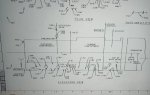
1746397504347.png

All the dimensions and the measurement reference point are shown in the lower left-most corner of the drawing. The gauge on the side of the tank reads FULL when the distance from the top of the oil to the top of the base beam is 304.8 mm. (Again--'Top of the Base Beam' means the underside of the top plate of the L.O. tank--which is welded to the top of the base beam (which are steel I-beams that forms the right- and left sides of the L.O. tank and the base of the Accessory Compartment when standing inside the Accessory Compartment).)

The HIGH L.O. Level alarm occurs when the distance from the top of the oil to the top of the base beam is 254mm.

The gauge on the side of the tank reads EMPTY when the distance from the top of the oil to the top of the base beam is 406.4mm.

The LOW L.O. Level alarm occurs when the distance from the top of the oil to the top of the base beam is 431.8mm.

The gauge and the alarms are designed to help keep a sufficient oil level in the tank so that the suctions of the L.O. Pumps are NOT below the level of the oil in the tank. They are NOT meant to indicate a percentage of the "normal" oil level or the FULL level of oil in the tank. They are designed to try to have operators/maintenance personnel keep the oil level above the lowest pump suction (the Emergency L.O. Pump suction) in the tank. (Notice that the gauge EMPTY level is still above the LOW L.O. LEVEL Alarm level!) If I recall correctly, on machines such as the one at your installation the amount of oil to change the reading from EMPTY to FULL (or from FULL to EMPTY) was approximately 1-2 barrels of oil--which is a fraction of the total amount of L.O. in the tank (1700 gallons or 6435 liters).

From the second attachment if the CL (center-line) of the machine is 85 inches above the machine base line (which I interpret to mean the bottom of the base beam) and the top of the base beam is is 48 inches below the CL then the height of the tank from bottom to top is (85-48) 37 inches (939.8mm), which seems a little incorrect to me, but it could be right for a machine that "young." And you should be able to calculate the other dimensions from the machine base line. But, I don't think that is exactly correct.

Again, the gauge does not indicate percentages of a full or normal oil level. It's more a guide to TAKE ACTION when the gauge indicates EMPTY to keep a safe level of oil in the tank for operation. AND, oil levels ARE NOT measured from the bottom of the tank--they are measured from the top of the oil level in the tank to the top of the base beam (to which the top of the L.O. tank) is welded. When one of the access plates in the Accessory Compartment to the L.O. tank is removed from the top of the L.O. tank the reference point for all measurements is taken from the BOTTOM of the cover of the L.O. tank to the top of the oil level inside the tank--NOT the bottom of the cover that was removed, but the bottom of the steel plate that forms the top of the L.O. tank.

A reading taken from the bottom of the top cover of the L.O. tank to the top of the oil level inside the tank of 480mm is below the LOW L.O. ALARM level. If we trust the dimension of the internal height of the L.O tank (from the bottom of the tank to the bottom of the top plate of the L.O. tank) as being 939.8mm (which doesn't seem exactly correct in my recollection) the LOW L.O. ALARM level would be (939.8-431.8) 508mm from the bottom of the top of the base beam. So I don't think the dimensions shown in the second attachment can be trusted to be accurate (because the LOW L.O. ALARM level is just slightly above the Emergency L.O. Pump suction level. So, it's still not clear (to me) how the oil level in the tank is being measured at your installation.

I hope this was clear and understandable.
 
@manyo,

Please tell us precisely how you are determining the height of the oil in the L.O. tank. Are you inserting a clean “stick” into the tank and touching the bottom of the tank and then withdrawing the stick and measuring the from the bottom of the stick to the highest mark of the oil on the stick?

Or, describe or take a photo of how you are measuring the oil level in the tank.

You also haven't told us what the L.O. Level gauge reads, and there is usually (maybe not on older machines...) a sight glass on the side of the L.O. tank (the steel I-beam that forms the right side of the L.O. tank where the L.O. level gauge is located) which could be used to try to determine the level of oil inside the tank without needing to remove a L.O. access plate to take a measurement. (But, again, I don't know machines as young as the one at your installation had a L.O. sight glass; some did and some didn't, depending on who packaged the machine for sale.)

View attachment 4838

All the dimensions and the measurement reference point are shown in the lower left-most corner of the drawing. The gauge on the side of the tank reads FULL when the distance from the top of the oil to the top of the base beam is 304.8 mm. (Again--'Top of the Base Beam' means the underside of the top plate of the L.O. tank--which is welded to the top of the base beam (which are steel I-beams that forms the right- and left sides of the L.O. tank and the base of the Accessory Compartment when standing inside the Accessory Compartment).)

The HIGH L.O. Level alarm occurs when the distance from the top of the oil to the top of the base beam is 254mm.

The gauge on the side of the tank reads EMPTY when the distance from the top of the oil to the top of the base beam is 406.4mm.

The LOW L.O. Level alarm occurs when the distance from the top of the oil to the top of the base beam is 431.8mm.

The gauge and the alarms are designed to help keep a sufficient oil level in the tank so that the suctions of the L.O. Pumps are NOT below the level of the oil in the tank. They are NOT meant to indicate a percentage of the "normal" oil level or the FULL level of oil in the tank. They are designed to try to have operators/maintenance personnel keep the oil level above the lowest pump suction (the Emergency L.O. Pump suction) in the tank. (Notice that the gauge EMPTY level is still above the LOW L.O. LEVEL Alarm level!) If I recall correctly, on machines such as the one at your installation the amount of oil to change the reading from EMPTY to FULL (or from FULL to EMPTY) was approximately 1-2 barrels of oil--which is a fraction of the total amount of L.O. in the tank (1700 gallons or 6435 liters).

From the second attachment if the CL (center-line) of the machine is 85 inches above the machine base line (which I interpret to mean the bottom of the base beam) and the top of the base beam is is 48 inches below the CL then the height of the tank from bottom to top is (85-48) 37 inches (939.8mm), which seems a little incorrect to me, but it could be right for a machine that "young." And you should be able to calculate the other dimensions from the machine base line. But, I don't think that is exactly correct.

Again, the gauge does not indicate percentages of a full or normal oil level. It's more a guide to TAKE ACTION when the gauge indicates EMPTY to keep a safe level of oil in the tank for operation. AND, oil levels ARE NOT measured from the bottom of the tank--they are measured from the top of the oil level in the tank to the top of the base beam (to which the top of the L.O. tank) is welded. When one of the access plates in the Accessory Compartment to the L.O. tank is removed from the top of the L.O. tank the reference point for all measurements is taken from the BOTTOM of the cover of the L.O. tank to the top of the oil level inside the tank--NOT the bottom of the cover that was removed, but the bottom of the steel plate that forms the top of the L.O. tank.

A reading taken from the bottom of the top cover of the L.O. tank to the top of the oil level inside the tank of 480mm is below the LOW L.O. ALARM level. If we trust the dimension of the internal height of the L.O tank (from the bottom of the tank to the bottom of the top plate of the L.O. tank) as being 939.8mm (which doesn't seem exactly correct in my recollection) the LOW L.O. ALARM level would be (939.8-431.8) 508mm from the bottom of the top of the base beam. So I don't think the dimensions shown in the second attachment can be trusted to be accurate (because the LOW L.O. ALARM level is just slightly above the Emergency L.O. Pump suction level. So, it's still not clear (to me) how the oil level in the tank is being measured at your installation.

I hope this was clear and understandable.
Yes it was clear. When I measured the tank from bottom to top of the base beam, the height of the tank was 835.0mm. Also from the value you got for the tank height (939.8), when we subtracted the thickness of the machine base (101.6mm), we have (989.8-101.6) which gives tank height of 838.2mm. can we say the height of the tank is within this range? The gauge is reading 55%. The 480mm reading was taken from the bottom of the tank to the oil level using dipstick. Thank you very much for your time and assistance
 
Top