Facebook
 Google
 GitHub
 Linkedin
Hello everyone,
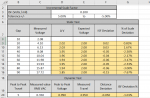
I have a question regarding the gap voltage in a setup we're using to measure radial vibration on a load gearbox shaft for a Fame 6B gas turbine driving a generator. During our recent maintenance activities, we set the gap voltage to -10V and locked it tightly. However, after performing some ratchetting activities, we observed that the gap voltage changed to -12.7V, which was the largest deviation among all sensors.
I’m curious about what could be causing this change in gap voltage. Could it be related to mechanical issues during the ratchetting process, or might there be other factors at play? We have also tested the Mechanical and Electrical Runout for the High Speed Shaft(HSS) and Low Speed Sha
Additionally, I’d like to know if such a change in gap voltage could pose any issues for accurately measuring radial vibration during equipment operation.
Details that might help:
Equipment: GE Frame 6B Gas Turbine
Driver: Alstom Generator
Load Gear Box: Flender
The issue occurs at multiple radial vibration sensors at the Load Gear Box.
Thanks in advance
I have a question regarding the gap voltage in a setup we're using to measure radial vibration on a load gearbox shaft for a Fame 6B gas turbine driving a generator. During our recent maintenance activities, we set the gap voltage to -10V and locked it tightly. However, after performing some ratchetting activities, we observed that the gap voltage changed to -12.7V, which was the largest deviation among all sensors.
I’m curious about what could be causing this change in gap voltage. Could it be related to mechanical issues during the ratchetting process, or might there be other factors at play? We have also tested the Mechanical and Electrical Runout for the High Speed Shaft(HSS) and Low Speed Sha
Additionally, I’d like to know if such a change in gap voltage could pose any issues for accurately measuring radial vibration during equipment operation.
Details that might help:
Equipment: GE Frame 6B Gas Turbine
Driver: Alstom Generator
Load Gear Box: Flender
The issue occurs at multiple radial vibration sensors at the Load Gear Box.
Thanks in advance