Level Transmitter False Reading

B

Thread Starter

Bilal

Hi, we have a level transmitter installed on ammonia service. It shows large variations when taken on AUTO. When changing its control constants (proportional gain, integral gain) on DCS it shows fine response for about 15 mins and then again shows large deviations. Due to this valve statrts opening when it shouldn't be. We have also changed its sensor, electronic cards and barrier to the DCS but the problem is still there. No variations occur when taken on Manual

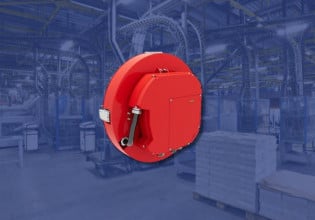
Transmitter has the following specs:
Make: Masoneilan DRESSER Flow controls
Model: 12322-058
Type: Torque Tube Displacer
S.No: MSP008127-1
Supply: 24 Vdc
Output: 4-20mA
Pressure: 1800 Psi at 60 degF
 
What gain settings do you have configured as they are important for the time basis of the deviation?
Have you trended the output in Auto to see if this is a gradual increase in output or does it just happen?

>No variations occur when taken on Manual

The old philosophy is still valid >> if the system and / or plant is stable on manual but not on automatic then the Auto controller is at fault otherwise it would always be unstable.

I have experienced a similar problem in the dark distant past on a very early version of a DCS/SCADA system, it was thought that the programmer was originally an Instrument Engineer or at least had read a book on Instrumentation as the set-up was similar to how we used to set up the alignment etc on local pneumatic controllers.
Set the output in manual to 50% and adjust the reset (integral) to min leave for a few minutes then to max.This had the effect of setting the "Bellows" to 50% balance. Strange as it may seam this was the only way we could get our Controllers to perform until the system was replaced many years later.

What type/make of DCS system are you using?
 
J
Bilal,

Are you were observing at the field (level glass) during this deviation? Do you have any level glass installed?

It sound like a tuning loop problem

1.- Check the correct stroke in the valve, test the stroke of the valve changing its position from DCS ( 0% 25 50 75 and 100%) and observing it in the field, It seem that the valve is working good, because in manual the variable is stable, but It is a good practice to check the valve and its stroke.

2.- Compare the liquid level showed in the level glass against to the showed by the level transmitter.

3.- Check the complete wiring, including positioner, transmitter and junction boxes. Take care with a loose strip, or loose terminal and make sure that to ground loop is not present

4.- Tuning the loop using your favorite method.

Regards
J.P
Instruments Technician
 
Sandy thanks for the concern.

We have Honeywell TDC 3000 DCS at our plant
We have taken the trends on AUTO and variation was gradual.

When controller was taken on manual no variations were there as we just varied the output of controller 'OP' to control the valve.
Another important observation was that the loop works fine when level is increasing but when level starts falling below 70% the transmitter doesn't follow it. So, local indication of level on field gauges becomes different from level reading on DCS. Transmitter works fine in the range 70-80% but not below it. It seems that displacer has easy travel upwards but faces a lot of hinderance when coming down.

However when we change the gain parameters (proportional, derivative) transmitter starts responding even below 70% but for just 15-20mins and then again starts showing deviations.

Original Parameters were:
Gain= 0.9
Reset= 1.5
Rate= 0

We changed them to improve the response:
Gain= 0.7
Reset= 1.5
Rate= 0.2
We again changed them to:
Gain= 0.6
Reset= 1.5
Rate= 0.2

Moreover we have also checked the Valve calibration using HART communicator and its fine.
We have a NP valve with FieldVue DVC5000 positioner.

Can you suggest where could be the problem?
 
hello,
I have same problem around past years, fortunately

we discover some fact, yes indeed the problems lies on the instrument for some reason the data transferred from the instrument slightly change after the controller (DCS) are set to auto that's before we realizes actually they are work correctly so on with the controller the main problems is the controller are adjusting the PV from manual state to auto so you better check again your Loop Process and the PID setting. Is there any load increasing or decreasing from the last time you used the manual and switch it to auto? and there's any process parameter that affect the loop.


that's all I Hope this can help.
 
B

Bruce Thompson

Have you checked for blockage in the pressure lines?

Since the transmitter is slow in responding to level changes in the decreasing direction, it suggests that either the pressure line has some blockage in it, or is simply too small for how its being used

Sandy thanks for the concern.
 
R
If the transmitter signal is not following the field gauges, the problem must lie with the transmitter. No amount of DCS tuning will fix that.

Is the displacer directly in the tank or in a stilling well to one side?

Is one of the local gauges also on the stilling well?

I have never worked with ammonia, could it be a freezing problem?

What is the fluid on top of the ammonia?

Roy
 
Thanx to all of you for guidance.

The problem has been resolved.

I want to share it with you for the sake of knowledge.

Initially, we were unable to isolate the transmitter because the isolating valve was passing,so we got the valve fixed. Since we had traced the entire loop previously and checked the stroking of valve both on Auto and Manual,so we were dead sure that the transmitter should be faulty. So we removed the transmitter and displacer from column and calibrated it using Dry by-weights method and found errors. We found that the knife-edge of the fulcrum was rounded. So we replaced it and again calibrated. Then we re-installed it and just for cross-checking we calibrated it in field using Wet method. It was then taken into service and after a while on AUTO. Now its reading level fine and matches the reading on local gauges. So, the problem was with the transmitter not with the controller or loop.
 
It is possible that either the displacer or the torque arm is damaged I can think of no logical reason why the level should respond differently when the level is falling or rising.

"Unless"
Maybe the displacer is fouing on the side wall or has a hole etc this would account for the differences between the DSC and local readings and possibly why below 70% it does not measure correctly.

Have you checked to make sure there are no "Filters" on the DCS input delaying the signal update?

Having said that If the sustem has previously worked OK and no major work has been carried out then the chances of the DSC system being to blame are very low and I would consider the "Mechanical" aspects of the installation to be high on my lists of possible faults

Best of luck
Sandy
 
Is the transmitter a pressure instrument? Obviously the ammonia tank is enclosed, is it blanketed with nitrogen or some other inert gas? Could the vessel "see" pressure changes during auto operation that wouldn't be present during manual operation?
 
Top