Modbus Architecture Question

Use a protocol gateway to move Modbus data to a PLC. (Modbus RTU/TCP to EtherNet/IP or PROFINET)
Use a local Historian to move time-series Modbus data to long-term storage. (FTP or direct injection to an SQL database)
Use an Edge gateway to move Modbus data to enterprise or Cloud applications.

Is this correct? Any comments? What are the main limitations of any of these architectures?
 
Yes and No
1. Gateway yes if your PLC does not do Modbus natively or with its own IO card.

2. Your local historian should have long term storage option via a shadow server or SQL database, if it doesn't get a better one. AFAIK using FTP will not be a good option, storing using FTP means it would be a file and not re-callable into a history trend in real time.

3. Use your historian instead of edge gateway. A good historian, being server based, is designed to provided data, and data streams, to multiple clients simultaneously. In this way you only one source of truth for your plant data. It makes troubleshooting of bad data easier when there is only one data path. Also having multiple data collectors hitting your PLC can be problematic for the PLC scan time/CPU usage or time delayed/accuracy of the data. Cyber consideration, using the historian allows you to have it as part of a DMZ to segregate corporate from process, if you use edge gateway or multiple gateways you have multiple points of potential access into process network(s).
 
Great information. I hadn't considered the point about a longer-term storage connection. I have had trouble distinguishing edge gateways from historians. Same functionality really.

What would you consider an Edge gateway?
John R
 
Yes, that’s generally correct. Using a protocol gateway is good for real-time PLC integration, a local historian works well for long-term storage, and an edge gateway is ideal for cloud/enterprise access.

The main limitations are latency and scalability with gateways, storage and query performance with local historians, and network dependency and security for edge/cloud solutions.
 
Great information. I hadn't considered the point about a longer-term storage connection. I have had trouble distinguishing edge gateways from historians. Same functionality really.

What would you consider an Edge gateway?
John R
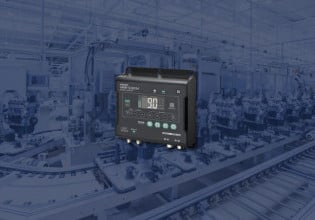
The general definition of an Edge device is that it sits at Level 1 or Level 0 in the design hierarchy. There are several different philosophies for gateways at that level and it depends on your hardware and/or perspective. You could use a Moxa edge gateways (DIN rail device) for connection between networks at that level, or a PLC with no I/O, or a PC of some design.
 
Top