SRV stop solenoid valve trouble

J

Thread Starter

Joysha

We are operating six frame-6B gas turbine with Mark V control system. Last seven years we faced 5 loss of flame trip due to failure of the stop solenoid valve coil.

We are still using the same solenoid valve with 650 ohms resistance. MODEL: SV10-23W-V-110VDC.

Anybody faced similar problems?

Any alternative coils?

Anybody can suggest what are the remedial actions to be taken to avoid recurrence of the similar problems?

Appreciate your valuable comments in advance

Regards,
Joysha
 
Have the failures occurred on the same units? Or have they occurred on different units? In other words, have multiple failures of the 20FG-1 solenoid occurred on one or a limited number of units, or have five of the six units each experienced their own failures?

The typical cause of failure of solenoids is heat. So, is there something about the position of the 20FG-1 solenoids on the units at your site that causes them to be subjected to high heat, or be blocked from proper cooling air flows? These solenoids typically do get warm, so if there is lack of cooling air flow or there is a high ambient temperature in the area where the solenoid is located that would be a likely cause.

Is there anything that can be done to improve the cooling air flow to the coils?

What is the voltage that's being applied to the coils? If the voltage is low the current will be higher, and high currents can be another failure cause. High currents cause high heat.

Lastly, oil varnish deposits can cause the mechanical portions of the valves through which the oil flows or is blocked to bind and stick which can cause premature failures of the solenoids. When you are replacing the solenoids are you ensuring the mechanical assembly where the oil is ported or blocked is working properly?

Do the units run continuously? Do they run continuously on gas fuel, or only occasionally on gas fuel, or what percentage of the time are they running on gas fuel?

Is the control system free and clear of battery grounds? When the 20FG-1 solenoid failures occur, is it a failure of the solenoid coil insulation, which results in a temporary battery ground at the time of failure?

These solenoids have been used for decades with very high reliability rates, so one has to wonder what's different about the application at your site that's causing this higher-than-normal failure rate?
 
This issue is interesting as I never experience (yet thx god ;)) any solenoid valve coil failures before. The usual failures would be on the valve due to varnish formation after several years of service. As CSA said, please check the voltage supply for any ground fault. That might be the main culprit ;)


Failures occurred on different units and no repeated failure so far.

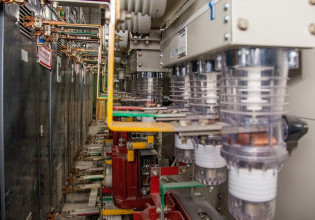
The solenoid is fitted on the block and the block is underneath of the old ‘SRV-GCV single block’ unit, this srv-gcv valve block is inside the small closed ‘gas valve compartment’ and one ventilation fan is running continuously.

The solenoid fitted block is open to the lube oil tank or we can say inside the lube oil tank. Lube oil temperature is around 55 deg C . We never measure the air temperature inside the tank. There is mist oil eliminator installed on the lube oil tank. So there will be always some negative pressure approximately 5-10 mbar.

Relocation of the block is not possible???? We have no idea how we can give cooling air flow into the tank?????

Applied voltage across the coil is 125-130 VDC , the voltage level is almost steady in all units. We observed that the defective coil resistance increased from normal 600 ohms to 20-35 Kohms, coil insulation was intact in all units and still we can stroke the SRV manually with the defective coil.

Our units are continuously running on gas fuel and once in every month a routine liquid fuel changeover test is there for approximately 15 minutes.

After the first incident we checked the complete bloke assembly, found all are ok

There was only one alarm ‘LOSS OF FLAME TRIP’.

Thank you for your comments
 
We had a problem with solenoid valve failures. The problem was atmospheric moisture creeping into the coil, creating a high resistance short to ground. We changed the solenoid to one with a different wiring connection (sealed) and the problem went away.
 
This is great information, Ronald B.

Can you provide us with the name of the new solenoid's manufacturer and the part number, please?

I'm somewhat concerned because I believe the solenoid the originator is referring to is a black cylinder, about 30 cm (12 inches) tall, about 7.5 cm (3 inches) in diameter, with a rounded, brass diamond-shaped base that bolts to the valve assembly with two bolts. The electrical leads exit from the top of the cylinder. I can't recall the manufacturer's name, but I think it's something like Ruggles-Klingemann (I found a website, www.r-kmfg.com), and in the upper left corner of the site is a cut-away picture of a valve similar to the one I tried to describe above.

I believe some F-class units use different valves for fuel trip solenoids (20FG-1, 20FL-2). I've seen some manufactured by Laurence on older F-class machines.

So, if you could tell, Ronald B., what kind of machines you work with and some more information about the replacement solenoids it would be very much appreciated!
 
Could you please share the details Mr. Ronald B.

CSA mentioned Black tall cylinder shaped solenoids, I have seen in old frame 6 units.

Our units having small solenoid 2.8 inch tall and 1.8 inch dia, fitted in a Moog block. SRV servo (90SR) valve also fitted in the same block.

model is SV10-23W-V-110VDC manufactured by Hydraforce. please see the links for more details

http://www.hydraforce.com/Solenoid/Sol-pdf/1-053-1.pdf
 
This is definitely a component I have not seen before, but then GE and their packagers are using new, cost-reduced designs all the time. (Hmmm..... I wonder if there's still a "dump valve" between 20FG-1 and the SRV servo-valve?)

If you go to the home page for hydraforce and click on the 'Contact Us' link, you will see towards the bottom of the page that all their products carry a five-year warranty.

I would also imagine they would be helpful in determining if the application is correct or if they have another product which would meet the requirements of the application. They have offices in the UK as well as in the USA.
 
Top