Temperature CONTROL PID

Dear all,

I am planning to replicate a relatively simple experiment, but I have no prior experience in temperature measurement and control. I would like to manage it on my own, but I would appreciate any advice you can provide (even just to avoid unnecessary expenses).

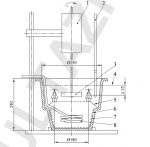
As you can see from the attached image, I need to immerse the PT100 in distilled water or glycerin, which can reach temperatures up to 300°C. The required accuracy is around ±1°C. Additionally, it is specified that the PT100 should be calibrated for an immersion depth of 40 mm.

I have started reading through several datasheets, but I feel like I am missing something in understanding the specific requirements that the PT100 needs to meet. Could you kindly share any advice and perhaps suggest a website where I can find some cost-effective options?

Furthermore, I need to heat water to reach the desired temperature at a specific °C/min rate.

I was considering purchasing this component:
https://www.tcdirect.co.uk/product-...er-with-up-to-4-Set-Points-and-Timer-Function.

However, I still have a few questions:

  1. Obviously, I need to purchase an electric heater capable of bringing the water from 0°C to the desired temperature, and sizing this is not a problem for me. However, I am unsure which type of immersion heater would be suitable for my purpose. What characteristics should it have?
  2. Will I be able to directly connect the heater to that PID controller, or will I need an additional component?
  3. Do you know where I could purchase an immersion heater like the one in the attached image?
  4. If I want to generate a data plot on my computer, will I need to purchase an additional component? If so, which one?
Looking forward to your advice, and thank you in advance!

Best regards,
 

Attachments

Dear Ciaci,

You could use a RKC Instrument temperature controller like the RB series. See it incl. its manuals almost halfway this page: https://cascade.net/en/controllers/
This controller has universal temperature sensor inputs and you can attach a Pt100 directly to its inputs. We advise to use at least a 3 wire Pt100 sensor in order to avoid misreadings caused by cabling issues.
We also deliver many temperature sensors of many types, see the "general catalog" for many standard types: https://cascade.net/en/thermocouple/
For driving the heater you can use a RKC Instrument solid state relay: https://cascade.net/en/rkc-thyristor-units-solid-state-relays/
Many RKC Instrument temperature controllers have a RS-485 modbus that you can connect (via USB->RS485 interface) to your laptop to read-out various parameters incl. the measured temperature. You could for example use our COM-KG interface for that purpose: https://cascade.net/en/com-kg-communication-converter/
This com-KG interface can be also be connected to the service port of the temperature controller, the free software Protem has a built-in software temperature recorder function. See it below on this page: https://cascade.net/en/com-kg-communication-converter/

What you can also do, is order the RKC Instrument temperature controller with a so-called retransmission output. This is an extra analog output that sends the measured value mapped to a 0-10Vdc signal. In turn, you can connect a temperature recorder to that signal. For temperature recorders, see: https://cascade.net/en/recorders/

Unfortunately, we don't deliver heaters. You could contact our customer Huikeshoven for that, they make all kinds of heaters: https://huikeshoven.nl/en/

Send an email to the address on this contact page and explain what you want to do: https://cascade.net/en/contact/
Many items can be delivered directly from our stock in Ridderkerk (near Rotterdam), the Netherlands
 
I assume that the 300°C is a typo (95°C?), because that rig is not a pressure vessel.

The RTD should be a 3-wire RTD because the measuring device should be able to actively compensate for lead wire resistance, which is not the case with 2-wire RTDs.

However, I have run across some 1/16 DIN (48x48 mm) controllers do not have enough space on the back connector block for 3 input terminals, so they will only handle 2 wire RTDs, which is inherently inaccurate. Be sure to check the wiring diagram to confirm that the controller will make a true 3-wire lead wire compensation. (I could not find the manual for that controller on that web site to see whether it handles 3-wire RTDs.)

You need to check to see if the controller's output relay or SSR output has the capacity to drive the immersion heater directly or whether you'll need an interposing relay or SSR to handle the current needed to drive the heater.

Yes, that sepoint programming feature option is what you want to ramp the temperature up over a certain period of time.

I'd probably buy one with at least one alarm and use the alarm to drop out the power (wired in series with the main control output) if the measured temperature gets up to the boiling point, to make sure it doesn't boil dry on you when you get called away by life (a non-code high limit).

Google will find all sorts of immersion heaters. The only characteristic is whether it fits in whatever that vessel is so that the heater element is covered by the liquid and I'd probably want one with a stainless steel sheath so any corrosion does not pollute the liquid.

The size of the heater will determine how quickly it can heat the water.

If holding the target temperature ±X°C is important, you'll have to run the autotune to get the PID to cycle on-off at a rate that hold the water temperature.
 
Thank you Mr. Duis,
I wrote an email to cascade as you adviced. I have to use a PT100 since the standard that I am trying to follow require it. Which is the instrument between those you mentioned that perform the PID? Which characteristics should have the heater to be compatible with this system.
 
Thank you David_2.
Indeed, it was a typo. The maximum temperature it can reach is 150°C. Regarding the immersion heater, I’m having trouble finding the right shape to fit the vessel. What do you do in such cases? Can it be custom-made? How can I ensure it is compatible with my system?
 
Dear Ciaci,

You could use a RKC Instrument temperature controller like the RB series. See it incl. its manuals almost halfway this page: https://cascade.net/en/controllers/
This controller has universal temperature sensor inputs and you can attach a Pt100 directly to its inputs. We advise to use at least a 3 wire Pt100 sensor in order to avoid misreadings caused by cabling issues.
We also deliver many temperature sensors of many types, see the "general catalog" for many standard types: https://cascade.net/en/thermocouple/
For driving the heater you can use a RKC Instrument solid state relay: https://cascade.net/en/rkc-thyristor-units-solid-state-relays/
Many RKC Instrument temperature controllers have a RS-485 modbus that you can connect (via USB->RS485 interface) to your laptop to read-out various parameters incl. the measured temperature. You could for example use our COM-KG interface for that purpose: https://cascade.net/en/com-kg-communication-converter/
This com-KG interface can be also be connected to the service port of the temperature controller, the free software Protem has a built-in software temperature recorder function. See it below on this page: https://cascade.net/en/com-kg-communication-converter/

What you can also do, is order the RKC Instrument temperature controller with a so-called retransmission output. This is an extra analog output that sends the measured value mapped to a 0-10Vdc signal. In turn, you can connect a temperature recorder to that signal. For temperature recorders, see: https://cascade.net/en/recorders/

Unfortunately, we don't deliver heaters. You could contact our customer Huikeshoven for that, they make all kinds of heaters: https://huikeshoven.nl/en/

Send an email to the address on this contact page and explain what you want to do: https://cascade.net/en/contact/
Many items can be delivered directly from our stock in Ridderkerk (near Rotterdam), the Netherlands
Hi, thank you again for your responses. I have already contacted Cascade, but in the meantime, I would like to delve deeper to better understand the questions I still have:

  1. Based on advice, the PT 100 will have 3 wires, but I'm unsure which one to choose among all the options available. The only things I know are that it must comply with EN 60751 and be capable of immersion in a liquid, such as glycerin up to 260°C or distilled water up to 80°C. It must also have an accuracy of ±1°C. Could you help me understand how to make the right choice? What are the technical implications of calibrating it for immersion at a depth of 40 mm?
  2. RKC SSR: Could you give me some advice on how to choose the right one?
Thanks in advance
 
The heater in the diagram appears to be a spiral shape heater. Google spiral heater elements. You need to know the line voltage driving the element, and the wattage needed. Size wise it's gotta fit your vessel.

±1°C might be a challenge if you have to get a certified calibration on the system. Consider having the vendor calibrate the RTD and provide a cert, assuming they're a certified cal service that can provide a traceable cert. At 260°C, a Class B RTD is on the order ± 1.7°C, so you'll have to pay for a Class A RTD that can achieve a ±0.7°C accuracy.
 
The heater in the diagram appears to be a spiral shape heater. Google spiral heater elements. You need to know the line voltage driving the element, and the wattage needed. Size wise it's gotta fit your vessel.
I searched for it, but in the image of the experiment there is a sloped part of the heater that follows the slope of the vessel.
 
Heaters consist of nichrome resistance wire in a sheath packed with a white powder, normally magnesium oxide, an insulator, and a termination at the opening.

Those spiral heaters start out as straight heating rod elements that are bent to shape.

You can make mild bends in small diameter heater rods. The Mineral insulated heat trace says minimum radius bends should be 6x the cable diameter but it sounds like you need 5-10° of a bend on a straight section.
 
Please specify to cascade in what kind of medium, or mediums, you want to measure with the Pt100 and up to which temperature. Then they will advise a correct type.
Each Pt100 can be calibrated on the temperatures you specify at a certified laboratory, but in this case extra costs and longer delivery time are involved. I would only suggest this if it is really needed.

Regarding the solid state relay you need, the following must be specified by you:
- max. and nomimal voltage of the heating element. I.e. if you use a normal 1-phase 230Vac heater you could use a DIN rail mount RKC SSL series SSR driven by a so-called 12Vdc voltage pulse from the RKC RB controller. We have them for 15 and 25A. This solution is for a 230Vac 1-phase heating element. 2/3 phase solutions are also possible but only needed for higher power levels.
- max. and nominal current of the heating element in Amperes
- max. and nomral power of the heating element in Watts
 
Good morning,
First of all, I want to thank you because I am learning a lot thanks to the information you provide. I would like to take the opportunity to ask for further advice.

The standard states:

"B.1 Apparatus
B.1.1 Laboratory temperature measuring device, having an accuracy of +0.25% of the nominal rating, calibrated to a depth of 40 mm immersion, for determining temperatures of liquids in bath tests and operating temperatures. The thermally sensitive part of the sensor (e.g., bulb of a thermometer) shall be held level with the centre of the sprinkler operating parts (glass bulb or fusible element). To control the temperature in the thermal bath, a PT100 sensor conforming with EN 60751 or equivalent shall be used."


I am not sure if this level of accuracy is required for the entire system or just for the PT100. Looking at various instruments on the market, it seems to me that this is a very stringent requirement, considering that a typical nominal temperature is 57°C, which implies an accuracy of 0.14°C.

In your opinion, is this a feasible requirement, or does it apply only to the PT100 since it would be unachievable for the entire system?

Thank you in advance for your help!
 
The quoted text is confusing. Is there an object under test in whatever process/scheme is going on here?

Is the "glass bulb or fusible element" an object that is being tested in the heated liquid solution?

A "glass bulb" might possibly refer to a certified liquid-in-glass thermometer a temperature reference but a fusible element is something that melts at a time/temperature interval, like something that might be tested in a heated solution.

The lowest accuracy component determines the system accuracy. It doesn't make sense to use high accuracy components if the limiting factor is a component with far less accuracy.
 
" The lowest accuracy component determines the system accuracy. It doesn't make sense to use high accuracy components if the limiting factor is a component with far less accuracy. "
This is very true and the most important thing many people forget: the major factor determining the accuracy is in 99.9% of the cases the sensor itself, not the equipment connected to the sensor, that is way more accurate.
 
Recently I wrote a web page on PID controllers, their history, what the P, I and D factors actually do and rules of thumb on how to set them.
All pages are in English, Dutch and German language.

See PID: https://cascade.net/en/pid-temperature-control-algorithm/

The same for the history of temperature measurement and thermocouples & Pt100 sensors.
see temperature measurement: https://cascade.net/en/thermocouplesaand-pt100-temperature-sensors/

And about thyristors, that is also for many people a "black box" so I tried to explain a little bit.
See thyristors https://cascade.net/en/electronic-power-switch-the-thyristor-how-does-it-work/

Hope this helps explaining a little bit for these important parts of a temperature control.
 
Top