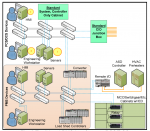
First, the manufacturer/vendor can sell more "stuff."
Second, no one wants to use an HMI in the control room when they can have an "Engineering Workstation" in their office.
Third, it's another device that needs attention, maintenance, back-up and repair (more support and effort).
Fourth, it won't be "soiled" by the operators.
And so on. It's really about the first reason, and the second and fourth reasons. The third reason just makes it more of a nuisance--but requires time and effort (that is, money, in someone's pocket).
Most manufacturers/vendors will tell the buyer they can't install any software other than what was supplied with the equipment on the computers/workstations. (And, I will tell you a horror story about a site that installed some automated round equipment software on one workstation that kept causing the entire plant to trip intermittently. (The culprit: A serial port driver that was causing chaos with communications between turbine island control equipment and the plant computer system--and kept causing the round data to be lost! It took over one year to find the source of the problem; meanwhile, it cost hundreds of thousands of dollars in lost generation, damaged equipment, and corporate reputation.) I heartily recommend adhering to this strong recommendation/requirement. So, even if the computer is classified as an "engineering workstation" unless one understands exactly and precisely how it fits in the plant networks putting "untested" software on any computer is begging for trouble.
A little more information and background than you asked for, but profit margins and egos are the two main reasons for most engineering workstations.

 Facebook
 Google
 GitHub
 Linkedin