Facebook
 Google
 GitHub
 Linkedin
Applications for Single Pair Ethernet: Perspectives for Device Manufacturers
Learn how SPE and Power over Data Line are enabling advanced developments in industrial and building automation, robotics, processing, infrastructure, and energy.
Single Pair Ethernet (SPE) represents a revolutionary advancement in connectivity technology, streamlining Ethernet communications through the use of just one twisted wire pair rather than the conventional two or four pairs. This innovative approach enables rapid data transfer over extended distances, supports Multidrop functionality, and allows for power delivery across the same wire pair. SPE proves especially beneficial in scenarios where minimizing weight, conserving space, and reducing costs are essential factors, rendering it perfectly suited for both industrial and commercial implementations.
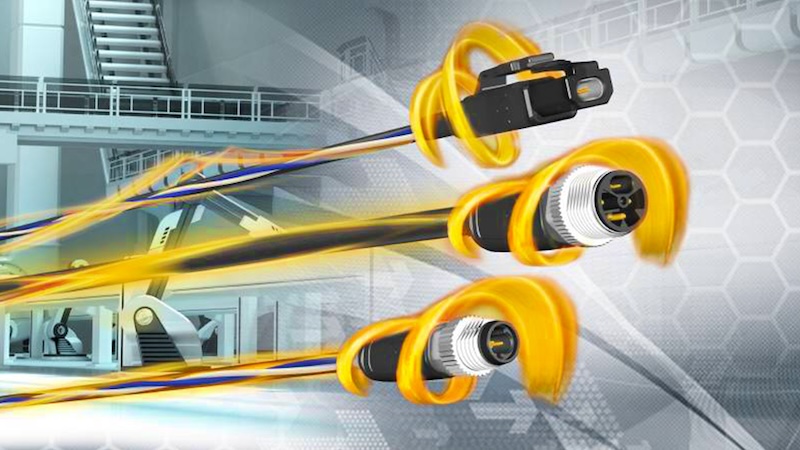
Figure 1. SPE cables and connectors are available in multiple form factors to meet unique application requirements.
The origins of Single Pair Ethernet can be traced back to automotive engineering, where compact devices with exceptional performance capabilities were in high demand. In today's technological landscape, SPE has expanded to numerous applications, particularly excelling in Industry 4.0 (IIOT) environments, as well as building, factory, and process automation systems. These diverse fields present Device Manufacturers with numerous opportunities to incorporate SPE when developing their next generation of products.
Industrial Automation
With the progression of automation technology, an increasing array of sensors and actuators is being deployed throughout manufacturing environments. This evolution necessitates a consistent, expandable, and time-sensitive network extending from IIoT devices to cloud systems, requiring dependable components. Such infrastructure enables Ethernet connectivity across all automation tiers, reaching down to individual sensor and actuator levels.

Figure 2. Large, distributed sensor and control systems make industrial automation well-suited to SPE.
SPE applications are particularly prevalent in contexts involving intelligent device communication, sensing, and monitoring activities. Typical implementations include Barcode Readers, Camera systems, User Terminal interfaces, and various Detection Sensor technologies.
Industrial automation environments often require data transmission across substantial distances up to 1,000 meters while maintaining high speeds, without necessitating additional gateway equipment. The diverse sensor arrays, actuator systems, and field devices within manufacturing facilities all require power sources. Through PoDL (Power over Data Line) technology, simultaneous power and data transmission becomes possible via just two wires, eliminating the need for separate power supply cabling.
Robotics
Single Pair Ethernet delivers remarkable advancements in communication infrastructure miniaturization, enabling the development of more advanced robot end-of-arm tooling. Diverging from traditional protocols, SPE provides enhanced bandwidth capabilities, allowing the communication between robotic arms and their control systems to process larger data frames with greater efficiency. The Power over Data Line (PoDL) capability reduces cabling complexity along robotic structures by transmitting both data and power through a unified cable.
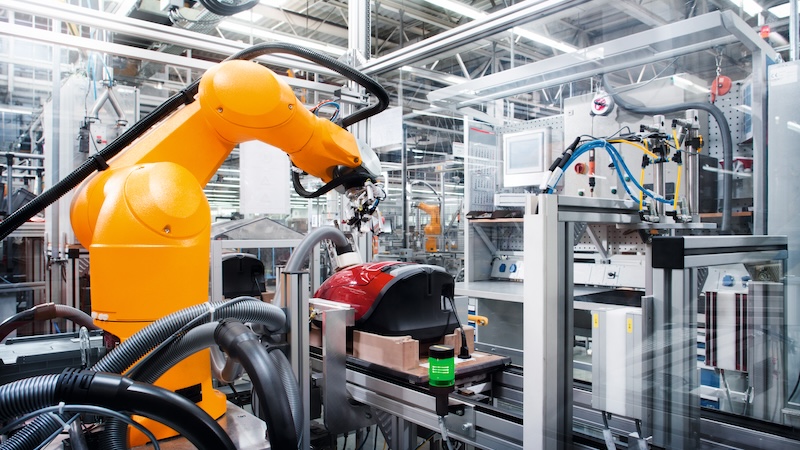
Figure 3. Robotics benefits from the high bandwidths and light weights of SPE cables and connectors.
SPE effectively supports high-definition 2D and 3D robotic vision systems by facilitating data transfer at rates reaching 1 Gbit/s over distances extending to 40 meters. Furthermore, SPE cabling features reduced bending radii compared to standard automation cables, potentially decreasing the overall dimensions of robot bodies and arms. This streamlined and efficient cabling solution enhances both performance capabilities and design flexibility in robotic systems.
Process Industry with Ethernet-APL
Process industries increasingly require Ethernet-compatible interfaces to extract field-level data via IIoT platforms. A significant challenge involves accessing information from remote field sensors and devices across substantial distances. Additionally, various IIoT devices must be integrated into existing network infrastructures. The process industry's specialized Single Pair Ethernet implementation is called Ethernet-APL, representing a tailored version of 10Base-T1L enhanced with functional safety features, necessitating tested and qualified components for reliable 10 Mbit/s data transmission and concurrent power delivery via twisted pair cabling extending up to 1,000 meters.
The Ethernet-APL (Advanced Physical Layer) standard enables direct field and device-level access through an internationally standardized two-wire solution. Implementation requires robust IIoT devices with qualified components. This technology facilitates improved plant availability and enhanced production data: The collection, utilization, and analysis of field device data becomes significantly more accessible, helping ensure and improve facility operations while enabling novel solution implementations.
Building Automation
The integration of Internet of Things (IoT) capabilities into building management systems has become essential to ongoing digital transformation efforts, with its significance projected to increase substantially.
Implementing IP protocol standardization makes building automation more efficient and streamlined, enabling seamless connection of sensors, controllers, and other building technologies to the central system architecture, even across extended distances. This approach replaces legacy proprietary fieldbus systems with a standardized Ethernet infrastructure, eliminating requirements for expensive and complex programming and configuration processes. When Single Pair Ethernet is employed, intermediate gateways become unnecessary.
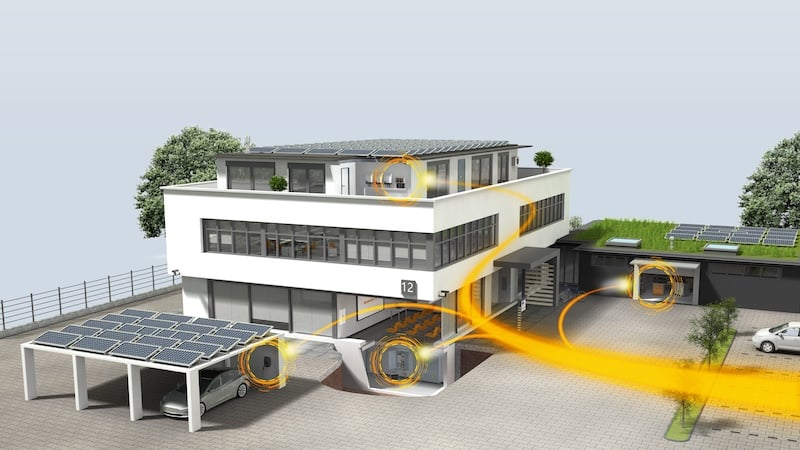
Figure 4. Compact, energy-efficient SPE systems provide reliable Ethernet connectivity for building automation.
Smart building design and development shows a clear trend toward minimizing energy consumption across all connected systems. Single Pair Ethernet plays a crucial role in this context by enabling simultaneous high-performance data and power transmission over a single wire pair through Power over Data Line (PoDL) technology.
Furthermore, SPE components, including connectors and cabling, are designed for intelligence, longevity, and efficiency. SPE facilitates the integration of building systems such as lighting control, HVAC operations, and security monitoring into a unified network infrastructure that simplifies installation and maintenance. Its ability to accommodate various transmission distances and rates, combined with high-density connection capabilities, makes this connectivity technology adaptable to virtually any system architecture. SPE transforms IoT device implementation by enabling compact, energy-efficient designs with reliable Ethernet connectivity—critical for applications in smart grid management, smart city development, and home automation systems.
Infrastructure
With its capacity to transmit data over significantly longer distances than conventional Ethernet, infrastructure projects can leverage substantial benefits from Single Pair Ethernet implementation. For example, 10BASE-T1L can deliver 10 Mbit/s up to 1,000 meters. This capability makes SPE particularly valuable for expansive infrastructure developments, including tunnels and railroad intersections, which demand extended reach combined with robust data throughput. Applications include signal control and power delivery, sensor connectivity with integrated power, and actuator management.
In extensive deployments such as trackside equipment networks and traffic management systems, SPE reduces cabling complexity significantly. By providing both power and data through a single wire pair (Power over Data Line), SPE simplifies the installation and ongoing maintenance of devices like sensors and monitoring cameras for traffic control systems.
SPE's native compatibility with existing Ethernet infrastructure ensures smooth integration, facilitating efficient deployment of intelligent infrastructure solutions requiring real-time data exchange and continuous monitoring capabilities. Additionally, SPE's inherent scalability makes it ideally suited for expanding established infrastructure networks, as it readily accommodates increasing data requirements and additional device deployment without necessitating major modifications to existing installations.
Energy
Single Pair Ethernet delivers numerous advantages within the energy sector. Its ability to support high-speed data communication across extensive distances makes it perfectly suited for monitoring and controlling remote energy assets, including wind turbines, solar installation fields, and electrical substations. Through Power over Data Line (PoDL) technology, SPE simplifies the deployment of smart grid devices, sensor networks, and actuator systems, enhancing IoT technology integration. Moreover, the real-time data exchange and monitoring capabilities provided by SPE prove essential for effective energy management practices, predictive maintenance programs, and ensuring consistent stability and reliability throughout power distribution networks.
Looking Ahead
Single Pair Ethernet constitutes a transformative advancement in Ethernet technology, offering substantial benefits to both device manufacturers and end-users. Its capabilities in simplifying cabling infrastructure, enhancing data transmission performance, and integrating power delivery position it as an essential enabling technology for the future of industrial automation, building management systems, and IoT applications. Device manufacturers who adopt SPE technology will position themselves at the forefront of technological innovation, prepared to lead the development of next-generation connected devices that deliver unprecedented intelligence, efficiency, and capabilities.
All images used courtesy of Weidmüller Group.
Related Content