 Facebook
 Google
 GitHub
 Linkedin
Automating Pallet Staging During Peak Dispatch Hours
Coordinating the time and space constraints of manual and robotic forklifts can have a hidden solution: reducing traffic by creating the proper flow, not simply by adding more moving units.
In most outbound operations, peak dispatch times reveal the weakest link.
Around 5 pm, the departure slots are filled in by reach trucks and pallet jacks that stage in front of the dock doors until about 9 pm. Those who are supposed to be loading trailers end up chasing pallets, and every time somebody drops in the wrong lane, it becomes a re-stage, waiting for a truck.
Mere congestion is rarely the root cause of the chaos. The real issue is that the staging operation of moving finished pallets into the correct lanes and load sequences gets squeezed into the same hours as loading. Separate those two jobs, in both time and in space, and forklift robots stop looking like a staging zone liability and instead start relieving pressure.
On-site engineers often tell us that a robot could never survive the evening rush on their dock. However, with the right layout and schedule, the robot rarely has to face that rush at all. But how can the facility create such a setup?
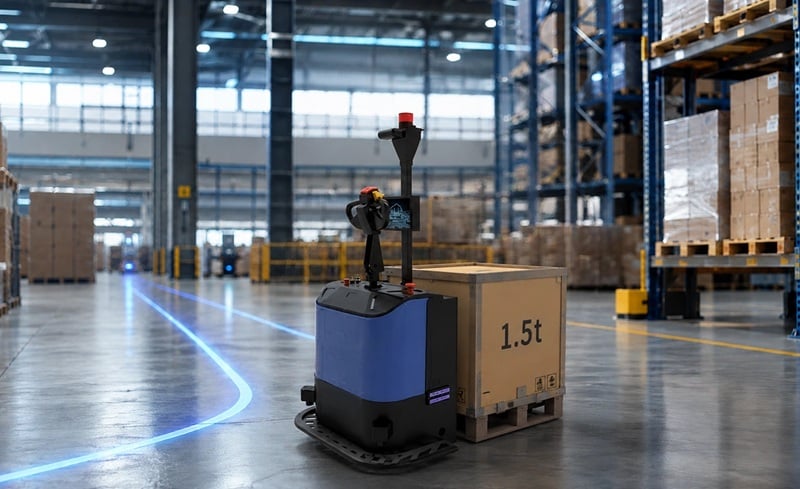
Figure 1. A forklift robot in a warehouse. Image used courtesy of Kody Robots
Why Staging Lanes Choke When the Dispatch Wave Hits
Most outbound operations are scheduled to a fixed time slot, and since customers prefer morning, these time slots usually cluster into a few evening hours. Finished pallets are left at the wrapper until a forklift operator can get to them, though picking and packing continue all afternoon.
Each staging trip is typically 60 to 80 m away from the dock door, and each incorrect drop turns into a re-stage or even a pallet dropped in the wrong truck. Pedestrian Pickers are added to the same corridor, and the result is a daily traffic jam.
| Challenge at peak dispatch | How Forklift Robot helps | Impact on the dock |
| Staging and loading compete for the same drivers in the evening window | Moves wrapped pallets to the back of staging lanes through the afternoon, on tasks assigned from the fleet dashboard | Most lanes are ready before the first departure, and drivers stay focused on loading |
| Wrong-lane drops lead to re-stages and mis-loaded rucks | Each task carries a lane and sequence position, and laser navigation places the pallet to about ±10 cm | Fewer re-stages and fewer pallets found on the wrong truck |
| Pickers, pallet jacks and manual trucks share the same corridor | 3D camera and LIDAR detect obstacles out to 60 m, and flow-through lanes keep the robot at the lane backs | Safer movement around people, with fewer stoppages in the busiest band |
| Trucks arrive early or late and the plan changes mid-shift | Supervisors reorder the load queue in the dashboard; packers call the robot with a one-touch button or smartwatch | Lanes follow actual arrivals without pulling a driver off the trailer |
| Battery runs low in the middle of the wave | Up to 10 h loaded runtime, automatic return to the charger and a standard AC 110/240 V charging pile | With charging scheduled before the shoulder hours, the robot stays available through the full dispatch window |
| Packing happens on a mezzanine or upper floor | Built-in elevator integration moves pallets between floors | Pallets reach the staging floor while drivers stay on the dock |
Forklift Robots in a Congested Staging Zone
The engineering answer is to give the robot the horizontal transport between the wrap station and the back of the staging lanes. Leave the dock end of each lane, plus the trailer itself, to your drivers.
Trailer floors and dock levelers create height changes you don’t want an autonomous unit negotiating at 8 pm with a truck waiting. The flat floor behind the dock line suits autonomous forklift robots far better, and that space just happens to be where most wasted driver minutes pile up.
We build ForkOn at Kody Robots, a robotics company in India, so the figures below come from our own unit. ForkOn is a forklift robot that carries up to 1.5 tons on 570 mm fork arms and holds its laser-navigated position to about ±10 cm. Treat such numbers as layout inputs, whichever vendor you evaluate.
The table below maps each ForkOn figure to the staging decision it drives, and the sections that follow explain the reasoning.
| ForkOn spec | What it means for your staging layout |
| ±10 cm laser navigation accuracy | Leave margin in slot pitch, roughly 1400 mm slots for 1200 mm pallets |
| 3D camera + LIDAR, 60 m detection range | Separate robot travel lanes; detection is the safety net, not the traffic plan |
| 450 kg unit weight, 1.5 t load capacity | Check floor joints and patched concrete for a loaded mass close to 2 t |
| 0.1 to 1 m/s speed range | Set a lower speed limit inside the staging zone |
| Up to 10 h loaded runtime, about 6 h charge | Schedule charging to finish before the shoulder hours |
| AC 110/240 V charging pile input | Place chargers off the dock band, on an existing supply |
Laying Out Lanes a Robot Can Hit Every Time
With ±10 cm positioning, design slot pitch with margin on each side instead of packing the pallets edge-to-edge the way a seasoned driver might. For a standard 1200 mm pallet, a slot of about 1400 mm lets the robot place loads cleanly and gives the driver at the far end room to get forks in without nudging the neighbor. You give up a little density, but you’ll gain far fewer knocked loads.
Laser navigation also depends on stable reference features. A staging zone changes shape all day as lanes fill and empty, so during the survey, confirm the robot can still localize when every lane is full. Mounting reference points on columns above stacked pallet height is a common fix, though your vendor should confirm the right approach for its own navigation stack. Walk the planned path too, since a fully-loaded unit puts close to two tons on any joint or patch near the dock.
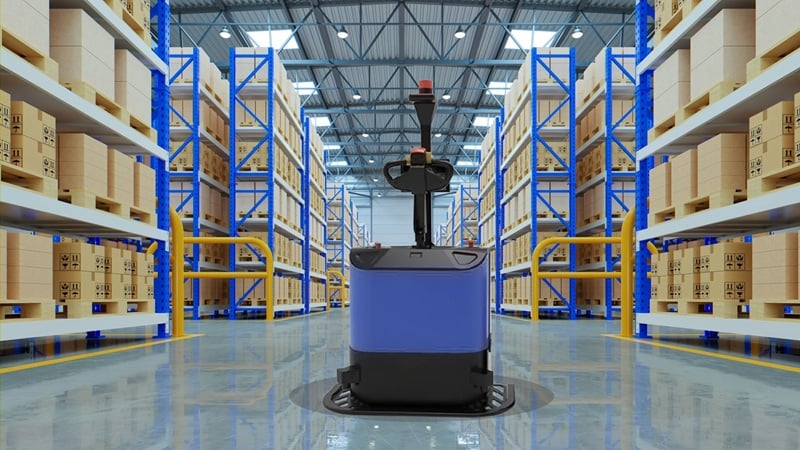
Figure 2. Efficient logistics consider both human and automated operations.
Keeping Robots and Drivers Out of Each Other’s Way
The ForkOn forklift robot detects obstacles with a 3D camera and LIDAR out to 60 m, and it slows or stops when something enters its path. A robot halting every thirty seconds because a pallet jack cut across its route isn’t very helpful, so treat obstacle detection as a safety net rather than a primary traffic plan.
The layout we recommend most often is the flow-through lane. The robot feeds each lane from the back, the driver pulls from the dock end, and the two machines never share the same few meters of floor. Add a one-way robot loop between the wrap area and the lane backs, plus a lower speed limit inside the staging zone (Forklift Robot runs anywhere between 0.1 and 1 m/s).
Smart warehouse management at the dock comes down to simple rules people follow without thinking, and forklift robots follow them without exception.
Running a Pilot You Can Trust
Prior to making any changes, note the number of lanes completed by the first truck and the number of re-stages per shift. These are the starting points of smart warehouse management, since they provide a point of reference from which one can gauge the level of chaos within the warehouse.
Keep it simple: one wrap station, four to six lanes, and one or two forklift robots that are autonomous will determine if the release timing and slot layout will withstand the test of an actual evening wave. ForkOn's integration with the elevator lets the driver stay on the dock while the facility continues to pack on the mezzanine as forklift robots move the pallets between floors.
This does not require any reconstruction of the dock. The most effective logistics automation options for staging are typically a revamped release schedule and a lane drawing that provides wider slots. Here, the forklift robot is most effective as an extension of your drivers' arms to do the walking, allowing your team to remain at the dock door where it is most needed.
Questions to Bring to Any Vendor
If you are comparing warehouse robotics solutions for outbound work to support pallet staging, bring your dispatch schedule and a dock floor plan to every conversation, including ours. As a robotics company, we find the most useful early discussions start with those two documents rather than a spec sheet.
Ask each vendor to show you where its robots would drive at 8 pm on your busiest day. Whichever warehouse robotics solutions you shortlist, judge them on that answer.
Well-planned logistics automation solutions built on autonomous mobile robots (AMRs) for warehouses take the walking out of staging, and your drivers keep their focus on the trucks.
Related Content