Facebook
 Google
 GitHub
 Linkedin
Compressed Air Control Systems: Where Efficiency Is Really Won or Lost
Compressed air is a standard industrial fixture, but it can be expensive when years of improper maintenance and servicing finally catch up. But what can be done to prevent these rising costs?
Compressed air usually operates in the industrial background, quietly consuming electricity and accumulating inefficiencies that can persist for years. The compressed air system only receives attention when something else goes wrong: a machine loses pressure, a compressor trips offline, or energy costs spike unexpectedly.
The compressed air system can be one of the most expensive utilities in a facility, but most modern compressors are designed with efficiency in mind. The challenge is how the system is controlled, monitored, and managed over time.
Rising energy costs have forced facilities leaders to seek solutions beyond just the simple compressor specs and investigate the overall system performance. Improvement may come not from replacing equipment but from understanding how the existing system behaves under real operating conditions.
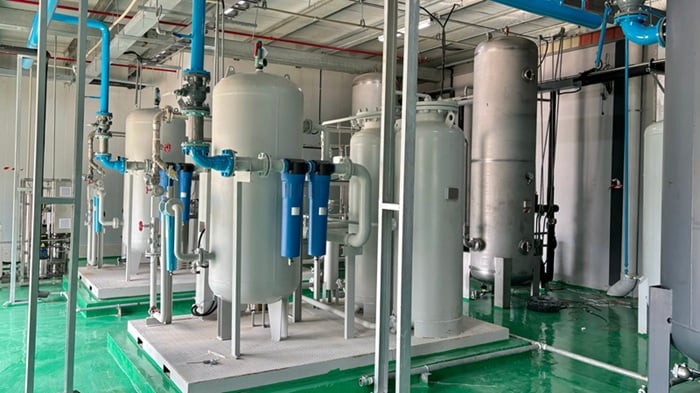
Figure 1. A standard industrial compressor application. Image used courtesy of Adobe Stock
The Pressure Problem Nobody Revisits
One of the most common efficiency issues starts with a simple decision someone made in the past.
Imagine that, years ago, a production line experienced a low-pressure event. To prevent future complaints, someone adjusted the regulator, raising the system pressure by a few psi. Production continued as normal, and the problem appeared solved. That higher setpoint became permanent.
That solution most likely overlooked a proper diagnosis of the original problem. The low pressure may have been caused by one or more issues: undersized piping, a clogged filter, a failing regulator, excessive pressure drop, a minor leak, or a temporary production condition. Instead of addressing the root cause, the entire system continued its operation at a higher pressure indefinitely.
The result is increased energy consumption and, in many cases, higher air demand. Many pneumatic devices consume more compressed air as pressure rises. The facility ends up producing additional compressed air without gaining any additional production output.
This distinction is important because system pressure and critical-point pressure are not necessarily the same thing. A facility may maintain adequate pressure at the compressor room while equipment located farther downstream struggles because of restrictions within the distribution network. Raising compressor discharge pressure to compensate for a localized problem often increases operating costs without resolving the underlying issue.
Before adjusting pressure setpoints, engineers should evaluate the origin of the problem: at the compressor, within the distribution system, or at the point of use.
Why Compressors End Up Fighting Each Other
Facilities operating multiple compressors frequently encounter another hidden problem: poor coordination between machines.
It’s not unusual to find two or three compressors responding independently to pressure fluctuations. One machine loads while another unloads. A third enters the sequence unnecessarily. The system remains operational, but efficiency suffers.
Engineers sometimes refer to this behavior as compressor hunting. Instead of working together, machines constantly react to each other’s actions. The result is excessive cycling, unnecessary energy consumption, and accelerated equipment wear.
This is where centralized control often delivers greater savings than expected. Rather than allowing individual compressors to make decisions independently, a master controller evaluates demand across the entire system and determines which machines should run.
Many efficient compressed air systems rely on a base-load and trim strategy. Base-load compressors operate near their most efficient capacity range and handle the majority of demand. Trim compressors respond to fluctuations and maintain stable system pressure as requirements change throughout the day.
Variable speed drive (VSD) compressors are often used as trim machines because they can continuously adjust output. However, VSD technology is not a universal solution. In systems with inadequate storage or poorly configured controls, a VSD compressor may spend much of its time chasing rapid demand swings rather than operating efficiently. Successful sequencing depends on the interaction between compressor capacity, storage volume, control logic, and actual demand patterns.
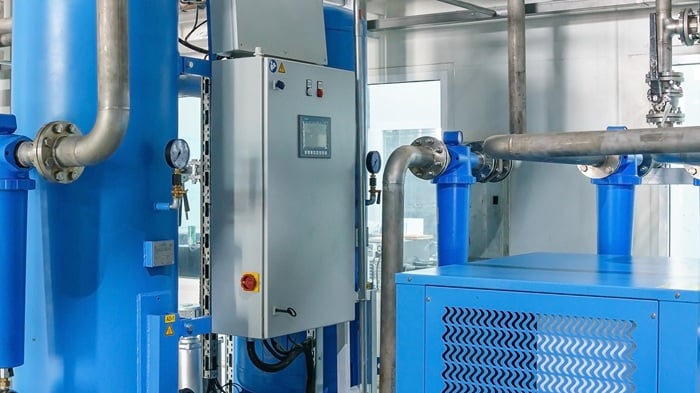
Figure 2. Control panel of an industrial compressor system. Image used courtesy of Adobe Stock
Leaks Are Usually Worse Than People Think
Most maintenance teams know they have leaks. The surprise comes when they discover how much air those leaks consume. A useful exercise is to review compressor activity during periods when production is shut down. Nights, weekends, and holiday shutdowns often reveal a baseline demand that should not exist. Significant airflow during non-production periods typically represents leakage somewhere within the system.
Because leaks develop gradually, they often become accepted as normal operating conditions. Compressors simply run longer to compensate. The problem isn’t just wasted air. Every leak forces compressors to consume additional energy while increasing wear on motors, airends, valves, and associated equipment. Over time, those costs add up.
Facilities that continuously monitor airflow and power consumption during non-production periods generally identify leak-related losses much faster than those relying solely on annual leak surveys. Establishing a leak baseline also provides a measurable benchmark for future improvement efforts.
More Data Doesn’t Automatically Improve Performance
The industrial sector has become increasingly effective at collecting data. Acting on it remains the bigger challenge.
Installing sensors throughout a compressed air system is relatively straightforward. Determining which information matters requires more experience.
Pressure readings alone rarely tell the full story. Engineers need to understand how pressure relates to flow, compressor loading patterns, power consumption, and production schedules.
For example, a gradual increase in compressor runtime might initially appear to indicate growing production demand. A closer look may reveal a developing leak problem or excessive pressure drop across filters and dryers.
Likewise, a pressure issue reported at a production line may not originate at the compressor room. Restrictions, undersized piping, or poorly configured regulators can create localized problems that are often mistaken for system-wide deficiencies.
The most valuable monitoring systems are not necessarily the ones collecting the most information. They’re the ones helping operators to identify meaningful relationships between system variables.
One of the more useful performance metrics is compressor-specific power, typically expressed as kilowatts per 100 cubic feet per minute (kW/100 CFM). This measurement helps engineers evaluate how efficiently compressed air is being produced relative to actual output. A system can maintain stable pressure while operating inefficiently, which is why energy consumption and airflow should always be evaluated together.
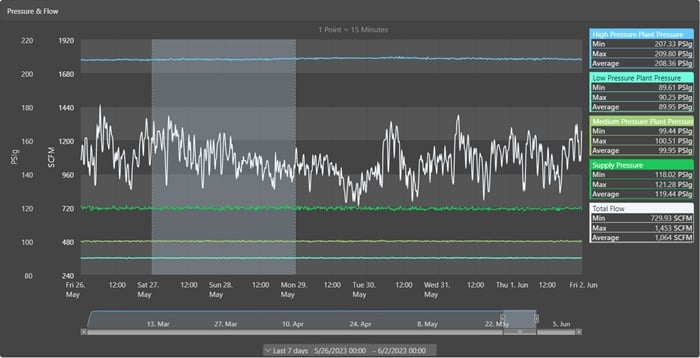
Figure 3. Optimizing a compressed air system with data. Image used courtesy of CAM Technologies
Storage Capacity Is Often the Missing Piece
When facilities struggle with pressure fluctuations, the first instinct is frequently to add compressor capacity. In reality, inadequate storage is often the larger issue.
Receiver tanks serve as buffers within the compressed air system. They absorb short-duration demand spikes, reduce pressure fluctuations, and minimize unnecessary compressor cycling. Without adequate storage, even well-designed compressors and controls may struggle to maintain stable operation.
Storage also influences sequencing performance. Additional storage volume gives controllers more time to evaluate system conditions before bringing additional compressors online. This can reduce short cycling and improve overall efficiency.
For this reason, experienced compressed air specialists frequently evaluate storage capacity before recommending additional compressor horsepower. In some facilities, improvements in storage and control strategies deliver greater benefits than equipment expansion projects.
Predictive Maintenance: Focus on Failure Modes
The phrase “predictive maintenance” gets used frequently, but its value comes from understanding how compressors actually fail.
Most failures provide warning signs. Discharge temperatures begin to rise. Differential pressure across filters increases. Dryer performance degrades. Motors draw more current. Vibration patterns change. Individually, these changes may seem insignificant. Viewed together over time, they often provide a clear indication that performance is deteriorating.
The goal isn’t to generate more alarms. It’s to identify developing problems early enough that maintenance can be scheduled before production is affected. When predictive maintenance is integrated with automated monitoring, facilities gain a clearer picture of equipment health and can make maintenance decisions based on actual operating conditions rather than fixed calendar intervals.
The Best Compressed Air Systems Are Managed, Not Just Maintained
Facilities sometimes assume that improving compressed air efficiency requires new compressors, extensive upgrades, or large capital expenditures. But, in practice, some of the biggest gains come from understanding how the existing system behaves.
The most efficient compressed air systems rarely achieve their performance through a single technology upgrade. Results typically come from understanding how compressors, storage, controls, air treatment equipment, and end-use demand interact as a complete system.
Facilities that focus only on compressor efficiency often overlook larger opportunities elsewhere, such as pressure losses, poor sequencing, excessive cycling, leak loads, and artificial demand. These issues frequently account for a greater share of energy waste than the compressor itself.
Technology alone is not the solution. Smart automation offers the visibility to address trouble spots, but the real value comes from applying sound engineering principles to system design, control strategy, and long-term performance management. Organizations that take this broader approach often uncover significant efficiency gains while improving reliability across the entire compressed air network.