Facebook
 Google
 GitHub
 Linkedin
Acromag Adds OPC UA and MQTT Support To Remote I/O Module Series
Cloud applications and edge computing require access to field-level I/O, but not all remote I/O terminals have OPC UA or MQTT capability. Acromag has expanded its series of remote I/O modules to support these protocols.
Connecting to cloud systems is becoming standard operating procedure for most mid to large manufacturers, and by using remote I/O cloud modules, users can quickly get communications to cloud services.
Acromag, an international industrial measurement and control product manufacturer, has added OPC UA and MQTT support to its BusWorks NT series of remote I/O modules. In addition to the new protocols, the remote I/O modules also support industry-standard communication protocols such as Modbus TCP/IP, Ethernet/IP, and ProfiNet.
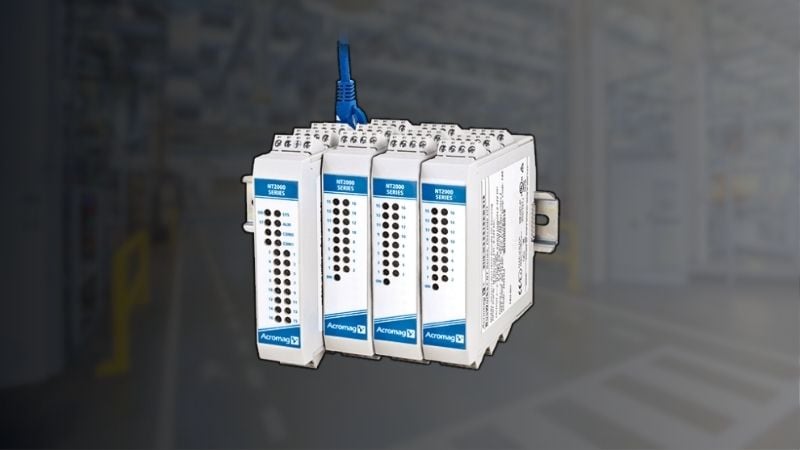
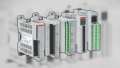
The BusWorks NT series of remote I/O modules now support OPC UA and MQTT protocols. Image used courtesy of Acromag
The BusWorks NT Series
Acromag’s BusWorks NT series of remote I/O modules can now use OPC UA and MQTT alongside industrial protocols over Ethernet to set and monitor inputs or outputs. Many different types of I/O modules can be combined to create a rack of cloud-connected remote I/O.
The NT Ethernet I/O module has two Ethernet ports, one for OPC UA or MQTT communication and the other for I/O communication. The device is configured as an OPC UA server and an MQTT client. Additional I/O cards offer both digital and analog inputs and outputs to be added to the NT Ethernet communication module; a maximum of 64 I/O channels of mixed types can be added under one IP address.
A web interface is used to configure and monitor the remote I/O rack and communication module. The NT Ethernet module is compatible with popular industrial Ethernet protocols such as Modbus TCP/IP, Ethernet/IP, and ProfiNet and is configured with the web interface. Conditions can also be configured into the I/O modules to allow simple if/then/else statements.
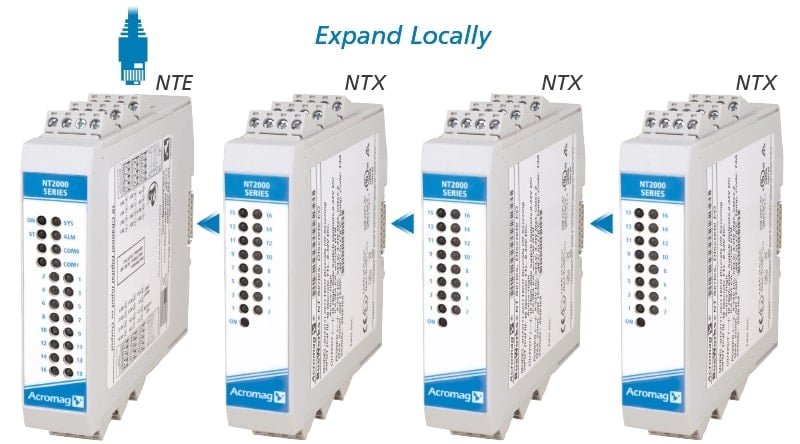
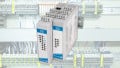
Users can expand I/O functions by locally connecting NTX expansion I/O modules. Image used courtesy of Acromag
OPC Unified Architecture (OPC UA)
With an OPC UA server connection, field devices and control systems can access I/O points that have been made available on the server. Other devices can now monitor the status of the I/O points, or they can write data to the I/O. PC software can also connect to the OPC UA server, and special applications can be written to monitor or wire data to the remote I/O modules.
Message Queueing Telemetry Transport (MQTT)
When wanting to send data over a secure connection to multiple cloud sources, MQTT facilitates that connection path. MQTT uses a publish and subscribe protocol often used in applications with poor internet connections. Once the data is sent to a server, subscribers can subscribe to data changes within the server, allowing multiple connections to the same data source.
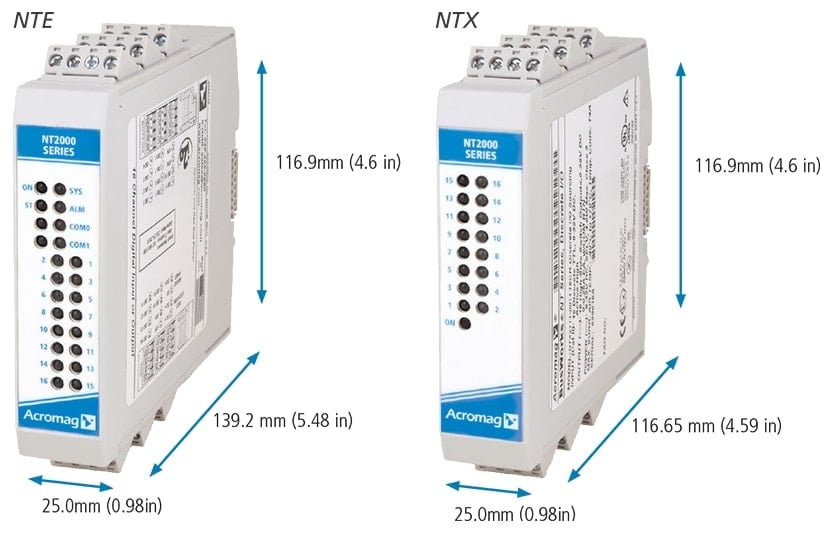
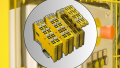
Dimensions for the NTE and NTX remote I/O modules from Acromag’s BusWorks series. Image used courtesy of Acromag
Data Exchange and Cloud Connectivity
With technology moving as quickly as it does, some manufacturers are using equipment that can't send data to cloud or edge systems. Rebuilding the equipment with IIoT in mind would be a large capital investment.
By using a device like Acromag's BusWorks NT series remote I/O modules, machine builders and factories can add data collection, a manufacturing execution system (MES), or machine learning to existing equipment without interfering with existing code or hardware. Sensors can be added to count good parts and reject parts. Actuators can be added and controlled via web applications from remote locations.
With the BusWorks NT series remote I/O modules' latest functionality, users can simply and affordably transfer data in cloud or edge applications.