Facebook
 Google
 GitHub
 Linkedin
AI-Backed Scanning Transforms Logistics With Honeywell, Stereolabs
Honeywell and Stereolabs pair stereoscopic 3D vision with SwiftDecoder barcode scanning to enhance logistics, manufacturing, and warehouse automation.
Honeywell announced a developmental partnership with Stereolabs to integrate their respective technologies to create a mobile, programmer-intuitive, high-speed scanning solution for manufacturing, warehouse, and distribution center goods handling operations. Honeywell will leverage the latter company’s ZED stereoscopic cameras for high-performance motion tracking and AI-backed, human-like perception.
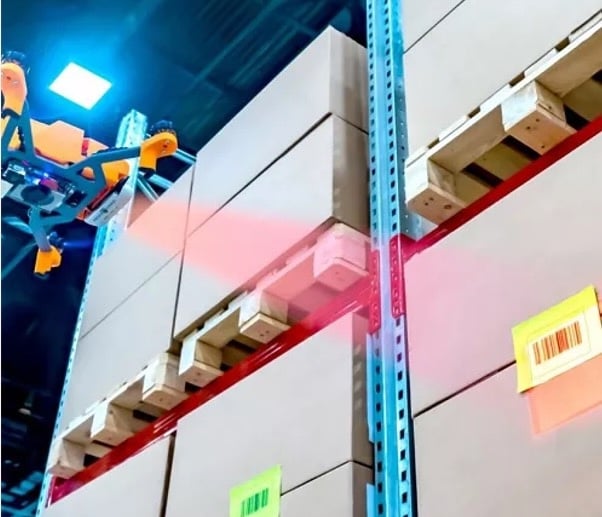
Honeywell’s SwiftDecoder software includes a window function where developers can program a specific window size to accommodate specific barcode information. Image used courtesy of Honeywell
The Data Capture Challenge
The rise in e-commerce—with an estimated value of $25.93 trillion in 2023 and a projected rise to $83.26 trillion by 2030—is serving as a selective pressure for warehouse and distribution center managers, forcing new approaches to product storage, retrieval, and order fulfillment to meet consumer demand and maintain a competitive edge in the market.
Capturing data on volume/weight/warning labels/size of pallets and boxes for transporting warehouse goods to a specific area is essential for executing tasks efficiently and promptly, thereby speeding up the order fulfillment process. For manufacturing, quick and reliable scanning of parts and materials is necessary for tracking and managing inventories and exercising rigorous quality control procedures (ensuring high-quality assembled products that meet customer satisfaction and safety requirements).
Traditionally, warehouses have employed tape measures, weighing scales, and other outdated, fixed equipment to measure product weight and size and scan other details. Innovators like Honeywell and Stereolabs are pushing forward mobile, programmer-intuitive, and high-speed scanning to help boost manufacturing, warehousing, and distribution center goods handling operations.
Stereolabs’ stereoscopic cameras
Cameras from Stereolabs ZED X family provide an IP67-rated robust aluminium enclosure, dual 1920x1200 global shutter color sensors, and a high-performance Inertial Measurement Unit (with vibration resilient gyroscope and 16-bit triaxial accelerometer). These combined features provide detailed color perception, durability (for use in industrial environments), and advanced motion tracking.
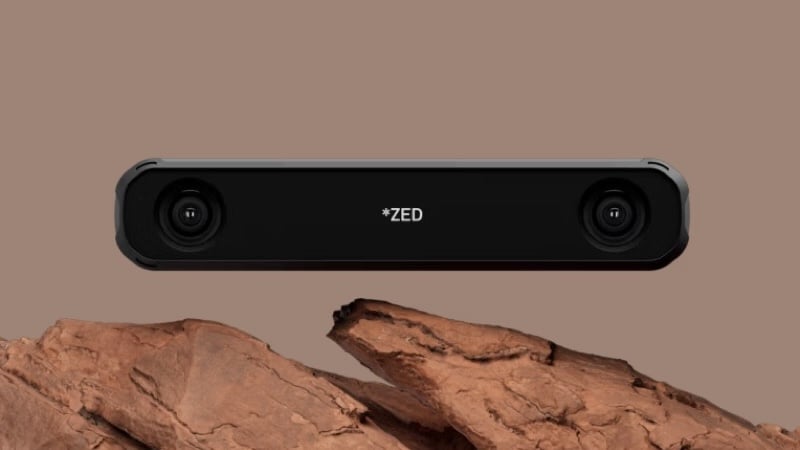
One key feature of the ZED X series includes a built-in Neural Depth Engine (by Terra AI) that employs a tailored convolutional neural network for creating precise, high-res depth maps from stereo images. Image used courtesy of Stereolabs
Customers also benefit from correcting distorted images and optional 2 to 4 mm lenses for a wider field of view or enhanced depth.
The ZED SDK supports programming languages including C++, Unity, ROS, and Python, transforming Stereolabs stereo cameras into complete 3D perception systems. It allows for real-time depth sensing, object detection, monitoring, and spatial mapping. The most recent ZED SDK 5, which is also driven by Terra AI, is a significant advancement, providing megapixel depth maps in as little as 30 ms and a 300% reduction in compute load on NVIDIA Jetson devices.
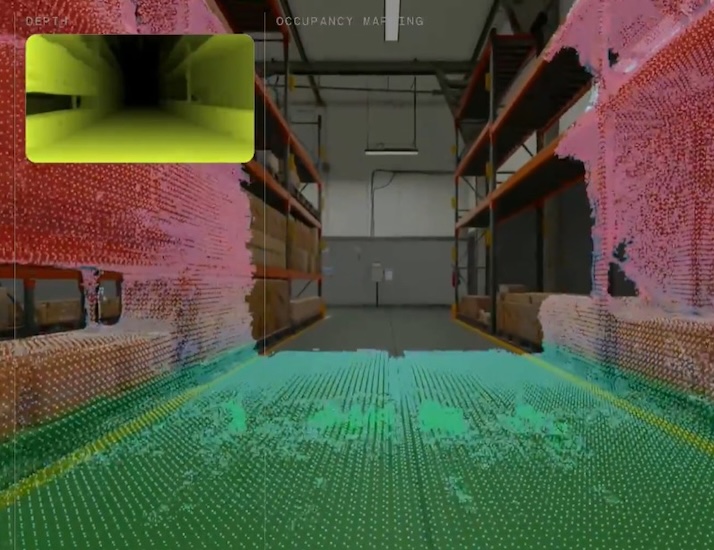
The ZED SDK AI-backed Vision framework offers real-time occupancy mapping to optimize safety when navigating indoor and outdoor settings. Image used courtesy of Stereolabs
Additionally, Magellan localisation is used indoors and outdoors for centimeter-level precision, adapting to poor weather and insufficient lighting. With SDK 5, stereo vision develops into a real-time, AI-powered platform that provides autonomous machines, augmented and virtual reality systems, and robots with advanced vision and environmental awareness.
Honeywell’s SwiftDecoder software
Hoeywell’s software development kit, SwiftDecoder, enables customers to create customized apps for reading barcodes in various environments, including hospitality, healthcare, warehousing and logistics, field service industries, and more. The scanning aspect of the software ensures only the target barcode is captured and read. Multiple barcodes can also be read in a batch fashion to gather more information concerning bulk stored products.
Users and developers can also set up customized scanning to read codes of a specific size, content, and/or with particular symbols. This aids in more efficient scanning and picking up specific inventory items to orchestrate the next steps in storing, retrieving, and transporting goods. Users can also employ continuous, automated barcode reading for situations (such as busy production lines or distribution center floors) requiring high-speed scanning (within tens of milliseconds).
SwiftDecoder supports mobile and stationary camera-integrated devices from PCs, tablets, mobiles, drones, robotics, and industrial equipment. The technology also covers various operating systems: Linux, iOS, Windows, Android, and wrappers such as React Native, NET MAUI, and Cordova.
Prospective customers can access the SwiftDecoder Demo App through Apple or Google Play app stores (by typing “HONEYWELL BARCODE SCANNER”) and trial the software for barcode reading, while also testing optical character recognition and ID scanning.
Stereolabs and Honeywell
Stereolabs and Honeywell have successfully integrated their respective technologies to provide an all-in-one solution that delivers condensed barcoded product data, detailed imagery, and optical recognition information, which customers can feed into most warehouse management systems.