Facebook
 Google
 GitHub
 Linkedin
AI-Powered Vision Comes to ABB’s RobotStudio
LandingAI’s LandingLens joins ABB’s RobotStudio, bringing no-code AI vision to robotics for defect detection, sorting, and quality checks.
ABB has announced a joint venture with California-based LandingAI, making it the first robotics company to offer an integrated AI vision system. The partnership will embed LandingAI’s LandingLens platform into ABB’s RobotStudio software, providing pre-trained models, streamlined workflows, and a no-code approach to AI vision programming. ABB estimates this integration could cut development and deployment time by up to 80%, accelerating applications in quality inspection, sorting, item-picking, and depalletizing across industrial sectors.
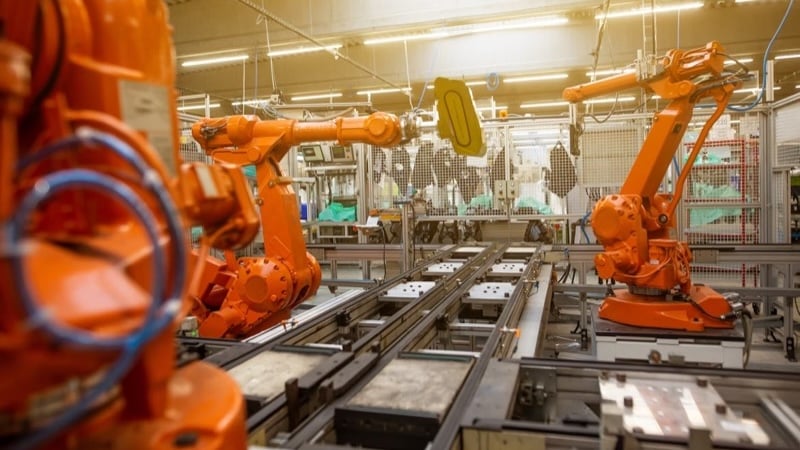
Robots are often used in industrial automation. Image used courtesy of Unsplash
Using AI With Industrial Vision Applications
A vision system used in automation will typically look for part or fixture features and report measured values. Operators can now teach product defect detection by adding AI technology to a vision system. The algorithm will learn what is a good and bad part and will eventually become independent of the operator flagging bad parts. Adding a camera to the robot allows the robot system to make decisions and perform different actions. When you combine AI vision and robotics, you have a powerful system capable of learning and adapting to its environment. ABB has recently invested in a California-based startup AI technology company to offer an AI robotic vision system.
LandingAI and ABB
The joint venture announcement between LandingAI and ABB is part of ABB’s ongoing effort to offer innovative robotic solutions to its customers. ABB plans to integrate LandingAI’s software, LandingLens, into its popular programming and simulation software, RobotStudio. The new features will include pre-trained models, data workflows, and a no-code approach to developing AI vision-guided robotic programs. ABB hopes to reduce the development and integration time of advanced AI vision robot systems by up to 80%. ABB will work with the developers at LandingAI to polish the LandingLens software for industry-specific applications such as item-picking, sorting, depalletizing, and quality inspections.
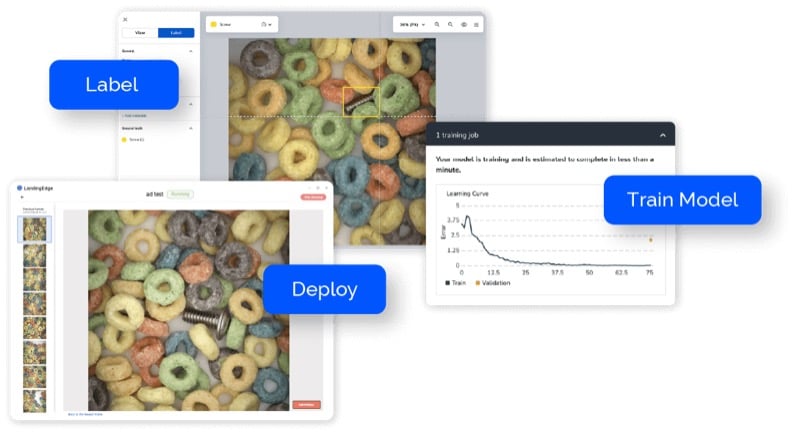
LandingLens offers pre-trained models and workflows to provide a no-code approach to AI robotics. Image used courtesy of LandingAI
LandingAI
Founded in California, LandingAI offers cutting-edge AI solutions to industrial and commercial problems. The flagship software, LandingLens, allows machine builders to deploy and integrate visual AI solutions without spending years in development. LandingAI also offers agentic document extraction software to extract data from unstructured visual documents.
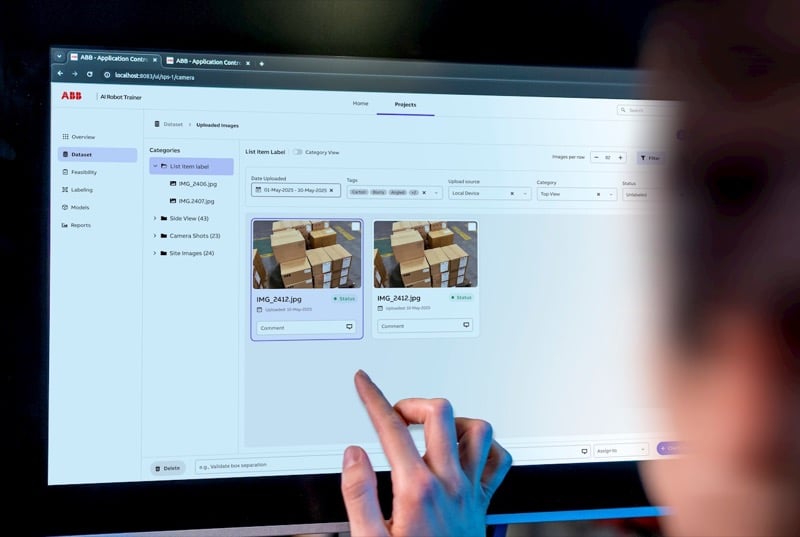
LandingLens now features RobotStudio integration to develop and deploy robot programs.. Image used courtesy of ABB
RobotStudio
Most robot systems require technicians to create and debug programs directly on the robot's teach pendant. This process can be time-consuming and prone to errors. ABB’s RobotStudio allows technicians to develop, simulate, and deploy robot programs from the comfort of a laptop. This allows the robot pendant to control and teach the robot. The new AI vision additions to RobotStudio will make the software even more powerful with a no-code approach to vision programming.
AI In Automation
Most of the artificial intelligence used in automation exists in vision applications. AI is so popular with vision because of the ability to teach the algorithm. Defect detection on manufactured parts can be hard for humans and almost impossible for standard vision applications. By using an AI vision system, an operator only needs to teach the system what is good or bad a few times, after which the system can detect and differentiate between good and bad parts.