Facebook
 Google
 GitHub
 Linkedin
Compact KEB Brake Expands Options for Robotics
KEB’s size 04 permanent magnet brake delivers 3.5 Nm torque in a compact 28.6 mm package, ideal for robotics, medical, and servo systems.
As machines get smaller, smarter, and more specialized, the need for reliable braking systems remains unchanged. System designers are often forced to compromise between brake size, holding power, and mounting flexibility. KEB Automation has responded by filling a long-standing gap in its COMBIPERM P1 series of permanent magnet brakes. With the introduction of size 04, the product line now spans eleven distinct sizes, extending its torque coverage while maintaining the compact form factor that made the P1 series popular in machine and plant construction.
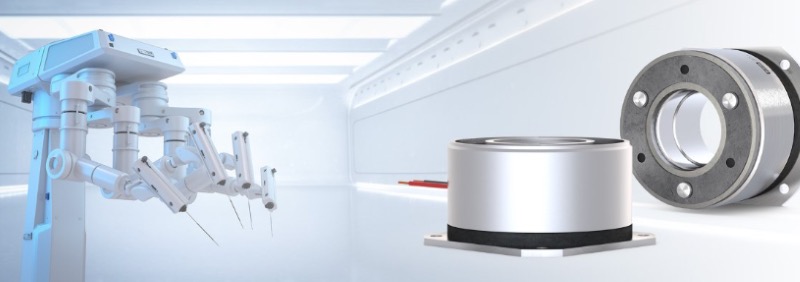
KEB’s size 04 permanent magnet brake. Image used courtesy of KEB
Designed for Versatility and Custom Fit
The P1’s performance profile remains unchanged with zero-backlash and friction-locking engagement that activates automatically during power loss. This fail-safe behavior is critical in motion systems where even a moment of drift can damage equipment or cause injury. Supplied as standard with 24 V power and an 11 W coil, the brake uses a solenoid to counteract the magnetic field when energized, allowing the system to disengage cleanly. What sets the size 04 model apart is its adaptability. The brake can be configured with round flanges for mounting on non-flat surfaces or supplied with prewired connections to ease installation in customer assemblies.
One notable design choice is rear-side mounting, eliminating the need for an additional flange. It’s a small detail, but these little additions add up in machines where every millimeter matters. This kind of modular thinking extends across the series, enabling the brake to be tailored for applications as varied as driverless transport vehicles, robotic arms, and even climbing aids in wind turbines.
Motor Braking Methods: Where Permanent Magnets Fit In
Brakes like the COMBIPERM P1 handle holding and emergency stop functions; however, they sit within a broader universe of braking methods, each suited to specific needs. For example, regenerative braking is often used in electric vehicles or large servo drives where deceleration energy can be recovered and reused. This energy-efficient method requires complex control electronics and suitable loads to absorb the recovered power. In contrast, resistive braking converts kinetic energy into heat via braking resistors. It’s simpler to implement and doesn’t depend on energy storage, but it generates excess heat that must be dissipated, limiting its use in thermally sensitive environments.
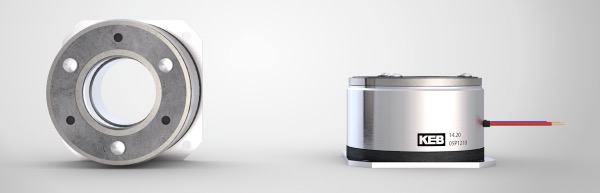
A closer look at KEB’s COMBIPERM P1. Image used courtesy of KEB
Permanent magnet brakes like the P1 don’t manage dynamic deceleration; instead, they provide secure holding force when the motor stops or power fails. Their reliability, low power draw, and compact size make them ideal for static holding in vertical axes or safety-critical machinery. While they don’t return energy or slow motion directly, they complement active braking systems by ensuring that it stays that way once a stop is achieved.
This division of labor is why permanent magnet brakes remain a staple in machine design. When used alongside active braking (especially in servo systems), they provide an added layer of control and safety without overcomplicating the design.
A Complete Range for a Growing Market
KEB has effectively rounded out a product line that now scales from 0.1 Nm to nearly 200 Nm of torque with the addition of size 04. For OEMs and system integrators, this means fewer compromises when choosing safety components for compact machinery. As more systems rely on precision motion in limited spaces, the need for compact, reliable brakes has only grown. KEB delivers a versatile solution that meets today’s demands for tighter integrations without engineering compromises.