Facebook
 Google
 GitHub
 Linkedin
Neura Robotics Debuts Cognitive Robot Solutions for Everyday Use
Neura Robotics unveiled cognitive robotic solutions at Automatica 2025, including its third-generation 4NE1 humanoid robot, MiPA personal assistant robot, and Neuraverse robotics ecosystem.
It's one thing to dream of robots that move, speak, and learn like us. It's another to engineer them to share our homes and workplaces safely. At Automatica 2025, Neura Robotics showcased its newest technologies that bring cognitive robotics out of the lab and into daily life. The company debuted its 4NE1 humanoid robot, its MiPA household assistant, and a connected ecosystem called the Neuraverse.
Neura's solutions are designed to be more than robots; instead, they have been designed as an integrated system of machines that can learn, adapt to their environments, and interact contextually, supported by a scalable manufacturing process and a software backbone built for real-world deployment. Whether used in factories, clinics, or living rooms, Neura has designed its solutions to offer a practical foundation for bringing intelligent machines into routine human environments.
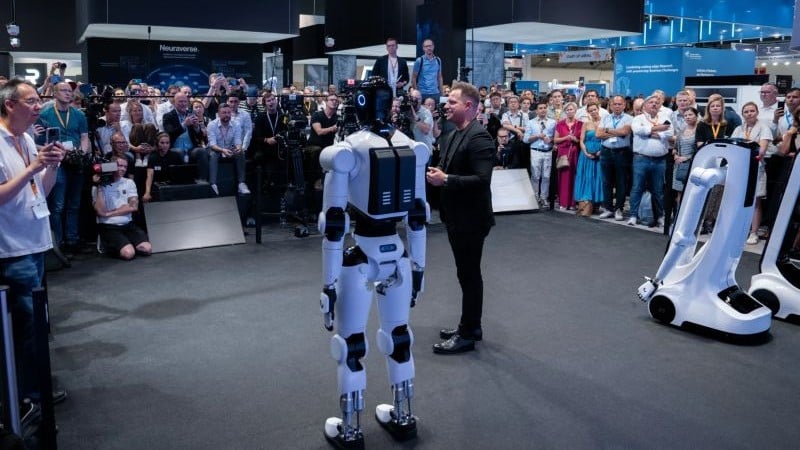
Neura Robotics’ CEO Dave Reger introducing the 4NE1 humanoid robot at Automatica 2025. Image used courtesy of Neura Robotics
The 4NE1 Humanoid Robot
Neura’s third-generation 4NE1 humanoid robot is designed to work safely and autonomously in industrial, service, and household environments. It features reinforced joints capable of lifting up to 100 kg and a dual-battery setup for uninterrupted uptime.
One of the 4NE1’s key features is its ability to perceive and adapt. The integrated Omnisensor allows the 4NE1 to distinguish people from objects and respond to its surroundings with appropriate behaviors. A synthetic skin adds another layer of spatial awareness, detecting human contact just before it happens.
Neura’s new hive method is designed for manufacturing applications, where robots assemble other robots inside a compact circular workcell. This setup is meant to make the production of humanoid systems efficient and scalable.
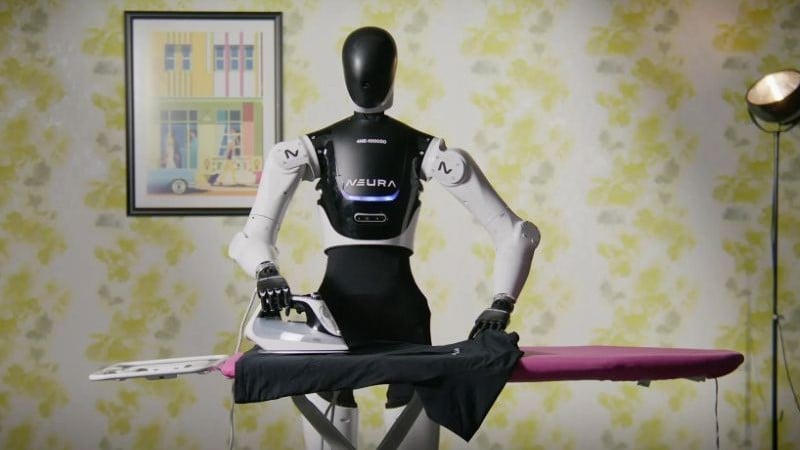
Neura’s robots are designed for industrial, service, and household tasks. Image used courtesy of Neura Robotics
MiPA Household and Service Robot
Neura’s My Intelligent Personal Assistant (MiPA) is a multipurpose robot that is fit for use in household, retail, and healthcare applications. It can carry out tasks such as dishwashing, vacuuming, and patient support. Rather than being a closed product, MiPA operates as an open and interoperable platform. Developers can teach the robot skills and expand its functionality through the company’s Neuraverse, and users can connect it to IoT devices, smart appliances, or wearable health tech. MiPA is already open for reservation and is available for deliveries later this year.
Neuraverse Robotics Ecosystem
The Neuraverse serves as a unifying ecosystem that connects Neura's robotic platforms. It functions like an app store, letting users install prebuilt robot capabilities while enabling shared learning across devices.
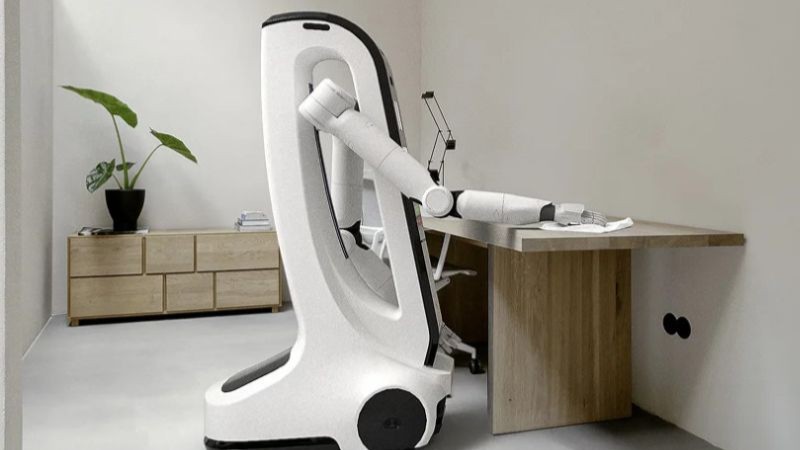
MiPA is designed to carry out everyday mundane tasks like vacuuming and dishwashing. Image used courtesy of Neura Robotics
Robots trained in one environment can instantly share their experience with others. This helps accelerate skill development, improve safety, and boost performance across the entire Neura network. Neura Gyms, the company’s physical training facilities, generate real-world training data that feeds back into the system, creating highly transferable machine learning models.
The platform is built to protect intellectual property and encourage developers and partners to contribute freely. Current applications include collaborative welding, object handling, and precision mobility, all of which are used today across Neura's partner network.
Robotics in Everyday Life
With cognitive platforms like the 4NE1 and MiPA supported by the Neuraverse, the company is creating tools that learn continuously, integrate flexibly, and scale effectively. For engineers exploring the next generation of automation, Neura's approach signals a turning point for cognitive robotics, not just being a concept in movies but becoming part of our everyday lives.