Facebook
 Google
 GitHub
 Linkedin
MODEX Brings Supply Chain Automation to Atlanta
Mobility, inventory tracking, and efficient operations were the central themes of the recent trade show, focusing on supply chain automation at the Georgia World Congress Center in Atlanta.
It’s impossible to really nail down one single technology that is influencing the acceleration of modern supply chains more than others. A brief walk around the MODEX trade show floor in Atlanta revealed a handful of such technologies, a few concepts working in harmony to bring greater efficiency and accuracy to warehouses and distribution centers.
Join our engineering team for a quick recap of a few of the noteworthy exhibitors, and learn how they are bringing expertise in mobility, energy efficiency, and inventory management to solve a few of the supply chain industry’s biggest headaches.
SICK
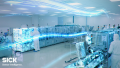
The “Sensor Intelligence” people filled their huge booth space with solutions for safety, mobility, and, of course, sensing.
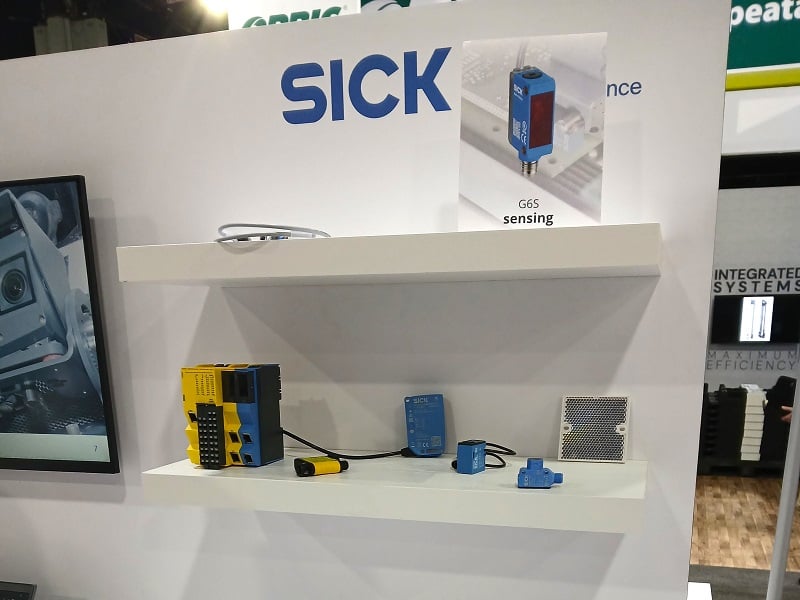
Sensing always takes on many forms in SICK booths at various shows.
For mobility solutions, like AMRs, SICK offers area scanners that provide 3D data of the navigation space. These scanners are safety devices, and they complement fixed safety sensors like light curtains, which protect both humans and machines. SICK also unveiled a new dynamic configuration module that allows light curtains to adapt to more flexible configurations.
UR
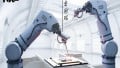
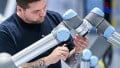
Universal Robots was one of the pioneers of the robots that occupy the human collaboration space, and that expertise has only become more mobile over the years. Pairing a UR robot arm with a MiR mobile platform (both companies existing under the Teradyne Robotics umbrella), warehousing applications can be handled with autonomous precision.
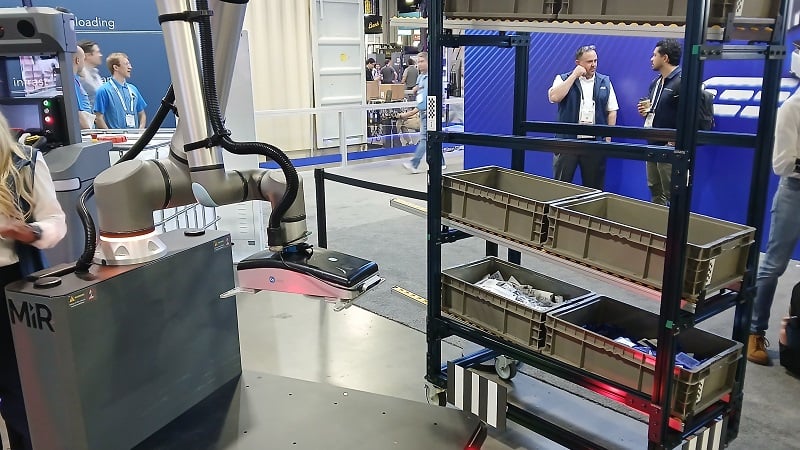
UR and MiR work together for mobile order processing and fulfillment.
The rest of the UR booth featured solutions from partner companies, including AI-assisted bin picking from RightHand Robotics and a vision-assisted pallet handling solution from beRobox. UR’s legacy has been built in this collaboration space: not just robots working alongside humans, but the robot arm manufacturer working alongside ecosystem partners to bring real solutions based on real experience.
Kardex
In any warehousing situation, whether in-house or at a distribution hub, storage space is a major point of concern. Automating the storage and retrieval system (or AS/RS, to apply the industry acronym) takes a great deal of engineering, and it usually focuses on vertical rather than horizontal expansion. Kardex provides AutoStore AS/RS solutions that use XY navigation robots, reaching down below the grid to stack crates many levels deep.
This method of vertical stacking can create a much higher stack density than traditional rack/shelf systems that rely on robots traversing the floor to reach products. In today’s world, floor space is expensive, so storage optimization is critical.
Murrelektronik
If the central pillars of supply chain automation revolve around mobility and product management in the warehouse, then we cannot overlook the importance of communication between all these moving parts. Murrelektronik displayed new products that enhance connectivity in several ways.
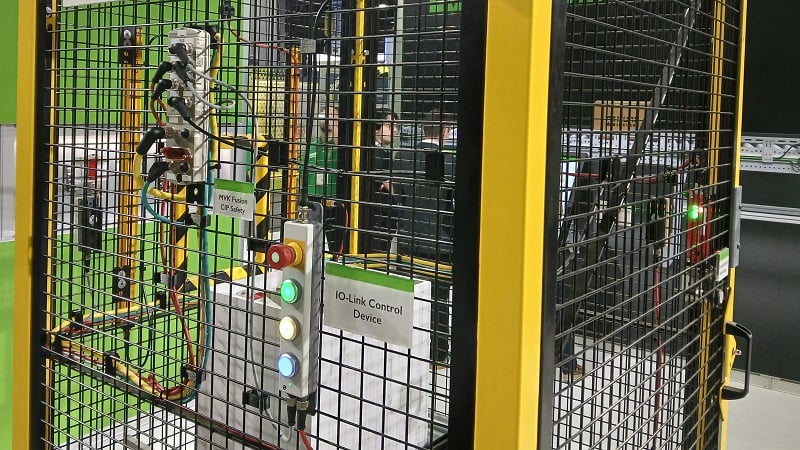
Safety and I/O are brought together in combo control devices.
Two products stood out in Murrelektronik’s display. One is the simple addition of red M12 cables. While not a listed standard of any sort, the color red can be used to consistently indicate cables that are carrying safety signals, preventing accidental disconnects or troubleshooting failures. Even though the cable end codings have long been standardized, consistent color schemes can certainly help as well. The other product is an I/O box populated with both standard and safety inputs and RGB LED outputs. The unique feature of this box is the separate M12 connectors for the IO-Link and the safety signal, allowing the two networks to work independently, but in perfect coordination side-by-side.
SEER Robotics
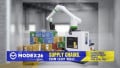
Mobile robotics certainly took center stage at the show (and stage left and right because, well, they’re mobile). These autonomous robots typically lift cargo from underneath or with forks, or they pull cargo on trailers. SEER Robotics presented several solutions at MODEX
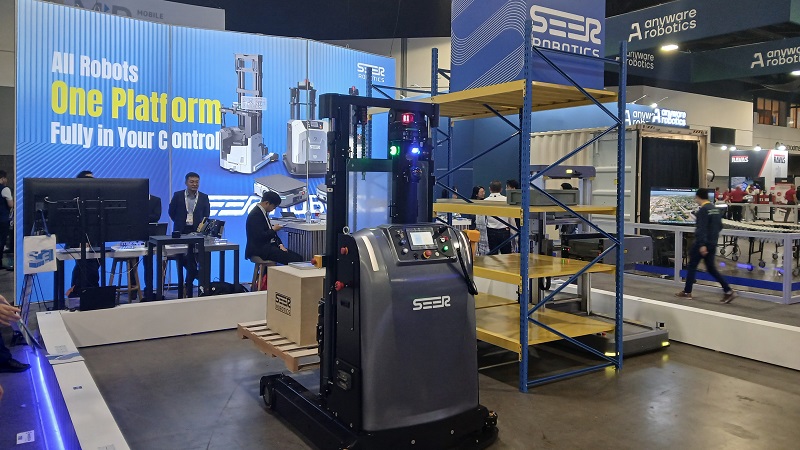
SEER Robotics autonomous forklifts and mobile lifters.
Automated forklifts are a fairly easy transition because the shape and navigation paths of normal forklifts are already factored into most warehouses. Handing over the forklift control to a sensor suite is a lower-lift investment. However, using top-lifting modules can greatly reduce the open floor navigation requirements, so it can be very appealing for new installations. SEER Robotics presented quite a few options working together with comprehensive fleet navigation around the booth.
Keeping Supply Chain Moving
What was the main point of MODEX? Motion. Safety to keep things moving more safely. AS/RS to keep things moving in smaller spaces. Motor solutions to keep things moving with more efficiency.
Whatever the consumers demand, our modern supply chain is ready to step up with modern solutions to meet the needs, today or tomorrow.
Related Content