Facebook
 Google
 GitHub
 Linkedin
Precise Color Detection: Wenglor Rolls Out the P1PF Color Sensor
The new P1PF color sensor features a 7 kHz switching frequency and detects up to eight different colors in either the RGB or HSL color spaces.
Not all object detection is a simple matter of material or height deviation; sometimes we need to detect an object's color. Color detection requires different sensors that are more dependent on the type of light and often share similar properties with vision systems.
The latest release from Wenglor is a color sensor that can detect up to eight different colors without the need for additional lighting. For monitoring and parameterization, the sensor uses the popular IO-Link I/O technology.
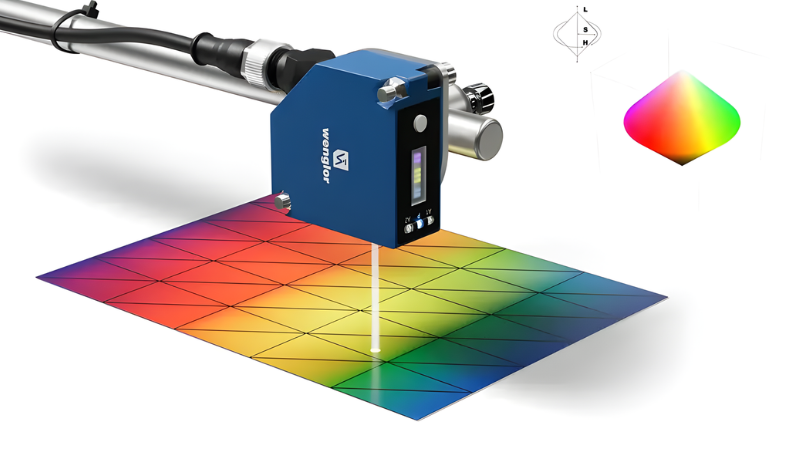
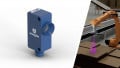
Wenglor's P1PF color sensor can detect up to eight colors. Image used courtesy of Wenglor
The P1PF Color Sensor
When your application requires the control system to determine different colors, you need to source a color detection sensor. Wenglor’s new P1PF color sensor is capable of detecting and reporting up to eight different colors with eight different outputs. Two colors and two outputs can be taught directly on the sensor, along with discrete outputs, while IO-Link can be used for the remaining six outputs.
Users can configure the P1PF to detect colors in either the RGB or HSL color space. This allows the P1PF to accurately detect specific colors in the RGB color spectrum or to detect colors based on your own perception, which is less accurate but functions well in an automated scenario.
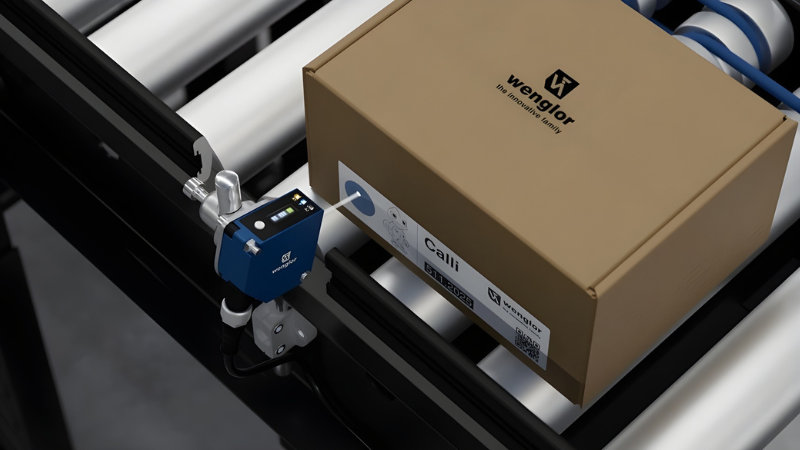
The P1PF sensor being used to determine package type via color sticker. Image used courtesy of Wenglor
Reliable Color Detection
Teaching, monitoring, and troubleshooting can all be done from the nine-LED bar graph display and integrated soft button located on the front of the unit. The bar graph shows the current detected color in real time, allowing technicians to quickly validate the teaching and sensor angles to achieve the best detection results.
To accommodate high-speed applications, the P1PF can support a 7 kHz switching frequency, making it an excellent sensor for the logistics industry. The compact size of the P1PF is complemented by IP67 protection.
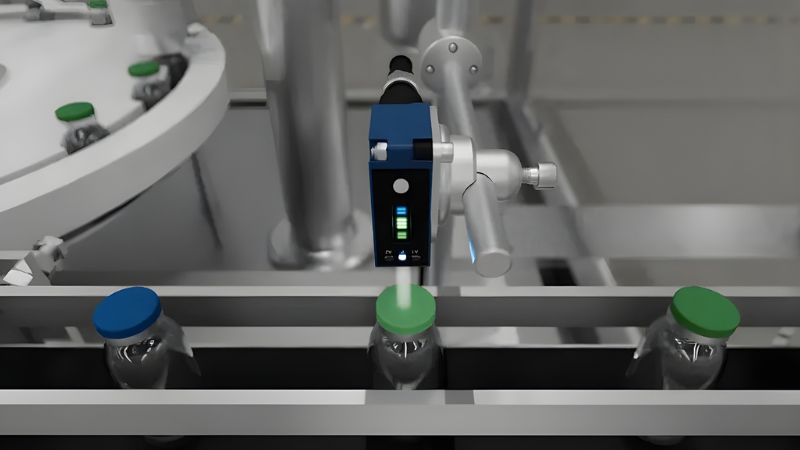
The P1PF being used to determine the color of bottle caps. Image used courtesy of Wenglor
Thin Object Detection and Classifying
Typical object detection sensors use a difference in height or conductivity, but if your application has neither of those properties, detecting the color difference might save the day. Hydrogen fuel cells are made up of stacks of carbon sheets. Sheets often enter the assembly cell via conveyor systems, but traditional sensors cannot detect their presence because they are too thin. A color sensor, such as the P1PF, can be trained to distinguish the dark color of the carbon sheet from the white conveyor belt, thereby detecting the carbon sheet when it enters the cell.
Additionally, the logistics industry processes different-sized packages very quickly as they travel along a conveyor system. Sorting these packages at high speed requires a definitive marking scheme. Using color stickers and a color sensor like the P1PF can quickly determine where the package needs to be directed, with little to no coding required.
Detecting colors is a unique problem to have, but with sensors like the P1PF from Wenglor, it is a problem that can be easily solved.