Facebook
 Google
 GitHub
 Linkedin
Wenglor Sensors Target Glossy and Reflective Surfaces
Wenglor unveils a blue laser ToF sensor and gloss sensor to boost factory accuracy on tricky materials like shiny metal and transparent film.
On high-speed factory lines, accuracy is and always has been a necessity. But glossy packaging, transparent adhesives, and red-hot metal surfaces often confuse traditional sensors, leading to errors, delays, and costly misreads. For industries such as automotive, packaging, and food production, even one detection failure can ripple into major downtime or product defects. Engineers have long struggled to find sensors that can keep up with complex, fast-moving environments. Wenglor Sensoric Group is stepping in with a two-pronged solution. The company has released two advanced sensors, each to fit a piece in the complex detection puzzle: the P1PY21 series, the first Time-of-Flight (ToF) sensor using blue laser technology, and the GM04 gloss sensors, designed for precise differentiation between matte and glossy surfaces.
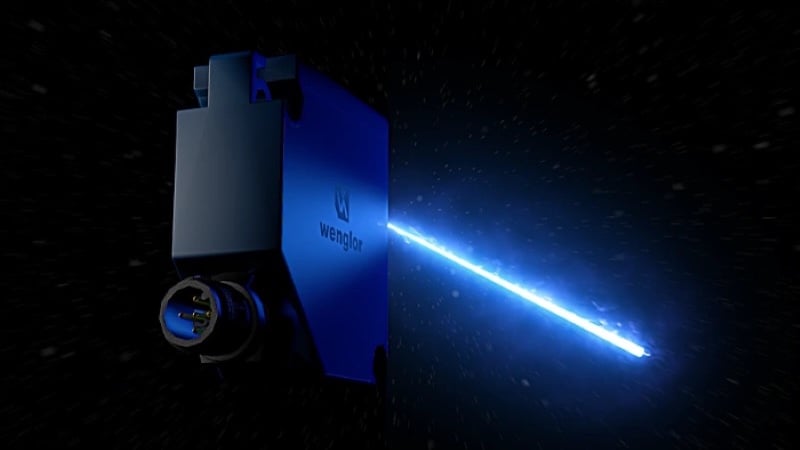
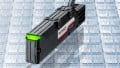
The world's first ToF Sensor with a blue laser for dark, reflective objects. Image used courtesy of Wenglor
Blue Laser Precision
The P1PY21 sensor is Wenglor’s answer to the toughest visual obstacles on the production line. Traditional red lasers or infrared sensors tend to misfire when scanning reflective, dark, transparent, or even glowing surfaces. That’s because they penetrate too deeply or get thrown off by thermal interference.
The P1PY21’s blue laser, by contrast, operates at a 445-nanometer wavelength (shorter than red light), so it focuses on surface-level details rather than getting muddled by reflections or heat. This feature is especially useful for spotting variations on polished metals, reading labels on glossy plastics, or monitoring organic materials coated in ink or paint. A key feature is its line-shaped laser spot. The laser's vertical line boosts accuracy when detecting objects that are partially obscured or irregular in shape. Additionally, dynamic jump detection enables it to identify surface variations in height, which can be particularly useful when inspecting uneven or perforated materials. The P1PY21 also includes a high-contrast OLED display for on-device configuration and can also be managed via Bluetooth using Wenglor’s weCon app, making remote setup and diagnostics simple. This is particularly beneficial when the sensor is out of reach.
With a range of up to five meters and contact-free speed measurement, the sensor keeps up with even the fastest conveyor systems. And thanks to its Laser Class 2 safety rating, it's ready for factory deployment without special training or protective gear.
Gloss Detection, Refined
While the P1PY21 deals with reflection and depth issues, Wenglor’s GM04 gloss sensor zeroes in on the difference between matte and shiny surfaces. That might sound subtle, but in industries like packaging and printing, the ability to detect a transparent label or confirm even glue coverage can make or break quality control.
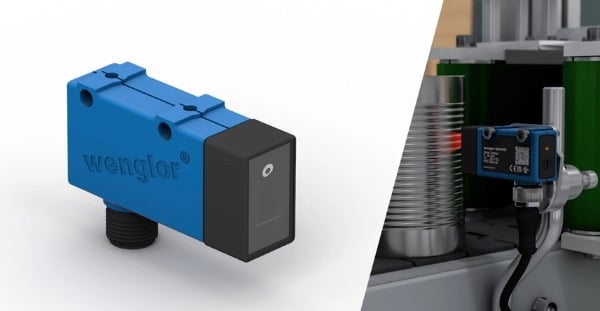
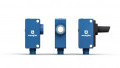
The compact GM04 gloss sensor differentiates between matte and glossy surfaces. Image used courtesy of Wenglor
With its compact M-format design (57.3 × 27 × 16 mm), the GM04 fits easily into tight production environments. It features a working range of 5 to 40 millimeters and remains stable even when objects are vibrating or slightly shifting. Yes, this is something that can throw off some optical sensors. It uses a simple potentiometer for quick manual adjustments, while IO-Link connectivity offers a faster digital interface for integration and data handling. Lastly, the GM04’s adjustment knobs and IO-Link interface strike a balance between hands-on fine-tuning and smart data integration.
These features make the GM04 a standout sensor on the market and a versatile addition to any setup that needs to inspect gloss levels, verify drying stages, or spot adhesive presence.
With Improvement Comes Opportunity
Manufacturers have long faced a patchwork of problems when it comes to optical detection, shiny surfaces here, transparent labels there, vibration, and dust everywhere. Wenglor is solving isolated problems with the dual release of the P1PY21 blue laser sensor and the GM04 gloss sensor, thereby expanding the boundaries of reliable detectability on the modern factory floor.