Facebook
 Google
 GitHub
 Linkedin
A Look at the Latest Sensors From Murata, EBE, and Endress+Hauser
The new releases include a sensor for high-frequency vibration detection, a contactless sensor for foam detection, and an OEM-configured electromagnetic flowmeter for liquid cooling.
Process automation requires multiple sensors to measure the environment in which the process is taking place. These sensors need to be reliable and consistent.
Recently, Murata Manufacturing, EBE Sensors + Motion, and Endress+Hauser released sensors designed to be integrated into process automation equipment, such as laboratory equipment or machinery skids, for the purpose of monitoring flow, temperature, and the presence of foam, air, or liquid.
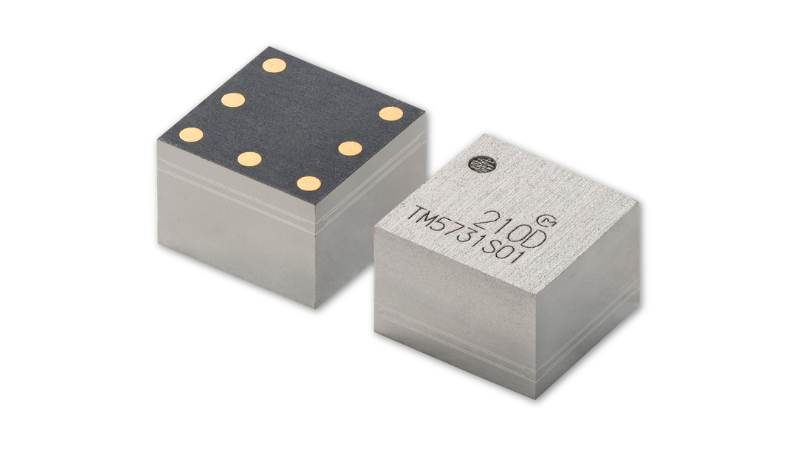
Murata’s PKGM-210D-R sensor is capable of detecting vibrations in the high-frequency range up to 20 kHz. Image used courtesy of Murata Manufacturing
High-Frequency Vibration Detection
Rotary equipment, such as pumps and motors, uses bearings and lubrication; these components wear and can fail prematurely if not maintained. As these components wear, they increase vibration.
Murata has released the PKGM-21D-R vibration sensor, a compact sensor designed to be installed directly into motor components or into existing equipment. The single analog output provides vibration detection up to 20 kHz with the use of piezoelectric ceramic detection technology.
This style of sensor is particularly useful in predictive maintenance scenarios. The vibration data can be fed directly into a machine learning tool, which can predict premature failure of motor components or suggest predictive maintenance schedules to prevent unexpected downtime.
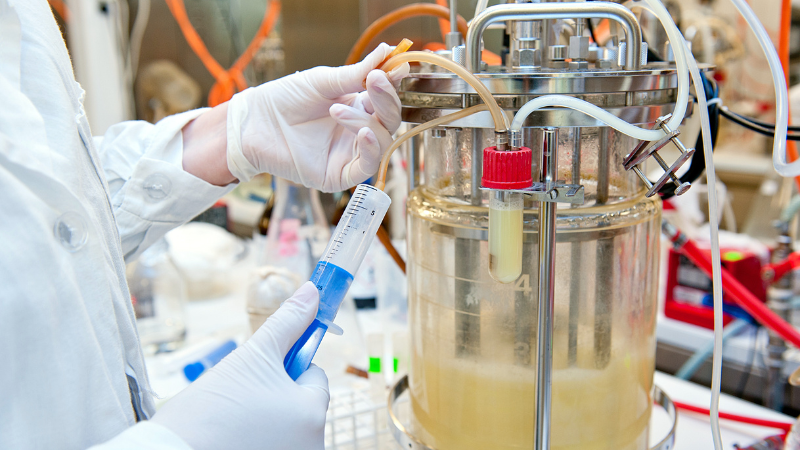
EBE’s QCRC sensors enable contact-free detection of foam, air, and liquids. Image used courtesy of EBE Sensors + Motion
Non-Contact Foam Detection
Some processes, such as beer production, produce foam, which can overflow vessels and cause pump cavitation. EBE, a sensor manufacturer out of Germany, has released a sensor that works through hose and vessel walls to determine the presence of liquid, air, or foam.
Using the capacitive and conductive properties of a flowing medium, EBE’s new QCRC sensor is able to provide in real-time the current state of the medium over an I2C interface. The sensor measures only 30 mm x 30 mm and is designed for integration into either existing laboratory equipment or new equipment.
By using a sensor like the QCRC, automation engineers can build smarter and safer equipment. When foam is detected in the suction line of a pump, the control system can shut down the operation and report the issue to the operator or trigger another pathway for the foam.
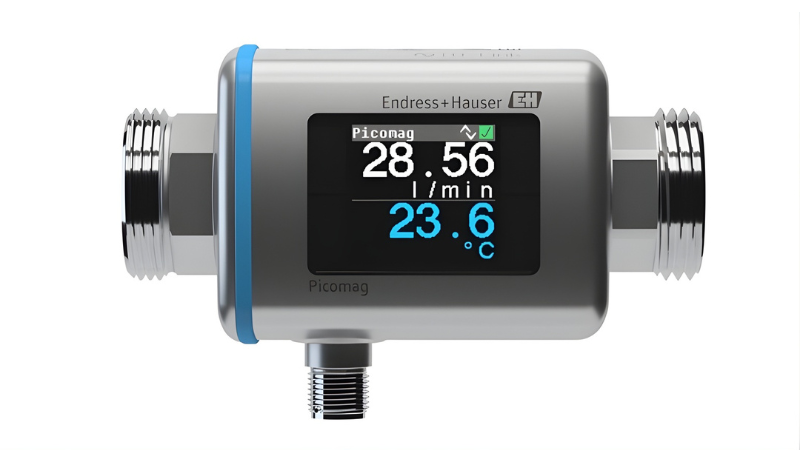
Endress+Hauser has released an OEM-configured version of its Picomag electromagnetic flowmeter. Image used courtesy of Endress+Hauser
Flow Detection From Endress+Hauser
Endress+Hauser recently released an OEM version of its Picomag electromagnetic flowmeter for the US market. This particular version is designed for cooling data centers and OEM cooling skids that require sensors to not have wireless connectivity. The OEM version can still measure flow, temperature, and conductivity of conductive liquids in small diameter pipes, all with one device.
The standard version of the Picomag uses Bluetooth technology for communication. This feature is not always accepted on sensors used in large data centers, so Endress+Hauser released the OEM version without this feature. The OEM version does have IO-Link communication for parameterization and real-time measurements, or the standard analog outputs can be used.
Data centers produce a lot of heat that needs to be dissipated before it can damage equipment. Many OEM companies make cooling machines that are small enough to fit on a standard shipping skid. These cooling skids can then be moved into position and connected to internal liquid cooling systems. The Picomag sensor is specifically designed to fit in these compact environments and provide pivotal information about the cooling medium to the control system, helping keep the data center running cool.