Facebook
 Google
 GitHub
 Linkedin
Autonics Debuts Contactless Linear Inductive Sensors
LPD series sensors from Autonics measure metallic object positions from 14–103 mm with analog output and rugged IP67 housing.
The new LPD series from Autonics delivers precise linear position measurements using inductive technology in a compact, rugged housing. These sensors provide analog output across ranges up to 103 mm and communicate via IO-Link for easy integration with automation systems—ideal for machine tools and demanding industrial processes.
Inductive Linear Sensors
Linear displacement sensors can be used to determine if a component is in position for the next processing step or ensure that process equipment is running smoothly. For example, they can be used to verify the position of a worktable for machining operations or to verify a gear change in a motor-driven piece of equipment.
Many linear position sensors use electrical resistance to determine the position of the object being measured. In this, a wiper tap moves across a resistor, changing the overall resistance. While this scheme works, the contact between the tap and resistor adds drag, potentially slowing down motion and wearing system components. Alternatively, optical or magnetic sensors are spaced along a track, sensing motion in front of them and using this to calculate position.
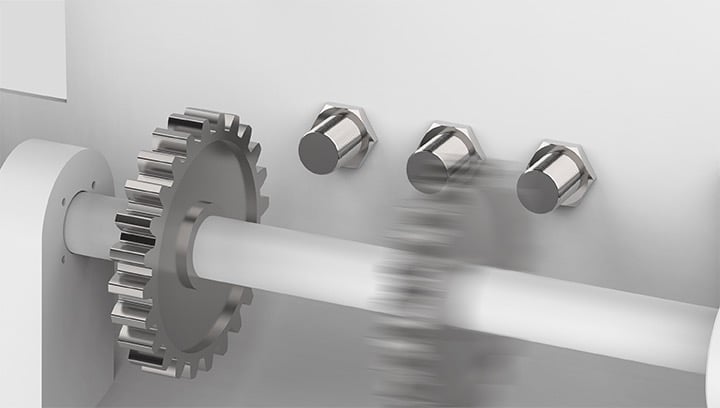
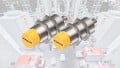
Multiple proximity position sensors must be mounted along a shaft to measure location accurately. Image used courtesy of Autonics
Inductive position sensors use a changing magnetic field to determine the position of a metallic object, such as a gear or pulley. They do not require contact between the part and the sensor, making them nearly maintenance and wear-free as compared to resistive sensors. Also, they continuously measure along their length, giving them an advantage over individual, discrete optical or magnetic sensors.
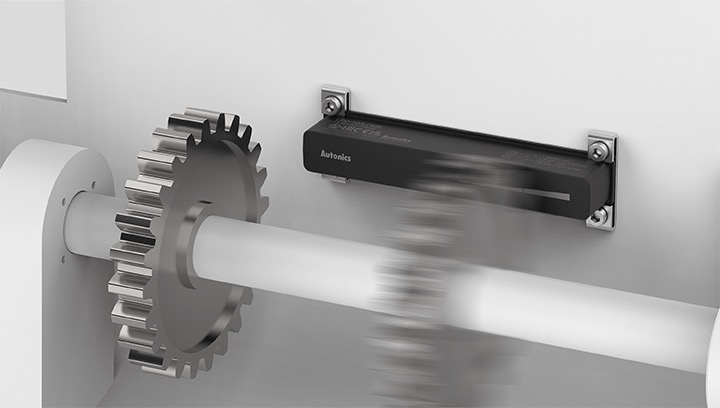
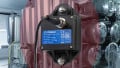
A single linear inductive sensor can accurately measure the position of a gear. Image used courtesy of Autonics
LPD Series Sensors
Autonics’ newest LPD series inductive sensors are available in models that can detect metallic objects from 14 mm to 103 mm (0.55 in to 4.05 in) away. There is also a metal attachment that can be added to non-metallic components so that their position can be determined as well. The sensor uses a coreless design and can measure continuously across the entire length of the sensor. Continuous, analog measurements mean that components can be precisely positioned as compared to other sensor arrangements.
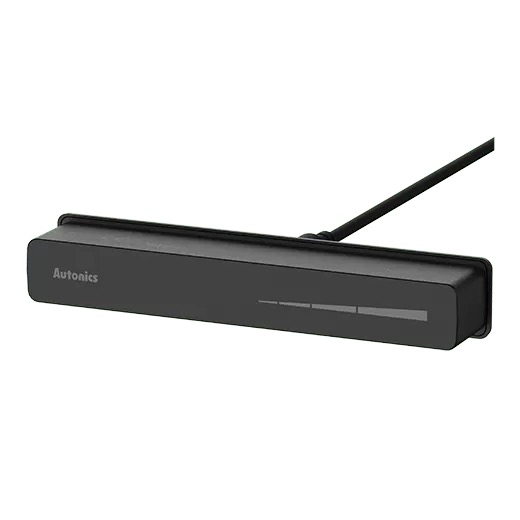
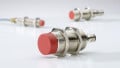
Autonics LPD Sensor: compact and rugged. Image used courtesy of Autonics
The sensor is compact, features an oil-resistant cable, and comes housed in a case that is rated to IP67 standards. High durability and low penetration of contaminants are a testament to the sensor’s use cases in harsh, demanding environments.
All LPD sensors are capable of communicating through an IO-Link. Analog signals (voltage or current) can be integrated into control or data collection systems. This simplifies integration with existing control systems and hardware.
Potential Applications
The LPD is designed for harsh environments and will see use in many industries. Autonics mentions specifically that the sensor can be used for positioning in the machine tools and machine shop industries, both of which demand high precision, durable components. Ultimately, the contactless, low-maintenance, and low-wear design of these inductive sensors makes them an attractive alternative to resistive sensors and discrete position sensors (whether optical, magnetic, etc).
Related Content