Facebook
 Google
 GitHub
 Linkedin
Parallel Loading: Driving Multiple Motors From a Single VFD
When motors drive in parallel from a single main power source, do they each need an individual VFD? Check out why this is useful in some cases, and take note of some necessary precautions.
Cooling fans, pumps, and conveyors all depend on motors, and as these systems increase in power demands, they often use multiple motors to perform the exact same action. Using a single VFD to control all these motors can reduce costs and overall size.
One VFD: Multiple Motors
A variable frequency drive is a great way to add control over your motor application. Some downsides to using a VFD are the expense, panel space, and heat dissipation when compared to a coil-driven contactor. But, to reduce these issues, what if you could control multiple motors from one VFD? Granted, they would have to start, stop, and run at the same speed, but you could reduce your overall project cost and save on panel space.
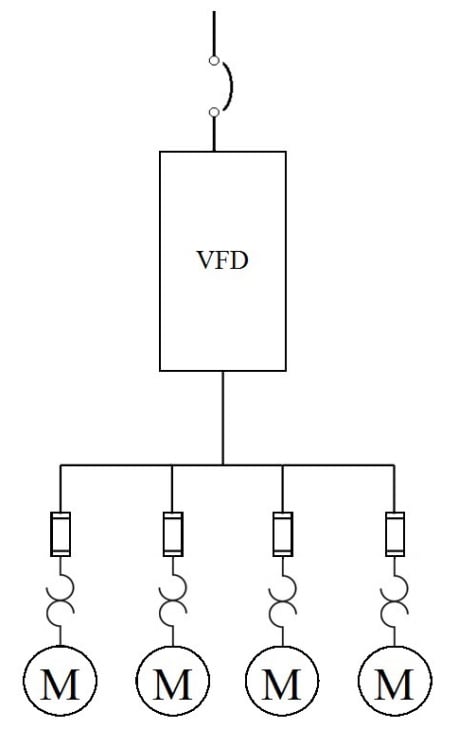
Figure 1. A simple schematic of a single VFD controlling multiple motors. Image used courtesy of Yaskawa
The Configuration
There are many applications where using multiple smaller motors instead of one large motor is more efficient, such as with HVAC and cooling fan systems, or with multiple pumps that need to work in parallel. There are also design considerations where using multiple motors is more economical by using fewer components and occupying less panel space. In such cases, we may be able to apply a single VFD to drive multiple motors.
There are some design considerations we must adhere to, such as that all the motors must operate at the same target speed. The single VFD will not know there are multiple motors connected, so individual control of each motor will not be possible with one VFD.
Another consideration is a single point of failure; if that one VFD breaks down, all of the connected motors will also fail to operate. This creates a single point of failure, but can be overcome by using a bypass circuit.
To help reduce the overall size of the VFD, the application must support simultaneous starting and stopping of all the motors in the circuit. If a motor is commanded to start after the controlled startup sequence of the VFD (like with an in-line contactor), the VFD will be subjected to unexpected inrush of current, so it will have to be upsized to support this increase in current. This application can be supported, but the larger required VFD may no longer be as cost-effective as multiple smaller VFDs.
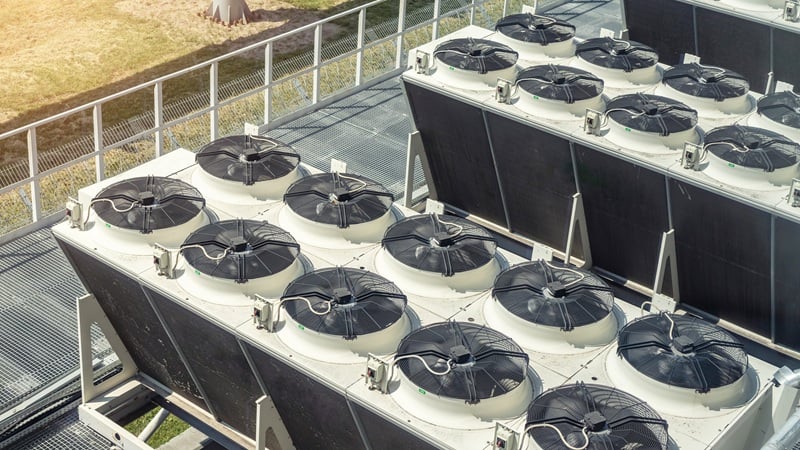
Figure 2. Large rooftop cooling fan network. Image used courtesy of Adobe Stock
Sizing Components
As with any electrical component, you need to calculate the appropriate size based on the maximum current draw. When controlling multiple motors with one VFD, we need to size the VFD to accommodate all the FLA ratings of all the motors downstream of the VFD. Some manufacturers suggest adding 20% to accommodate lower leakage inductance.
Suppose you have five different 5 HP motors that you want to drive from one VFD; you will need a minimum of 25 HP of output power. Adding the 20% safety factor means we should choose a 30 HP VFD for this situation.
Even when controlling multiple motors, we still need to adhere to the NEC 430 standard and ensure we have a properly sized overload for each motor. Make sure to check the manufacturer's instructions for the overload to ensure it can be installed after a VFD. The VFD will only be able to detect the sum of the current draw from all the motors; this is why each motor will need overload protection.
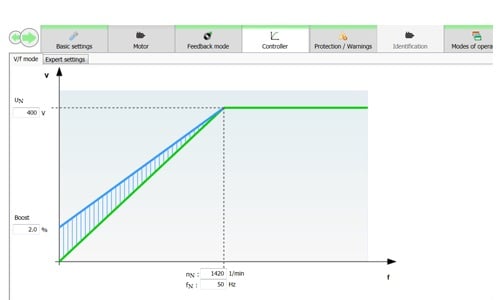
Figure 3. A graph showing the V/Hz output. Image used courtesy of KEB
Drive Configurations
The drive will need to be configured to support multiple motors. With the Rockwell PowerFlex drives, the V/Hz mode will need to be enabled, sometimes referred to as open loop mode. This mode maintains a constant ratio of voltage to frequency, which helps keep the magnetic flux stable. The output frequency still varies to change the speed of the motors, but with the V/Hz mode enabled, the output voltage will also change with the frequency. Make sure to check your drive's manual for additional settings for multiple motor configurations.
PLC Control
Controlling multiple VFDs can require some complex logic to make sure all the motors start and stop at the same time as well as run at the same speed. If one VFD faults, you need to make sure the others are issued a stop command. With only one VFD, you will not need to monitor the status or speed of the other motors. Your control and speed logic is simply sent to one VFD controlling all your motors.
Some logic will need to be programmed for monitoring the individual overload protection circuits. If one motor starts drawing too much current and the overload trips, the remaining motors will continue to run. By monitoring the status of the overload in the PLC, you can create logic to shut down the VFD and report the fault to the operator via the HMI.
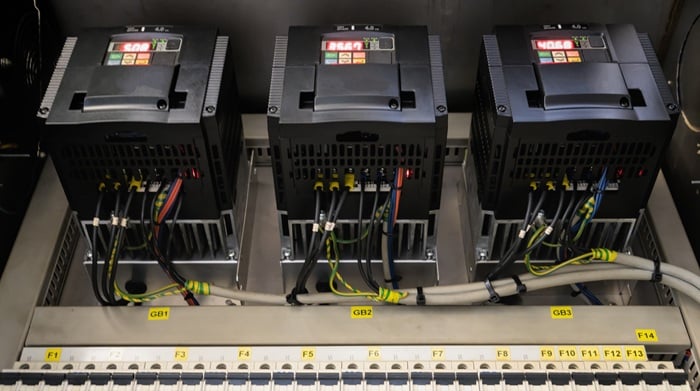
Figure 4. Multiple VFDs in a drive system. Image used courtesy of Adobe Stock
Overall Costs
Using the same example, where we compared five individual 5 HP VFDs against a single 30 HP VFD (remember the recommended 20% safety factor). That single 30 HP VFD costs $1,300, while five 5 HP VFDs will cost $1,800. While this difference might not be drastic, there are installation costs and programming costs to consider. There is also the reduced panel space and less heat dissipated into the cabinet. These numbers will continue to favor using one VFD as the size of the motors increases, and the number of motors increases.
How you control multiple motors depends heavily on how the application needs to utilize the motors. If you need to control each motor independently, then a single VFD might not be suitable. If your application is limited to simultaneous starting and stopping and matching motor speed, then a single VFD might just work. As always, evaluate your application and investigate the most economical and efficient solution.