Facebook
 Google
 GitHub
 Linkedin
Emerson Launches pH/ORP Sensor for Demanding Process Environments
The Rosemount 350A is a digital pH and ORP sensor featuring M12 plug-and-play connectivity for high-temperature and high-pressure process conditions.
Emerson has announced its newest digital sensor, the Rosemount 350A, designed to work in harsh environments. The sensor measures both pH and oxidation-reduction potential (ORP). Both of these measurements are used to determine the quality of water and hint at contamination sources to calculate the effectiveness of water treatments and other such applications.
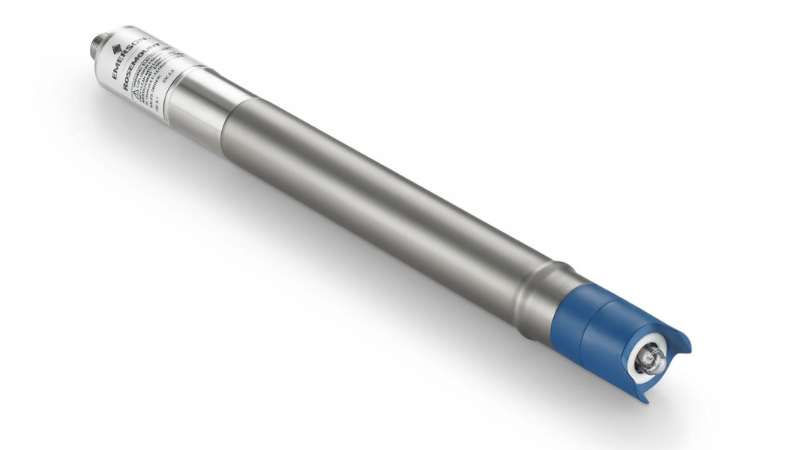
Emerson’s Rosemount 350A sensor measures both pH and ORP. Image courtesy of Emerson
Challenges With pH and ORP Measurements
In many cases, pH and ORP measurements are performed using analog sensors. At their core, pH and ORP are both small signal, analog phenomena, and so many sensors are designed to transmit that analog signal. However, analog signals are particularly vulnerable to wiring and radio frequency interference (RFI). Furthermore, pH sensors often have extremely high output impedance, making it difficult to amplify the small signal without significant losses.
Wastewater treatment and fluid-handling operations present electrically challenging environments. These sensors often require long wires and suffer from hidden, intermittent ground loops. Furthermore, heavy vibration from pumps, valve motion, and occasional water hammer will quickly ruin them.
Besides electrical attack, liquids present a constant chemical attack. Liquids of varying electrical conductivity, splashing, mist, caustic exposure, biofilms, and other such challenges affect the sensor itself as well as the signal. Liquids with embedded solids or slurries will mechanically erode sensors as well. For this reason, pH and ORP sensors are consumables that must be replaced periodically.
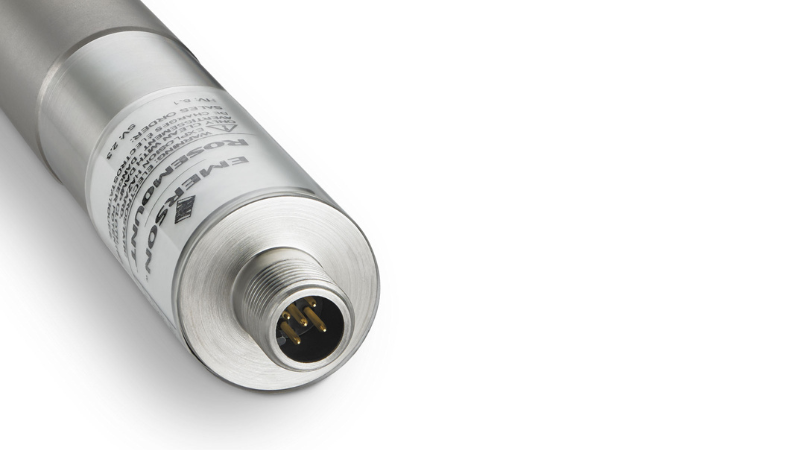
The Rosemount 350A features a standard 5-pin M12 connector for quick, plug-and-play installation and setup. Image courtesy of Emerson
Rosemount 350A Digital Sensor
The Rosemount 350A pH/ORP sensor addresses the analog/digital signal dilemma early in the sensor chain. The analog signal is converted into a digital signal directly in the sensor, rather than at the controller/PLC/computer. The digital signal is less susceptible to noise, improving the accuracy.
Each Rosemount 350A features a standard M12, 5-pin connector and can operate as “plug and play,” reducing the time required for installation and configuration. It also integrates easily with Emerson’s suite of liquid sensors and can be calibrated using selectable reference electrolytes, meaning it can be tailored to a specific application.
One of the key features of this sensor is its ability to withstand harsh environments. Built with polyphenylene sulfide (PPS) and optional titanium retractable mountings, the sensor resists chemical degradation. To protect against process fluids, it utilizes a rebuildable double-junction reference with customizable electrolyte options.
Sensor health is monitored through a set of onboard diagnostics. Instead of waiting for a sensor to produce faulty values as it degrades, the diagnostics can notify operators ahead of time, meaning replacements can become part of preventive or predictive maintenance schedules.
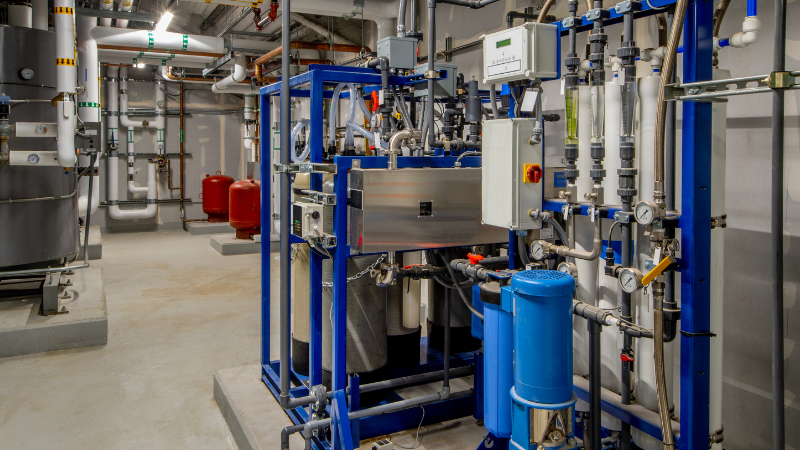
The Rosemount 350A provides monitoring for demanding process applications, including wastewater treatment and chemical processing. Image courtesy of Canva
Process Control and Monitoring Uses
Accurate pH measurements are essential in numerous industrial applications. Wastewater, chemical process industries, food and beverage manufacturing, and many other applications use pH as a proxy for other process parameters. For example, in wastewater treatment, pH can indicate the degree to which nitrification is occurring, and that can determine the treatment required.
ORP measurements round out the information. They can measure how well chlorination is cleaning process water, determine how likely a solution is to oxidize or reduce other materials, and other such properties. Combining pH and ORP into one sensor provides a wealth of information that will serve any chemical monitoring operation.
Related Content