Facebook
 Google
 GitHub
 Linkedin
Emerson Scales Edge Application Deployment With PACEdge 3.0
PACEdge 3.0 adds group management and an application marketplace to help manufacturers develop, deploy, and manage industrial edge applications at scale.
Emerson’s PACEdge 3.0 introduces new tools for developing and deploying industrial edge applications and makes distributed systems easier to manage. The latest release combines control, local data processing, containerized applications, and IT/OT connectivity within a unified platform. A new group management feature lets users remotely manage device sets and update up to 100 projects from a single device, while an application marketplace and visual development tools are designed to help teams deploy data-intensive applications more efficiently across industrial facilities.
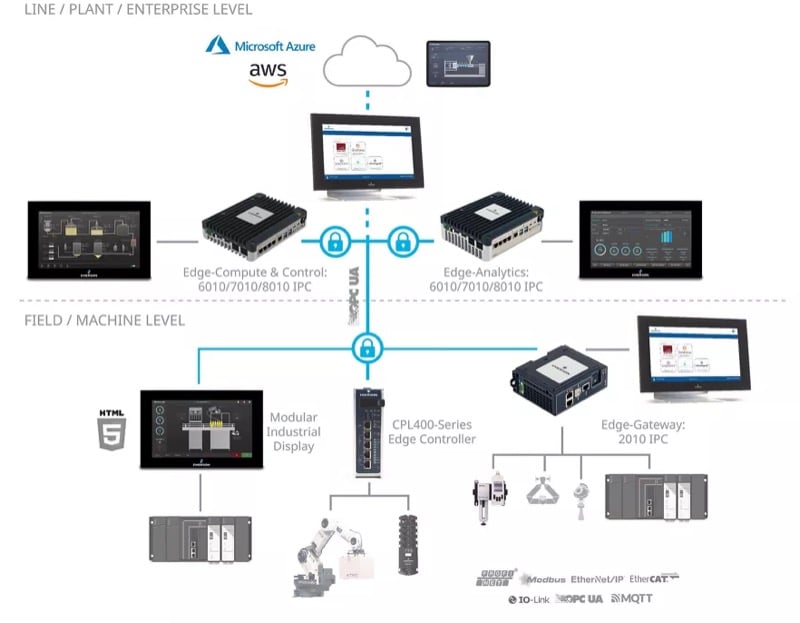
Emerson’s PACEdge version 3.0 is intended to help manufacturers limit the siloeing of facility data through IT/OT integration, containerized applications, local processing, and analysis. Image used courtesy of Emerson
From Decentralized Computing to Containerized Deployment
The evolution of cloud computing is thought to have begun in the 1960s with the pioneering concept of time-sharing. As technologies advanced, there was a growing need for data processing beyond the restricted use of complex, bulky mainframe computers. The goal became centered on creating a system that would allow multiple parties to use a centralized computing platform remotely without interfering with one another. Further technological advancements and the growth of network bandwidth spurred the emergence of cloud computing as we know it today.
In the 1960s, IBM introduced the System/360, a general-purpose, centralized enterprise computing platform that enabled facilities to send their data back to a large mainframe room for processing ex situ. This later evolved into the decentralized edge-shift architectural movement, in which businesses would send data to a central cloud server for processing. Now, industrial facilities process data locally to execute actions on machinery and processes in real time to optimize operations.
For example, a robust edge gateway or IPC is rail-mounted in a cabinet to receive initial fieldbus data, normalize it using OPC UA or MQTT, and run low-latency logic locally. This hardware manages store-and-forward buffering and data pre-processing on the facility floor, safely transferring compiled datasets to the cloud for logging and analytics.
To address data silos, PACEdge version 3.0 aggregates data from various edge devices for processing within containerized applications (such as Docker containers). By conducting local, AI-based analytics and edge processing, and sending only filtered, high-value data to the cloud, it reduces data accumulation.
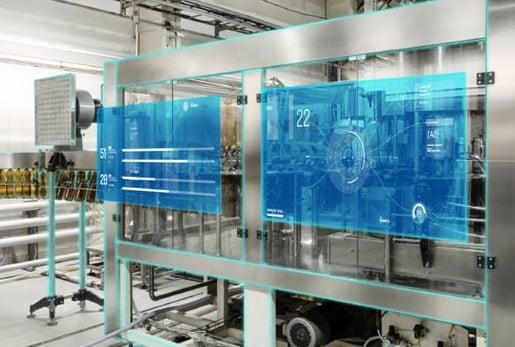
Customers can integrate the software with Emerson’s IPCs and programmable logic controllers and utilize application samples to get creating with confidence. Image used courtesy of Emerson
PACEdge Software 3.0
The latest edition of the PACEdge software allows users to create an interconnected system of control and compute nodes (including Emerson controllers and industrial PCs), uniting containerized applications, real-time data processing and analytics, and system control. This flexible, scalable cloud-fluid system promotes IT/OT convergence and speedier deployment of data-intensive industrial applications.
Features of the PACEdge 3.0 include drag-and-drop programming for user-friendly application development, comprehensive visualization and analysis tools, standard node sets via Node-RED, and optional group management to update up to 100 projects from a single device. Programming languages include Node.JS, Python, and NodeRED. Users can also benefit from a unified interface, secure data transmissions, and communication between IT and cloud applications.
One key upgrade to the PACEdge system is the addition of a group manager feature, allowing teams to manage sets of devices remotely, whether within a particular facility or enterprise-wide.
Featured image used courtesy of Adobe Stock