Facebook
 Google
 GitHub
 Linkedin
iTP Series Brings High-Performance, Networked HMI Control
Autonics iTP Series HMIs combine quad-core processing, flexible connectivity, and real-time data integration for modern industrial systems.
The Autonics iTP Series introduces a new generation of HMI panels built for highly connected industrial environments. Combining quad-core processing, flexible communication options, and integrated software tools, these panels go beyond traditional visualization roles to function as active system nodes. With support for databases, remote access, and real-time diagnostics, the iTP platform enables tighter integration between machines, operators, and enterprise systems while maintaining the durability required for demanding industrial applications.
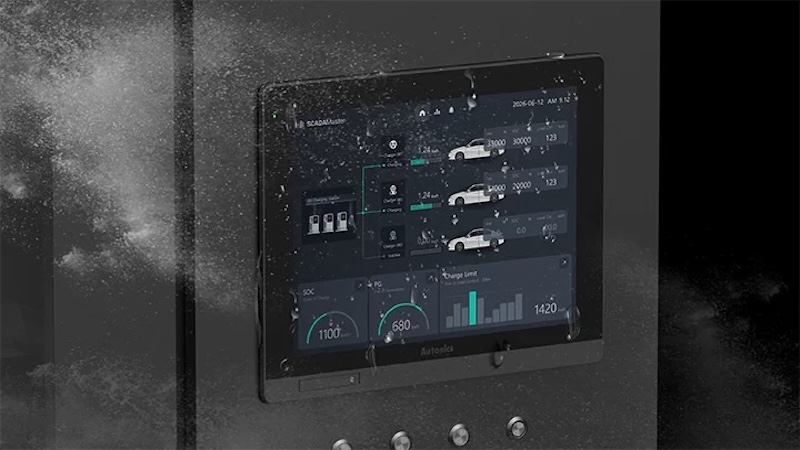
The iTP Series withstands harsh environments. Image used courtesy of Autonics
Processing Power Meets Modern HMI Demands
At the core of the iTP Series is a quad-core CPU paired with 4GB of memory, providing the processing headroom required for increasingly complex HMI environments. As visualization demands grow and systems generate more data, panel performance becomes a limiting factor more quickly than expected.
The iTP platform addresses this directly, allowing smoother screen rendering, faster response times, and more stable operation when handling multiple tasks simultaneously. This becomes especially important in systems where monitoring, control logic, and data handling are tightly coupled.
Designed for Flexible Deployment Across Environments
The iTP Series is available in multiple display sizes, including 8.4, 10.4, 12.1, and 15-inch models, as well as gateway variants that operate without a display. This split enables the platform to support both operator-facing applications and backend system roles. Gateway models, in particular, extend the platform's usefulness beyond visualization. They enable real-time data exchange between devices and systems without requiring separate servers or additional infrastructure. In smaller deployments, this can significantly reduce system complexity while maintaining functionality. The availability of explosion-proof models further expands deployment into hazardous environments, where reliability and certification are critical rather than optional.
Built for Integration at Every Level
Connectivity is a defining feature of the iTP Series. The iTP panels support Ethernet, serial communication, USB, SD card storage, and even Wi-Fi. This high level of flexibility ensures compatibility across both old and new architectures. The iTP panels adapt to existing environments while still supporting future expansion, without forcing system redesigns.
Support for multiple database management systems, including MS SQL Server, MySQL, MariaDB, Oracle, and PostgreSQL, further strengthens this position. Data can be stored, accessed, and analyzed within broader enterprise systems without requiring additional middleware.
SCADAMaster Designer: Simplifying Interface Development
The iTP Series is supported by SCADAMaster Designer, a dedicated screen editor software designed to simplify HMI development. The interface is structured to be intuitive without sacrificing capability. An integrated SVG image library provides access to a wide range of industrial graphics, enabling interface designs that more closely resemble real-world systems. This reduces the gap between visualization and operation, thereby improving usability in practical applications. The result is a development process that is faster to implement and easier to maintain over time.
Remote Access and System Visibility
The inclusion of VNC functionality allows the iTP panels to be accessed and controlled remotely from a PC or mobile device. This extends operational visibility beyond the physical installation.
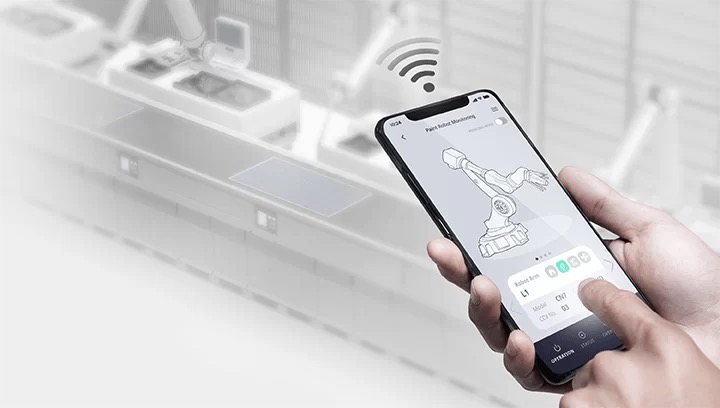
The remote access capabilities allow operators to monitor and control systems from external workstations. Image used courtesy of Autonics
In addition, built-in web tools provide direct access to system diagnostics, including CPU usage, network status, memory capacity, and connection monitoring. Users can evaluate system performance directly in the panel, without relying on external tools. These capabilities move the iTP Series closer to a self-contained monitoring and control platform rather than a simple interface layer.
Built for Industrial Conditions
The iTP Series is designed for environments where reliability is not negotiable. An IP66 protection rating allows the panels to operate in conditions involving dust and water exposure, while explosion-proof certifications ensure safe deployment in hazardous locations. Installation flexibility is also built into the design, supporting both horizontal and vertical orientations. This allows panels to be integrated into a wide range of control cabinets and operator stations without requiring custom mounting solutions.
What the iTP Series Represents
The iTP Series reflects a broader shift in how HMI systems are used within industrial environments. Panels are no longer limited to displaying information and collecting inputs. They are expected to process data, communicate across systems, and contribute to overall system performance.