Facebook
 Google
 GitHub
 Linkedin
Mencom’s Magnetic Sensors: Small Devices, Big Impact
Mencom has added reed and magneto-resistive sensors to the current product lineup, serving various applications within sectors such as automation and manufacturing environments.
Mencom has released a series of magnetic sensors, available in two different variations, designed to meet the diverse needs of modern industrial environments. These sensors provide a reliable and versatile solution for various sector applications.
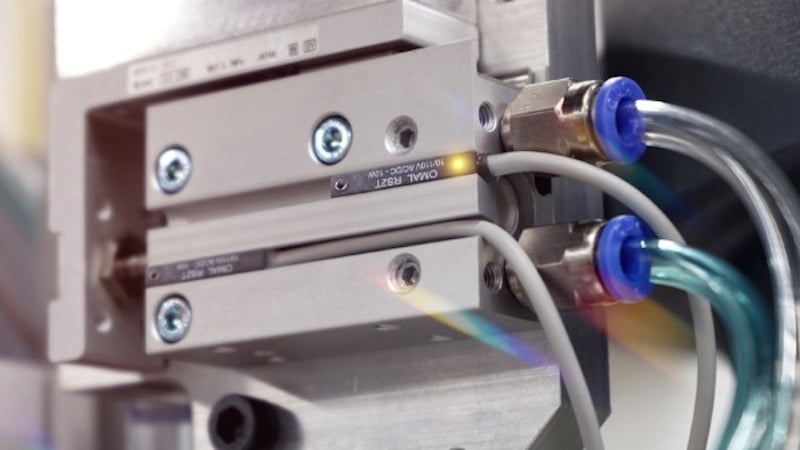
This image shows a newly-released Mencom sensor providing data on the cylinder's status. Image used courtesy of Mencom
Mencom’s Two Available Options
The newly released sensors are available in two different options: reed and GMR types. The main difference between reed and GMR sensors is their operating principles and characteristics. Reed sensors use a mechanical switch mechanism. They consist of two overlapping metallic contact plates inside a glass tube. The plates close when a magnetic field is applied, allowing current to flow. When the field is removed, the plates open, breaking the circuit. GMR sensors use the Giant Magneto-Resistance effect. This effect changes electrical resistance depending on the alignment of magnetic layers within the sensor. This is then detected and used to trigger the sensor.
The difference in characteristics between the GMR and reed variations is in their sensitivity and durability. GMR sensors are more sensitive and can detect minor changes in magnetic fields, making them suitable for high-precision applications. GMR sensors tend to have an unlimited lifespan in switching cycles because they do not have mechanical contact. Reed sensor types are generally less sensitive to vibrations and impacts and typically have a limited lifespan of around 1 to 2 million cycles.
Simplistic Design Creates Efficiency
Mencom's new magnetic sensors are easy to install due to their flexible mounting options, which include clamps and screws. This design allows quick installation in different industrial settings without requiring specialized tools or extensive setup time. The sensors also feature a yellow LED indicator that shows if they are operating. This indicator makes it easy to monitor their status, allowing for quick diagnostics, which enhances overall reliability and efficiency.

The new magnetic sensor from Mencom, part number #RS2IXA30. Image used courtesy of Mencom
Versatile Voltage Range and Robust Load Capacity
Mencom’s new magnetic sensors are designed to enhance system efficiency with their low power consumption and high-performance capabilities. The reed sensors operate within a voltage range of 10 to 100V, while the GMR sensors function between 5 to 30V, providing flexibility for various applications. Additionally, the reed sensors boast a maximum load capacity of 10 W DC and can handle switching currents up to 400 mA, making them suitable for high-demand environments. The GMR sensors, which can switch to 150 mA and detect field strengths of 2.8 mT, offer precise and reliable performance.
These features collectively ensure that the sensors meet and exceed modern industrial systems' operational demands, contributing to improved efficiency and reduced maintenance costs.