Facebook
 Google
 GitHub
 Linkedin
MiR Launches Scalable, Cybersecurity-Enhanced AMR Fleet Management Software
Mobile Industrial Robots (MiR) has released MiR Fleet Enterprise, a software with robust cybersecurity measures and a user-friendly web interface for centralized and simplified AMR fleet control.
Teradyne Robotics company, Mobile Industrial Robots (MiR), announced the release of its cybersecurity-focused, scalable fleet management software platform, MiR Fleet Enterprise. The software includes IT management system compatible configuration, enhanced cybersecurity features, and optimized data transfer between autonomous mobile robots (AMRs) and management software. MiR Fleet Enterprise is designed to allow secure growth of AMR fleet operations, supporting facilities as they expand operations in line with increasing customer demand.
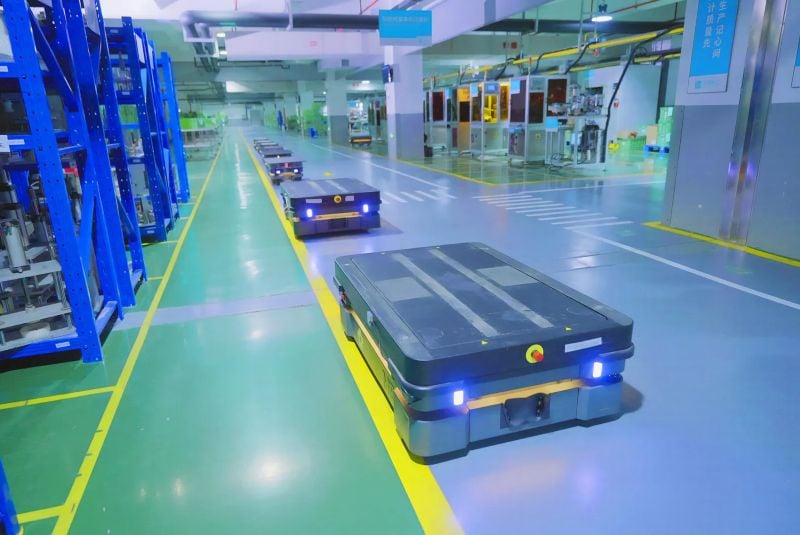
MiR delivers secure, scalable fleet management with the release of its MiR Fleet Enterprise software. Image used courtesy of Mobile Industrial Robots
AMR Fleet Management
One of the key features of the MiR Fleet Enterprise platform is its user-friendly web interface, which is designed to reduce training and facilitate intuitive fleet management for operators. The platform can merge with existing enterprise resource planning, warehouse management, and manufacturing execution systems (through a REST-API), enabling comprehensive coordination, logistics planning, and enhanced AMR fleet performance.
The platform automates AMR selection and post-programming priorities and informs users of barriers or obstacles to streamlined operations. MiR Fleet Enterprise operates on Windows Servers, reduces network load by improving data exchange, and works alongside existing IT frameworks and cloud environments, supporting rapid deployment.
A brief overview of the MiR Fleet Enterprise platform. Video used courtesy of Mobile Industrial Robots
Advanced Cybersecurity
Because AMR fleets depend on continuous contact with central management systems in linked environments, they are susceptible to cyberattacks. A cyberattack directed at an AMR system might cause delays and inventory problems by rerouting robots to the wrong places. Such delays can cause backlogs and unwanted downtime in warehouse and logistics centers, leading to poor order fulfillment and dissatisfied customers if not remedied right away.
The enhanced cybersecurity features of the MiR Fleet Enterprise platform are designed to align with the IEC 62443 Part 4-2 (SL-C 3), a section of the standard series from the International Electrotechnical Commission that covers security requirements for industrial automation and control systems. Part 4-2 of the IEC 62443 series states that technical controls are required for industrial control system components. The security level denoted by SL-C 3 provides top-level protection against targeted cyberattacks.
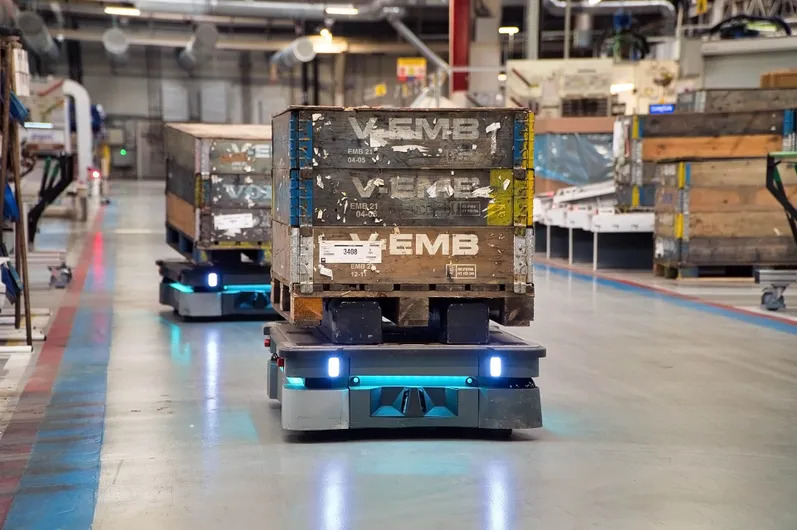
The MiR Fleet Enterprise’s advanced cybersecurity features safeguard operations against cyber attacks and unwanted downtime. Image used courtesy of Mobile Industrial Robots
Part 4-2 provides software and hardware protection for AMRs spanning connectivity modules, networked sensors, and processing units, particularly from unauthorized access and malicious device manipulation. Unauthorized AMR access prevention is achieved via communications encryption, digital signing, role-based access control, multi-factor authentication, and safeguarding AMR data transmission and operation commands.
In order to identify suspect activity and enable prompt responses to odd occurrences, including abrupt movement or illicit access attempts, SL-C 3 also requires real-time monitoring and tracking. System hardening, which lowers risks by turning off unused features, installing security updates, and enforcing robust setups to stop misuse or malware assaults, is also vital. Lastly, SL-C 3 employs countermeasures against Denial-of-Service (DoS) attacks, including network overload safeguards, which guarantee that AMR functions properly even when an attack is attempted. When combined, these safeguards support the resilience, security, and dependability of AMR fleets in networked environments.